King Snake Temperature Guide: Heat Gradient & UTH
Enclosure Setup
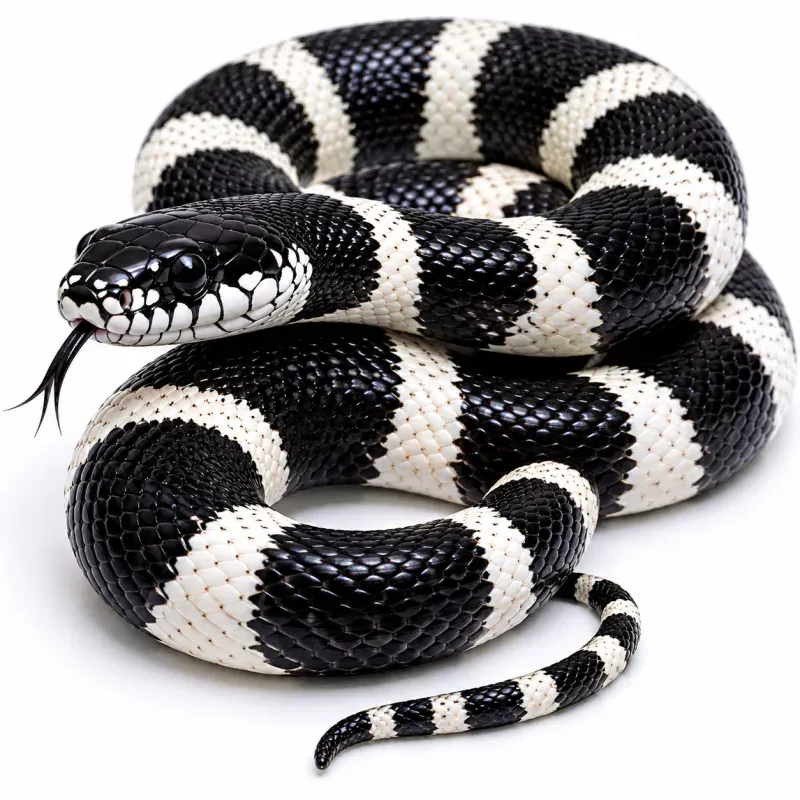
King snakes (Lampropeltis species) are active, terrestrial snakes native to diverse habitats across the Americas. A proper enclosure is the foundation of their health. For adults, a 40-gallon breeder tank (36x18x18 inches) is the minimum, with larger enclosures (4x2x2 feet) recommended for species like the California king snake (L. californiae) or Mexican black king snake (L. getula nigrita). Juveniles can start in a 10–20-gallon tank, but avoid oversized enclosures without ample hides to prevent stress.
Use a secure, locking mesh lid to prevent escapes—king snakes are notorious escape artists. Substrate options include aspen shavings (ideal for burrowing), cypress mulch (for humidity retention), or paper towels (for quarantine). Provide at least two hides: one on the warm side and one on the cool side, such as half-logs or reptile caves. Add climbing branches, cork bark, and fake plants to enrich the environment. A water dish large enough for soaking should be placed on the cool side.
Step-by-Step Enclosure Setup
- Choose the right tank size based on the snake's age and species. Use a 10–20 gallon for juveniles, 40-gallon breeder for most adults, and 4x2x2 feet for larger species.
- Install a secure lid with a locking mechanism. King snakes can push or lift loose lids.
- Add substrate to a depth of 2–3 inches. Aspen is preferred for burrowing; avoid cedar and pine due to toxic oils.
- Place hides on both the warm and cool ends. Ensure each hide is snug so the snake feels secure.
- Add enrichment like branches, cork bark, and fake plants. These encourage natural climbing and exploration.
- Position the water dish on the cool side, large enough for the snake to soak in.
Substrate Comparison Table
| Substrate | Pros | Cons | Best For |
|---|---|---|---|
| Aspen shavings | Allows burrowing, low dust, easy to spot clean | Can mold if wet | Most king snakes |
| Cypress mulch | Retains humidity, natural look | May be too moist for dry species | Species needing higher humidity |
| Paper towels | Cheap, easy to clean, sterile | Not natural, no burrowing | Quarantine, sick snakes |
| Reptile carpet | Reusable, no ingestion risk | Can harbor bacteria if not cleaned | Simple setups |
Enclosure Troubleshooting
- Escapes: Check for gaps around lid and tubing. Use clips or weights.
- Stress from large enclosure: Add more hides and foliage to break sight lines.
- Substrate ingestion: Feed on a plate or separate container to avoid accidental ingestion.
Heating and Lighting
King snakes are ectothermic and require a thermal gradient to regulate their body temperature. The basking spot should be 88–92°F (31–33°C), the warm side ambient temperature 80–85°F (27–29°C), and the cool side 70–75°F (21–24°C). Use a thermostat with all heat sources to prevent burns and overheating.
For primary heating, an under-tank heater (UTH) is recommended for belly heat, which aids digestion. Place the UTH on the warm side, covering one-third of the enclosure's floor. Ensure the UTH is connected to a thermostat (set to 90°F) and never place it inside the enclosure—attach it to the outside bottom. A ceramic heat emitter (CHE) or a deep heat projector (DHP) can supplement ambient heat, especially in cooler rooms. Avoid heat rocks, as they can cause severe burns.
Lighting: King snakes do not require UVB lighting, but a low-output UVB bulb (5–6% T5) can benefit diurnal species by supporting natural behaviors and vitamin D synthesis. Provide a 12-hour photoperiod with a dimmable LED or fluorescent light. Turn off all lights at night to mimic natural cycles.
Heat Gradient Setup Table
| Zone | Temperature Range | Heat Source | Placement |
|---|---|---|---|
| Basking spot | 88–92°F (31–33°C) | UTH + CHE/DHP | Warm side, top |
| Warm ambient | 80–85°F (27–29°C) | UTH | Under tank |
| Cool ambient | 70–75°F (21–24°C) | None | Opposite side |
| Nighttime drop | 65–70°F (18–21°C) | Off or low wattage | Use thermostat |
Selecting and Installing a UTH
- Choose the right size: The UTH should cover about one-third of the floor area. For a 40-gallon tank, a 11x17 inch UTH is typical.
- Attach to the outside bottom: Peel off the backing and stick it firmly to the glass or plastic. Do not place inside the enclosure.
- Connect to a thermostat: Insert the probe between the UTH and the glass or inside the tank on the warm side. Set to 90°F.
- Monitor with a thermometer: Use a digital thermometer with a probe to verify surface temperatures.
Troubleshooting Temperature Issues
- Basking spot too hot: Adjust thermostat down or move the heat source farther away.
- Cool side too cold: Add a low-wattage CHE on a thermostat, or move the enclosure to a warmer room.
- Temperature fluctuations: Ensure the room has stable ambient temps; use a dimming thermostat for lights.
- UTH not heating: Check the connection and confirm the thermostat is set above the current temperature.
Heat Source Comparison Table
| Heat Source | Pros | Cons | Best Use |
|---|---|---|---|
| Under-tank heater (UTH) | Provides belly heat, low profile, efficient | Only heats surface, can overheat without thermostat | Primary heat for ground-dwelling snakes |
| Ceramic heat emitter (CHE) | Long-lasting, no light, good ambient heat | Gets very hot, needs guard | Supplementing ambient heat |
| Deep heat projector (DHP) | Penetrates tissue, no light, efficient | More expensive | Basking spot alternative |
| Heat rock | None (dangerous) | Causes burns, uneven heating | Avoid entirely |
Humidity and Water
King snakes require moderate humidity, typically 40–60%. For most species, this is achieved with a large water dish and occasional misting. During shedding, increase humidity to 60–70% by misting the enclosure or adding a humid hide (a plastic container with damp sphagnum moss). Use a digital hygrometer to monitor levels. Excess humidity (>70%) can cause scale rot, while low humidity (<30%) leads to stuck shed and dehydration.
Provide fresh, dechlorinated water daily. Clean the water dish weekly with reptile-safe disinfectant. A shallow dish allows soaking, which helps with hydration and shedding.
Maintaining Humidity Levels
- For 40–60%: Use a large water dish and mist lightly every few days. Monitor with a hygrometer.
- For shedding (60–70%): Increase misting, add a humid hide with damp sphagnum moss, and reduce ventilation slightly.
- For low humidity (<30%): Mist more frequently, use cypress mulch, or add a humidity box.
- For high humidity (>70%): Increase ventilation, switch to aspen, and reduce misting.
Water Dish Tips
- Choose a heavy ceramic dish that can't be tipped over.
- Place on the cool side to prevent evaporation and keep water cooler.
- Change water daily and scrub the dish with a reptile-safe disinfectant weekly.
- If the snake defecates in the water, clean immediately.
Diet and Feeding
King snakes are carnivorous and primarily eat rodents in captivity. Hatchlings should be fed a pinky mouse every 5–7 days. Juveniles (12–24 inches) eat a fuzzy or hopper mouse every 7–10 days. Adults (24+ inches) eat a small to medium adult mouse (or rat, if appropriate) every 10–14 days. Prey size should be no larger than 1.5 times the snake's girth at its widest point.
Feed frozen-thawed prey to avoid injury and parasites. Use tongs to offer the prey, wiggling it to stimulate feeding. Feed in the enclosure to minimize stress, but watch for substrate ingestion. After feeding, leave the snake undisturbed for 48 hours to prevent regurgitation. King snakes are known to be voracious eaters, but avoid overfeeding to prevent obesity. Adjust frequency based on body condition—a healthy snake should have a rounded, not square, cross-section.
Feeding Schedule Table
| Age/Size | Prey Type | Frequency | Notes |
|---|---|---|---|
| Hatchling | Pinky mouse | Every 5–7 days | Start with small pinkies |
| Juvenile (12–24 in) | Fuzzy or hopper mouse | Every 7–10 days | Increase prey size as snake grows |
| Adult (24+ in) | Small to medium adult mouse | Every 10–14 days | Can offer rat pups for larger species |
Step-by-Step Feeding Process
- Thaw the prey: Place the frozen rodent in a plastic bag and submerge in warm water for 20–30 minutes. Never microwave.
- Warm the prey: Use a hair dryer or warm water to bring the prey to ~100°F (38°C) to increase scent.
- Offer with tongs: Hold the prey by the tail and wiggle it near the snake's head. Some snakes prefer a stationary prey item.
- Allow strike and constriction: Let the snake strike and constrict. This is natural behavior.
- Leave undisturbed: Do not handle for 48 hours after feeding to prevent regurgitation.
Common Feeding Problems
- Refusal to eat: Check temperatures, stress, and shedding. Offer smaller prey or try a different color mouse.
- Regurgitation: Usually due to handling too soon or temperatures too low. Wait 48 hours after feeding and ensure warm side is 88–92°F.
- Overfeeding: Stick to the schedule. Obesity leads to health issues.
- Substrate ingestion: Feed on a plate or paper towel to avoid accidental ingestion.
Handling and Temperament
King snakes are generally docile and easy to handle, but juveniles may be defensive. Start handling sessions short (5–10 minutes) 2–3 times per week after the snake has eaten and defecated. Support the body fully with both hands, avoiding sudden movements. Never handle during shedding or within 48 hours of feeding. Signs of stress include hissing, tail rattling, musking (releasing a foul-smelling liquid), or biting. With regular, gentle handling, most king snakes become tame.
Wash hands before and after handling to avoid transferring scents. Avoid handling after handling other reptiles or prey items, as the snake may mistake your hand for food.
Handling Tips for Beginners
- Start with short sessions (5 minutes) and gradually increase to 15–20 minutes.
- Let the snake explore your hands and arms; don't restrain it tightly.
- Move slowly and confidently to avoid startling the snake.
- If the snake musks, don't punish it—just wash up and continue gentle handling.
- Never grab the snake from above; approach from the side to mimic a predator.
Signs of Stress and How to Respond
- Hissing or tail rattling: Give the snake space; return later.
- Musking: A defensive response; wash and try again another day.
- Biting: Usually a feeding response. Use a hook to gently disengage.
- Hiding constantly: Ensure adequate hides and reduce handling frequency.
Common Health Issues
King snakes are hardy, but can suffer from:
- Respiratory infections: Caused by low temperatures or drafts. Symptoms include wheezing, mouth breathing, and excess mucus. Treatment involves raising temperatures and vet-prescribed antibiotics.
- Scale rot: From high humidity or dirty substrate. Look for discolored, raised scales. Improve ventilation, clean enclosure, and apply topical antiseptic.
- Stuck shed: Due to low humidity. Provide a humid hide or soak the snake in shallow warm water for 15 minutes.
- Mites: Small black dots on the snake, especially around eyes and vent. Use reptile-safe mite spray and clean enclosure thoroughly.
- Obesity: From overfeeding. Reduce prey size and frequency; increase exercise with climbing branches.
- Regurgitation: From handling too soon after feeding or incorrect temperatures. Wait 48 hours after feeding before handling.
Always consult a reptile veterinarian for persistent issues.
Preventive Health Checklist
- Monitor temperature and humidity daily.
- Spot-clean substrate weekly; deep-clean monthly.
- Check for mites during handling.
- Weigh your snake monthly to track growth and detect obesity.
- Quarantine new snakes for 30–90 days.
Avoid These Errors
Avoid these pitfalls:
- Improper heat gradient: Not providing a cool side can cause overheating and stress. Always use a thermostat.
- Using heat rocks: They cause severe burns. Stick to UTHs or CHEs.
- Overfeeding: King snakes will eat as much as offered, leading to obesity. Stick to a schedule.
- Incorrect substrate: Avoid cedar or pine (toxic). Use aspen or cypress.
- Neglecting humidity: Low humidity causes stuck shed; high humidity causes scale rot.
- Skipping quarantine: New snakes should be isolated for 30–90 days to prevent disease spread.
- Ignoring brumation needs: Many king snakes benefit from a winter cooling period (brumation) to regulate breeding cycles. Gradually reduce temperatures to 55–60°F (13–16°C) for 2–3 months, with no food. Consult a vet for details.
Brumation Guide
Brumation is a natural dormancy period for king snakes, especially for breeding purposes. Begin by reducing feeding 2–3 weeks before cooling. Gradually lower temperatures over 2 weeks: drop basking spot to 60–65°F (15–18°C) and cool side to 50–55°F (10–13°C). Provide a water dish but no food. Duration: 60–90 days. Monitor weight weekly—loss of more than 10% is dangerous. Gradually warm them back over 2 weeks, offering food only after they are active. Brumation is optional for pets but recommended for breeding.
For more details, see our King Snake Care Guide.
Frequently Asked Questions
What is the ideal basking temperature for a king snake?
The basking spot should be 88–92°F (31–33°C), with the warm side ambient at 80–85°F and the cool side at 70–75°F. Always use a thermostat to maintain these temperatures.
Can I use a heat rock for my king snake?
No, heat rocks are dangerous and can cause severe burns. Use an under-tank heater (UTH) with a thermostat or a ceramic heat emitter instead.
How do I fix stuck shed?
Stuck shed is usually due to low humidity. Increase humidity to 60–70% by misting or adding a humid hide with damp sphagnum moss. You can also soak the snake in shallow warm water for 15 minutes.
How long should I wait after feeding to handle my king snake?
Wait at least 48 hours after feeding before handling to prevent regurgitation. Handling too soon can cause stress and digestive issues.
Related Reading
- King Snake Enclosure: Tank Setup & Heating — Learn how to build a proper tank with heat zones and décor for your king snake.
- King Snake Care Guide: Setup, Feeding & Morphs — Get a complete overview of king snake husbandry, from habitat to diet and morphs.
- King Snake Feeding Guide: Schedule & Prey Size — Discover the right feeding schedule and prey sizes to keep your king snake healthy.
- King Snake Health: Diseases & Prevention — Identify common king snake ailments and learn prevention tips for optimal health.
- King Snake Morphs: Mexican Black & California — Explore popular king snake morphs like Mexican Black and California varieties.
Not a timer — it reads the actual humidity and stops when it hits your target. Two temperature probes, failsafes, no cloud account. We don't know yet whether it's worth making, so we're asking keepers first. Two-minute survey →
One email when there's news — including if we decide not to build it. No newsletter.
Check optimal temps, calculate feeding, and find your perfect species match.
References
- Rossi, J. (2006). The King Snake Manual. Advanced Vivarium Systems.
- de Vosjoli, P. (2004). The Art of Keeping Snakes. Advanced Vivarium Systems.
- Barten, S. (2011). Reptile Medicine and Surgery. Elsevier.
🐾 Join the Community
See how other keepers set up their enclosures, ask questions, and share your experience.
🛠️ Apply What You Learned
Check optimal temps, calculate feeding schedules, and get calcium dosage — all personalized for your species.
Comments
No account needed — corrections, updates and questions are all welcome. For a full question with photos, the community Q&A is the better place.