Emerald Tree Skink Enclosure: Size, Plants & Setup
Introduction
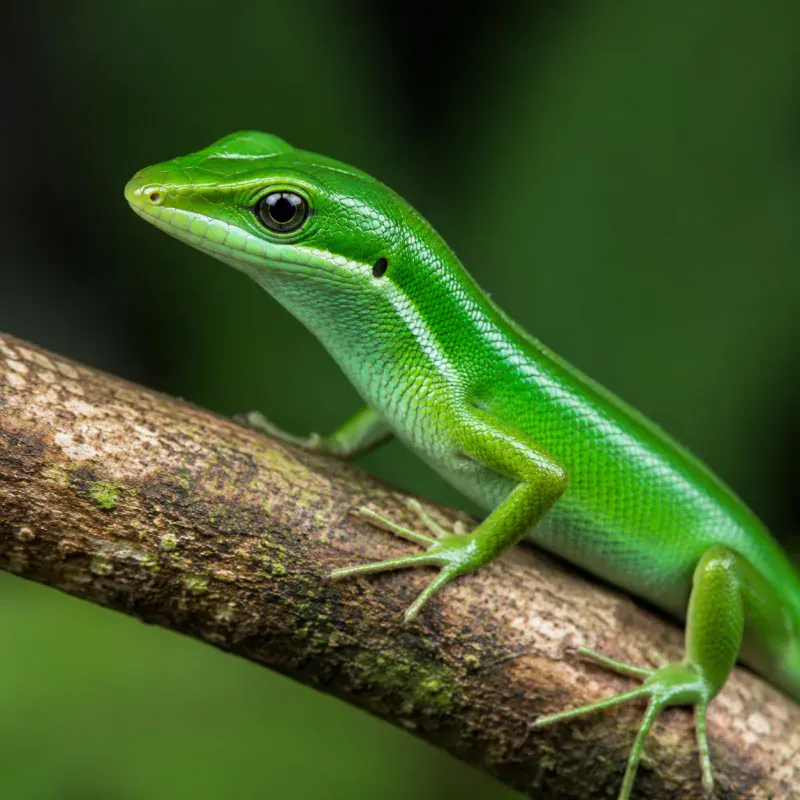
The Emerald Tree Skink (Lamprolepis smaragdina) is a stunning, diurnal arboreal lizard native to the rainforests of Southeast Asia and the Pacific Islands. With its vibrant green coloration, active demeanor, and relatively small size (6–10 inches total length), it has become a sought-after species for intermediate reptile keepers. However, success with these skinks hinges on replicating their complex arboreal habitat. A well-designed enclosure not only meets their physical needs but also promotes natural behaviors like climbing, basking, and social interaction. This guide provides a comprehensive, evidence-backed approach to designing an arboreal vivarium for Emerald Tree Skinks, covering enclosure dimensions, substrate, plant selection, lighting, heating, humidity, diet, handling, common health issues, and multi-skink housing strategies.
Quick Facts
- Scientific Name: Lamprolepis smaragdina
- Lifespan: 5–8 years (captive)
- Adult Size: 6–10 inches (15–25 cm), including tail
- Difficulty: Intermediate
- Price Range (initial setup): $400–$800
- Read Time: 10 minutes
Enclosure Setup: Dimensions and Arboreal Design
Emerald Tree Skinks are highly arboreal and require vertical space more than floor area. The minimum recommended enclosure size for a single adult is 18" x 18" x 36" (45 x 45 x 90 cm), but larger is always better, especially for groups. A 24" x 18" x 48" (60 x 45 x 120 cm) enclosure is ideal for a pair or trio. Front-opening doors are preferred for easy access and to minimize stress.
Construction materials should be non-toxic and moisture-resistant. Glass or PVC enclosures work well. Ensure the enclosure has ample ventilation—either through a mesh top or side vents—to prevent stagnant air and mold growth. The enclosure must have a tight-fitting lid to prevent escapes, as these skinks are adept climbers.
Substrate and Drainage
A bioactive substrate is highly recommended for maintaining humidity and breaking down waste. Use a mix of organic topsoil, coconut coir, sphagnum moss, and leaf litter (e.g., 40% topsoil, 30% coconut coir, 20% sphagnum moss, 10% leaf litter). Add a drainage layer of hydroballs or lava rock at the bottom, covered with a mesh barrier, to prevent waterlogging. A clean-up crew of springtails and isopods will help process waste and prevent mold.
Hardscape and Climbing Structures
Provide a dense network of branches, vines, and cork bark tubes that crisscross the enclosure at various heights. Use sturdy, non-toxic wood such as manzanita, ghostwood, or cork bark. Secure all structures firmly to prevent collapse. Include multiple basking platforms near the top, as well as hiding spots in the form of cork rounds or dense foliage. A vertical gradient of perches allows skinks to thermoregulate and feel secure.
Step-by-Step: Assembling the Enclosure
Follow these steps to set up a functional and naturalistic Emerald Tree Skink enclosure from scratch. This sequence ensures proper drainage, planting, and equipment placement before introducing your skinks.
- Prepare the enclosure: Clean the glass or PVC with a reptile-safe disinfectant and rinse thoroughly. Place the enclosure in a quiet area away from direct sunlight and drafts.
- Install the drainage layer: Add a 2–3 inch (5–8 cm) layer of hydroballs or lava rock at the bottom. Cover with a mesh barrier (e.g., fiberglass window screen) to prevent substrate from falling into the drainage layer.
- Mix and add substrate: Combine 40% organic topsoil, 30% coconut coir, 20% sphagnum moss, and 10% leaf litter. Moisten the mix until it holds together but is not waterlogged. Fill the enclosure to a depth of 3–4 inches (8–10 cm).
- Add hardscape: Arrange branches, cork bark tubes, and vines to create a vertical network. Secure them with silicone or sturdy suction cups to prevent collapse. Place basking platforms near the top and hiding spots at various heights.
- Plant live plants: Plant larger species like pothos and philodendron directly into the substrate. Attach epiphytes like bromeliads and orchids to branches or background using sphagnum moss and fishing line. Water plants thoroughly after planting.
- Introduce the clean-up crew: Add springtails and isopods to the substrate to help break down waste and prevent mold.
- Install lighting and heating: Mount the UVB T5 HO bulb and basking lamp above the mesh top, positioned to create a basking spot at 90–95°F (32–35°C). Connect all heat sources to a thermostat. Add a timer for the photoperiod.
- Set up misting and water: Install an automatic misting system or prepare a hand mister. Place a shallow water dish at the bottom.
- Monitor and adjust: Run the enclosure for 1–2 weeks before adding skinks. Check that temperatures and humidity stay within the ranges described in this guide. Make adjustments as needed.
Plant Selection: Creating a Lush Canopy
Live plants are essential for maintaining humidity, providing cover, and creating a naturalistic environment. Choose species that thrive in high humidity (70–90%) and moderate light. All plants must be non-toxic, as skinks may nibble leaves. Recommended plants include:
- Pothos (Epipremnum aureum): Hardy, fast-growing, and tolerates low light. Excellent for climbing and hiding.
- Bromeliads (e.g., Neoregelia spp.): Provide water reservoirs and perching sites.
- Ficus pumila (Creeping Fig): Great for covering background walls.
- Ferns (e.g., Nephrolepis exaltata): Add texture and humidity.
- Philodendron scandens: Easy to grow and provides dense foliage.
- Orchids (e.g., Phalaenopsis): Add vertical interest and are safe.
Plant in the substrate or attach to branches using sphagnum moss and fishing line. Allow plants to establish before introducing skinks. A background of cork bark or foam covered in sphagnum moss can also support epiphytic plants.
Lighting: UVB, Basking, and Photoperiod
Emerald Tree Skinks are diurnal and require UVB lighting for vitamin D3 synthesis and calcium metabolism. Provide a linear T5 HO UVB bulb (5.0 or 6% for arboreal setups) spanning at least half the enclosure length. The UVB output should create a gradient from UVI 3.0–4.0 at the basking spot to 0.5–1.0 in the shade. Replace bulbs every 6–12 months, as UVB output degrades over time.
Basking temperature should be 90–95°F (32–35°C) at the hottest spot, achieved with a low-wattage halogen or ceramic heat emitter placed above a basking branch. Ambient temperature should range from 75–82°F (24–28°C) during the day, dropping to 70–75°F (21–24°C) at night. Use a thermostat to regulate heat sources and prevent overheating.
Photoperiod: 12 hours of light, 12 hours of darkness year-round. Use a timer to maintain consistency. Full-spectrum LED grow lights can be added to support plant growth and enhance the enclosure's visual appeal.
Humidity and Water
Maintain ambient humidity at 70–90%, with occasional spikes after misting. Use a hygrometer to monitor levels. Achieve humidity through:
- Automatic misting system: Set to mist 2–3 times daily for 30–60 seconds.
- Hand misting: Mist twice daily with dechlorinated water.
- Live plants and substrate: Help retain moisture.
- Water bowl: Provide a shallow dish of fresh water, but skinks will primarily drink droplets from leaves.
Ensure the enclosure dries out slightly between mistings to prevent bacterial or fungal overgrowth. Good ventilation is critical to avoid respiratory issues.
Seasonal Care Adjustments
While Emerald Tree Skinks do not require brumation, seasonal changes in your home can affect the enclosure environment. Adjust your husbandry accordingly to maintain stable conditions year-round.
- Winter: Ambient room temperatures may drop, so monitor the basking spot and ambient temperatures closely. You may need to increase the wattage of the heat emitter or add a secondary heat source. Humidity may also drop due to indoor heating; increase misting frequency to compensate.
- Summer: Higher room temperatures can cause the enclosure to overheat. Ensure the thermostat is working correctly and consider reducing the basking bulb wattage. Humidity may rise naturally; increase ventilation to prevent mold.
- Spring and Autumn: These transitional seasons often have variable temperatures. Check the thermostat daily and adjust as needed. Keep the photoperiod consistent at 12 hours of light year-round.
- Year-round: Replace UVB bulbs every 6–12 months, as output degrades even if the bulb still emits visible light. Clean the water bowl and misting nozzles regularly to prevent bacterial growth.
Diet and Feeding
Emerald Tree Skinks are insectivores, with occasional fruit in the wild. In captivity, offer a varied diet of appropriately sized insects dusted with calcium and vitamin D3 supplements.
| Food Item | Frequency | Notes |
|---|---|---|
| Crickets | Every other day | Gut-loaded 24 hours prior; size < skink's head width |
| Dubia roaches | 2–3 times/week | High protein; excellent staple |
| Black soldier fly larvae | 2–3 times/week | High calcium; soft-bodied |
| Mealworms | Once weekly | High fat; feed sparingly |
| Waxworms | Rare treat | Very high fat; use as occasional reward |
| Pureed fruit (e.g., mango, papaya) | Once weekly | Offer in small amounts; remove uneaten after 2 hours |
Supplement schedule: Dust insects with calcium + D3 at every feeding for juveniles, and 3–4 times per week for adults. Use a multivitamin (e.g., Repashy SuperVite) once weekly. Provide a shallow dish of pureed fruit or a commercial gecko diet as a treat.
Handling and Temperament
Emerald Tree Skinks are generally shy and fast-moving. They tolerate handling poorly and may drop their tail (autotomy) if stressed. Handling should be minimal and only when necessary (e.g., health checks, enclosure cleaning). To reduce stress:
- Allow the skink to walk onto your hand rather than grabbing it.
- Support the body fully; never pinch the tail.
- Keep handling sessions short (5–10 minutes) and infrequent.
- Observe body language: tail twitching, gaping, or darkening color indicate stress.
Never house with other species or handle roughly. With patience, some skinks become accustomed to brief handling, but they remain a display animal for most keepers.
Common Health Issues
With proper husbandry, Emerald Tree Skinks are hardy, but several issues can arise:
- Metabolic Bone Disease (MBD): Caused by insufficient UVB or calcium. Symptoms include tremors, soft jaw, and lethargy. Prevent with proper UVB and supplementation.
- Respiratory Infections: Often due to low temperatures or high humidity with poor ventilation. Symptoms include wheezing, open-mouth breathing, and nasal discharge. Treat by correcting husbandry and consulting a vet.
- Tail Loss (Autotomy): Stress-related. Regrows over weeks but may not look identical. Reduce handling and provide hiding spots.
- Parasites: Internal or external. Quarantine new animals and have fecal exams done annually.
- Dehydration: Wrinkled skin, sunken eyes. Increase misting and provide a water bowl.
Always consult a reptile veterinarian if you notice any signs of illness.
Troubleshooting Common Enclosure Problems
Even with careful setup, you may encounter issues. Here are solutions to common problems based on the husbandry guidelines in this article.
| Problem | Likely Cause | Solution |
|---|---|---|
| Mold growth on substrate or decor | Excess moisture and poor ventilation | Increase ventilation by opening vents or adding a small fan. Reduce misting frequency and allow the enclosure to dry out slightly between mistings. Remove moldy material and ensure the clean-up crew is active. |
| Skink not basking | Basking temperature too high or too low; basking spot not accessible | Check the basking temperature with a thermometer; adjust the wattage of the heat emitter. Ensure the basking branch is sturdy and positioned directly under the heat source. |
| Plants wilting or dying | Inadequate light or overwatering | Add a full-spectrum LED grow light to supplement plant photosynthesis. Reduce watering frequency and ensure the substrate has proper drainage. |
| Humidity consistently too low | Insufficient misting or poor substrate moisture retention | Increase misting frequency or duration. Add more sphagnum moss to the substrate and cover part of the mesh top to reduce evaporation, but maintain ventilation. |
| Aggression among skinks | Multiple males or insufficient resources | Separate males immediately. Ensure the enclosure is large enough (minimum 4' tall x 2' wide x 2' deep for groups) and provide multiple basking spots, hiding places, and feeding stations. |
Multi-Skink Social Housing
Emerald Tree Skinks are one of the few skink species that can be housed in groups, but careful planning is essential. In the wild, they live in loose colonies. In captivity, a male with 2–3 females is the most stable group. Multiple males should never be housed together as they will fight, leading to injury or death.
For a group, use a larger enclosure (minimum 4' tall x 2' wide x 2' deep) with multiple basking spots, hiding places, and feeding stations to reduce competition. Introduce all skinks simultaneously to a neutral enclosure to minimize territorial aggression. Monitor closely for bullying (chasing, biting, or blocking access to resources). If aggression occurs, separate the individuals permanently. Quarantine new additions for 30 days before introducing to an established group.
Females can be housed together peacefully if space is ample. Avoid housing with other species.
Cost Breakdown: Setting Up an Emerald Tree Skink Enclosure
Understanding the initial investment helps you budget. The following table estimates costs for a standard setup, based on the enclosure and equipment described in this guide. Prices are approximate and may vary by brand and location.
| Item | Estimated Cost (USD) | Notes |
|---|---|---|
| Enclosure (24" x 18" x 48") | $150–$300 | Glass or PVC; front-opening preferred |
| Substrate materials (topsoil, coir, moss, leaf litter) | $30–$50 | Enough for a 3–4 inch layer |
| Drainage layer (hydroballs or lava rock) | $20–$40 | 2–3 inch layer |
| Hardscape (branches, cork bark, vines) | $30–$60 | Non-toxic wood and cork |
| Live plants (6–10 plants) | $40–$80 | Pothos, bromeliads, ferns, etc. |
| UVB lighting (T5 HO fixture and bulb) | $60–$100 | Replace bulb every 6–12 months |
| Basking lamp and thermostat | $50–$80 | Halogen or ceramic heat emitter |
| Misting system (automatic) | $50–$150 | Hand mister is cheaper but less convenient |
| Hygrometer and thermometer | $15–$30 | Digital probes recommended |
| Clean-up crew (springtails, isopods) | $20–$40 | Initial culture |
| Total | $465–$930 | Within the $400–$800 range for a basic setup, but can exceed with premium items |
Ongoing costs include replacement UVB bulbs ($20–$40 every 6–12 months), feeder insects ($10–$20 per month), and supplements ($10–$20 per month).
Steer Clear of These
- Too small enclosure: Skinks need vertical space; a 20-gallon tall is insufficient for adults.
- Poor ventilation: Leads to respiratory infections and mold.
- Inadequate UVB: Using coil bulbs or no UVB causes MBD.
- Overhandling: Causes chronic stress and tail loss.
- Incorrect diet: Feeding only crickets without supplements leads to deficiencies.
- Ignoring humidity: Too low causes dehydration; too high promotes bacteria.
- Housing multiple males: Inevitable fighting and stress.
Conclusion
Designing an enclosure for Emerald Tree Skinks is a rewarding challenge that mimics a slice of tropical rainforest. By prioritizing vertical space, live plants, proper lighting, and social dynamics, you can create a thriving habitat that showcases these vibrant lizards. Remember that consistency is key—stable temperatures, humidity, and a varied diet will keep your skinks healthy and active. With patience and attention to detail, you'll enjoy years of observation and interaction with one of the most beautiful skinks in the hobby.
Related Reading
- Emerald Tree Skink Care: Complete Arboreal Gem Guide
- Emerald Tree Skink Social Housing Guide: Keeping Gro...
- Emerald Tree Skink Diet: Nutrition & Supplement Sche...
Frequently Asked Questions
What are the minimum recommended enclosure dimensions for a single Emerald Tree Skink?
The minimum recommended enclosure size for a single adult Emerald Tree Skink is 18" x 18" x 36" (45 x 45 x 90 cm). Larger is always better, especially for groups, and a 24" x 18" x 48" enclosure is ideal for a pair or trio.
What UVB lighting is recommended for Emerald Tree Skinks?
Provide a linear T5 HO UVB bulb (5.0 or 6% for arboreal setups) spanning at least half the enclosure length. The UVB output should create a gradient from UVI 3.0–4.0 at the basking spot to 0.5–1.0 in the shade, and bulbs should be replaced every 6–12 months.
How often should adult Emerald Tree Skinks be fed and supplemented?
Offer a varied diet of insects like crickets every other day, with dubia roaches and black soldier fly larvae 2–3 times weekly. Dust insects with calcium + D3 3–4 times per week for adults, and use a multivitamin once weekly.
Can multiple Emerald Tree Skinks be housed together?
Yes, Emerald Tree Skinks can be housed in groups, but a male with 2–3 females is the most stable group, and multiple males should never be housed together. Use a larger enclosure (minimum 4' tall x 2' wide x 2' deep) with multiple basking spots, hiding places, and feeding stations, and introduce all skinks simultaneously to a neutral enclosure.
What is the recommended substrate mix for a bioactive setup?
A bioactive substrate mix of 40% organic topsoil, 30% coconut coir, 20% sphagnum moss, and 10% leaf litter is recommended. Add a drainage layer of hydroballs or lava rock at the bottom, covered with a mesh barrier, and introduce springtails and isopods as a clean-up crew.
How can I tell if my Emerald Tree Skink is stressed?
Signs of stress include tail twitching, gaping, darkening color, and attempting to flee. Handling should be minimal and infrequent, as stress can lead to tail loss (autotomy). Provide ample hiding spots and avoid overhandling.
What are the signs of Metabolic Bone Disease (MBD) in Emerald Tree Skinks?
Symptoms of MBD include tremors, soft jaw, and lethargy. It is caused by insufficient UVB or calcium. Prevent it by providing a linear T5 HO UVB bulb and dusting insects with calcium + D3 as recommended.
Check optimal temps, calculate feeding, and find your perfect species match.
References
- Bauer, A. M. (2013). Lizards of the World: A Natural History. Johns Hopkins University Press.
- McLeod, L. (2020). Emerald Tree Skink Care Sheet. Reptiles Magazine.
- Rundquist, E. (2019). The Ultimate Guide to Emerald Tree Skinks. Reptile Apartment.
- Stuart, B. L., & Emmett, D. (2006). A Photographic Guide to the Amphibians and Reptiles of Thailand. New Holland Publishers.
🐾 Join the Community
See how other keepers set up their enclosures, ask questions, and share your experience.
🛠️ Apply What You Learned
Check optimal temps, calculate feeding schedules, and get calcium dosage — all personalized for your species.
Comments