Chinese Water Dragon Water Feature Setup
Introduction
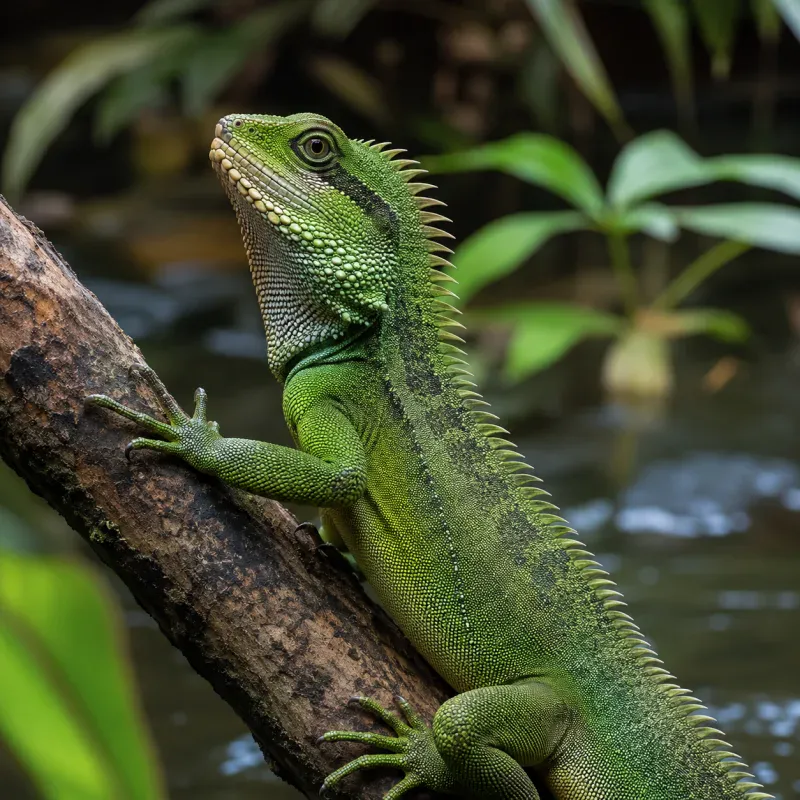
The Chinese Water Dragon (Physignathus cocincinus) is a striking semi-aquatic lizard native to the tropical forests of Southeast Asia. These intelligent, arboreal reptiles thrive in high-humidity environments with a large, clean water feature. Without proper water management, they suffer from dehydration, respiratory infections, and skin issues. This guide covers filtration, water quality, swimming depth, and humidity control to create a thriving habitat.
Enclosure Setup
A single adult Chinese Water Dragon requires a minimum 75-gallon tank (48" x 18" x 24"), though 120 gallons or larger is ideal. The enclosure should be tall (at least 4 feet) to accommodate climbing branches. The water feature should occupy 30–50% of the floor space. Use a custom-built pond, a large plastic stock tank, or a reptile-safe water basin. Ensure the water area is accessible via a gentle ramp or sloping land section.
Key setup elements:
- Substrate: Use coconut fiber, cypress mulch, or sphagnum moss to retain humidity. Avoid pine or cedar.
- Land area: Provide basking spots (95–100°F) and hiding caves. Use driftwood, PVC pipes, or cork bark.
- Water feature: Choose a basin at least 18" deep for swimming. Include a gentle waterfall or filter outflow for oxygenation.
- Safety: Cover any exposed heating elements to prevent burns. Use a screen top for ventilation.
Heating & Lighting
Chinese Water Dragons are ectothermic and need a thermal gradient. Provide a basking spot of 95–100°F (35–38°C) via a ceramic heat emitter or halogen bulb. The ambient temperature should be 80–85°F (27–29°C) during the day, dropping to 70–75°F (21–24°C) at night. Use a thermostat to regulate heat sources.
Lighting: Provide UVB (10–12% output) for 10–12 hours daily. UVB is essential for vitamin D3 synthesis and calcium absorption. Replace UVB bulbs every 6 months. Add a daylight LED or fluorescent tube for plant growth and natural day/night cycles.
Humidity Management
Humidity must be 70–85% at all times. Low humidity leads to shedding problems, respiratory infections, and dehydration. Achieve this through:
- Large water feature: Evaporation naturally raises humidity.
- Misting: Mist the enclosure 2–3 times daily with dechlorinated water. Use an automatic misting system for consistency.
- Humid hide: Place a damp sphagnum moss hide in the cool end.
- Substrate: Keep substrate moist (not waterlogged).
- Hygrometer: Place a digital hygrometer at mid-height. Aim for 70–85%.
If humidity drops below 60%, increase misting frequency, add a fogger, or reduce ventilation. Excess humidity (above 90%) can cause mold; improve airflow if needed.
Water Feature: Filtration & Quality
Filtration
Chinese Water Dragons defecate in water, so robust filtration is critical. Use a canister filter (e.g., Fluval FX series) or a pond filter rated for 2–3 times the water volume. Include mechanical (sponge), biological (ceramic rings), and chemical (activated carbon) media. Clean the filter every 2–4 weeks.
For smaller setups, a submersible filter with a UV sterilizer helps control bacteria. Avoid filters with strong currents; use a spray bar or diffuser to reduce flow.
Water Quality Parameters
| Parameter | Ideal Range | Testing Frequency |
|---|---|---|
| pH | 6.5–7.5 | Weekly |
| Ammonia | 0 ppm | Weekly |
| Nitrite | 0 ppm | Weekly |
| Nitrate | <20 ppm | Monthly |
| Temperature | 75–82°F (24–28°C) | Daily |
| Chlorine/Chloramine | 0 | Before adding water |
Perform 25–50% water changes weekly. Use dechlorinated water (tap water treated with a reptile-safe conditioner). Reverse osmosis (RO) water is ideal but must be remineralized with a reptile supplement.
Swimming Depth
Provide a swimming depth of at least 12–18 inches (30–45 cm) for adults. Juveniles can use 6–8 inches. The water area should be large enough to allow full-body swimming and submerging. Include shallow areas (2–4 inches) for basking and drinking. Use smooth rocks or slate to create graduated depths.
Never use a deep water feature without a ramp or easy exit—dragons can drown if trapped. Test the water depth by observing your dragon: they should be able to fully submerge and surface easily.
Diet & Feeding
Chinese Water Dragons are omnivorous. Juveniles eat daily; adults every other day. Feed a variety of gut-loaded insects: crickets, dubia roaches, silkworms, hornworms, and black soldier fly larvae. Dust with calcium powder (without D3) at every feeding and a multivitamin once weekly.
Vegetables: Offer collard greens, mustard greens, dandelion greens, shredded carrots, and squash. Avoid spinach, kale, and iceberg lettuce. Fruits (e.g., blueberries, mango, papaya) as treats once a week.
Feed in a separate container to prevent substrate ingestion. Provide fresh water in a shallow dish daily, though most hydration comes from the water feature.
Handling & Behavior
Chinese Water Dragons are generally docile but can be skittish. Handle them gently and regularly (5–10 minutes daily) to build trust. Support the body fully; never grab the tail, as it can drop (autotomy). Signs of stress: tail whipping, gaping, hissing. If stressed, return to enclosure and try later.
Never handle during shedding. Wash hands before and after handling to prevent Salmonella transmission. Supervise children around them.
Common Health Issues
- Respiratory infections: Caused by low humidity or cold temps. Symptoms: wheezing, open-mouth breathing, mucus. Treat with vet-prescribed antibiotics and increase humidity.
- Metabolic bone disease (MBD): From UVB deficiency or low calcium. Symptoms: swollen limbs, tremors, soft jaw. Prevent with proper UVB and calcium supplementation.
- Skin infections: From dirty water. Symptoms: red patches, blisters, shedding problems. Improve water quality and treat with vet care.
- Parasites: Internal (worms) or external (mites). Regular fecal exams and quarantine new animals.
- Tail rot: From injury or poor circulation. Keep enclosure clean and provide proper humidity.
See a reptile veterinarian annually for check-ups.
Lessons From Experienced Keepers
- Small enclosure: Dragons need space to climb and swim. A 40-gallon tank is too small for adults.
- Poor water quality: Skipping filtration leads to bacterial blooms and sick lizards.
- Low humidity: Causes stuck shed and respiratory issues. Monitor with a hygrometer.
- Incorrect temperature gradient: No basking spot or cold temps suppress immune system.
- Inadequate UVB: Using a coil UVB instead of a linear tube leads to MBD.
- Overhandling: Stresses the animal. Let them acclimate for 2 weeks after purchase.
- Wrong diet: Too much fruit or no calcium causes health problems.
Avoid these pitfalls by following the guidelines above. Join herpetology forums or consult a vet for personalized advice.
Conclusion
A well-designed water feature is the cornerstone of Chinese Water Dragon care. By maintaining clean water, proper depth, and high humidity, you’ll replicate their natural habitat and ensure a long, healthy life (10–15 years in captivity). Invest in quality filtration, monitor water parameters weekly, and provide a balanced diet. With dedication, your dragon will thrive as a stunning, interactive pet.
Related Reading
Check optimal temps, calculate feeding, and find your perfect species match.
References
- Barten, S. (2021). Chinese Water Dragon Care. Reptiles Magazine.
- Vosjoli, P. de (2004). The Chinese Water Dragon: A Complete Guide to Care and Breeding. Advanced Vivarium Systems.
- McLeod, L. (2022). How to Care for a Chinese Water Dragon. The Spruce Pets.
- Radi, M. (2023). Water Quality in Reptile Enclosures. Journal of Herpetological Medicine and Surgery, 33(2), 45–52.
🐾 Join the Community
See how other keepers set up their enclosures, ask questions, and share your experience.
🛠️ Apply What You Learned
Check optimal temps, calculate feeding schedules, and get calcium dosage — all personalized for your species.
Comments
No account needed — corrections, updates and questions are all welcome. For a full question with photos, the community Q&A is the better place.