White's Tree Frog Care: The Dumpy Frog Guide
Species Overview
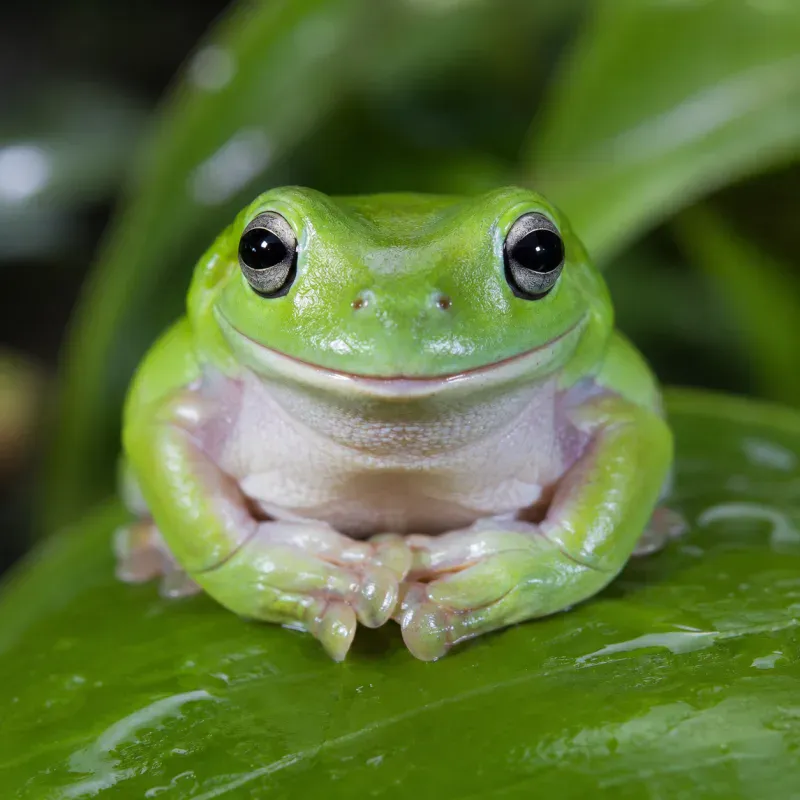
White's tree frog (Litoria caerulea), also called the dumpy tree frog for its chubby, smiling appearance, is the most popular pet amphibian. Hardy, personable, and tolerant of beginner mistakes. Native to Australia and New Guinea.
These frogs are known for their docile temperament and relatively simple care requirements, making them an excellent choice for first-time amphibian keepers. In the wild, they inhabit tropical and subtropical forests, as well as urban areas where they often seek shelter in human structures. Their natural behavior includes climbing, soaking, and hunting at night. With proper care, they can live 15–20 years in captivity, forming strong bonds with their keepers.
One of the most endearing traits of White's tree frogs is their tendency to "smile" — a result of their naturally upturned mouth shape. They are also vocal, producing a low, pleasant croak, especially during the breeding season or when they are content. Their skin is thicker than most amphibians, which allows for more frequent handling, though it still requires careful attention to hygiene and moisture.
Enclosure Setup
Minimum: 18"×18"×24" for 1–2 adults (arboreal). Substrate: Eco Earth or ABG mix, 2–3" deep. Broad-leaved plants (pothos, philodendron), cork bark tubes, sturdy branches. Large shallow water dish with dechlorinated water — they soak regularly.
Step-by-Step Enclosure Assembly
- Choose the right size: For one adult, an 18"×18"×24" terrarium is the absolute minimum. For two adults, upgrade to a 24"×18"×24" or larger. These frogs are surprisingly active at night and need vertical climbing space — height matters more than floor space.
- Select a substrate: Use Eco Earth (coconut fiber), ABG mix, or a blend of organic topsoil and sphagnum moss. Depth should be 2–3 inches to retain humidity and allow burrowing. Avoid gravel or sand, which can cause impaction if ingested.
- Add climbing structures: Provide cork bark tubes, sturdy branches, and broad-leaved plants like pothos or philodendron. These create hiding spots and mimic their natural arboreal habitat. Ensure all decorations are stable and cannot fall and injure the frog.
- Install a water dish: Use a large, shallow dish filled with dechlorinated water. The dish should be heavy enough to prevent tipping and easy to clean. White's tree frogs soak regularly, so the water must be changed daily to prevent bacterial growth.
- Set up lighting and heating: Place a low-wattage ceramic heat emitter (CHE) or side-mounted heat pad on one side of the enclosure to create a temperature gradient. Avoid heat rocks, which can cause burns. For UVB, install a low-level T5 2.5% tube — now recommended for optimal health.
- Add a thermometer and hygrometer: Place digital probes at both the warm and cool ends to monitor temperature and humidity accurately. Adjust heating and misting as needed.
Substrate Options Comparison
| Substrate | Pros | Cons |
|---|---|---|
| Eco Earth (coconut fiber) | Retains moisture, natural look, affordable | Can mold if over-misted, needs frequent replacement |
| ABG mix | Excellent drainage, supports live plants | More expensive, requires layering |
| Organic topsoil + sphagnum | Holds humidity well, natural | Must be pesticide-free, can be messy |
| Paper towels | Easy to clean, ideal for quarantine | Not natural, low humidity retention |
Lighting and UVB
While White's tree frogs are nocturnal, providing low-level UVB (T5 2.5% tube) is now recommended. UVB aids in vitamin D3 synthesis, which is crucial for calcium metabolism. Place the tube over the enclosure with a mesh screen to filter intensity. Provide 10–12 hours of light per day, and ensure there are shaded areas so the frog can escape the light if desired. Avoid strong UVB bulbs designed for desert reptiles, as they can cause burns and eye damage.
Common Enclosure Mistakes
- Too small: Many keepers start with a 10-gallon tank, which is far too small. These frogs need vertical space to climb and exercise.
- No hiding spots: Without cork bark or plants, frogs become stressed and may refuse to eat.
- Water dish too small: They need a dish large enough to soak their entire body. A shallow bowl that only allows drinking is insufficient.
- Substrate too dry: If the substrate dries out completely, humidity drops, causing skin issues.
- Overcrowding: Housing more than two adults in a small enclosure leads to stress and aggression.
Temperature & Humidity
| Parameter | Value |
|---|---|
| Daytime | 75–85°F (24–29°C) |
| Night | 65–72°F (18–22°C) |
| Humidity | 50–70% (spike to 80% at night) |
Low-wattage CHE or side-mounted heat pad. Mist morning and evening. Let tank dry somewhat between mistings.
Creating a Temperature Gradient
Place the heat source on one side of the enclosure to create a warm side and a cool side. The warm side should be at the upper end of the daytime range (85°F), while the cool side should be at the lower end (75°F). At night, allow temperatures to drop to 65–72°F. Use a thermostat to regulate the heat source and prevent overheating. Never let temperatures exceed 90°F, as this can be fatal.
Humidity Management
Maintain daytime humidity at 50–70%, with a spike to 80% at night. Mist the enclosure thoroughly in the morning and evening with dechlorinated water. Between mistings, allow the substrate to dry slightly to prevent mold and bacterial growth. Use a hygrometer to monitor levels. If humidity is too low, increase misting frequency or add a larger water dish. If too high, improve ventilation by adding a screen top or reducing misting.
Troubleshooting Temperature and Humidity
- Temperature too high: Reduce wattage of heat source, move it further away, or add a dimmer thermostat.
- Temperature too low: Increase wattage, add a second heat source, or insulate the enclosure.
- Humidity too low: Mist more often, add live plants, or cover part of the screen top with plastic wrap.
- Humidity too high: Increase ventilation, reduce misting, or remove standing water sources.
Diet & Feeding
Staples: crickets, dubia roaches, nightcrawlers. Juveniles daily, adults every 2–3 days. Calcium with D3 2×/week, multivitamin 1×/week. Feed at night when active.
Feeding Schedule by Age
| Age | Frequency | Prey Size |
|---|---|---|
| Juvenile (under 1 year) | Daily | Small crickets (1/4 inch) or fruit flies |
| Subadult (1–2 years) | Every other day | Medium crickets or small dubia roaches |
| Adult (2+ years) | Every 2–3 days | Large crickets, dubia roaches, or nightcrawlers |
Supplementation Schedule
Dust prey with calcium with D3 twice a week and a multivitamin once a week. For juveniles, increase calcium to three times a week. Use a small container to shake the prey in the supplement powder, ensuring even coating. Avoid over-supplementing, as excess vitamins can be toxic.
Feeding Techniques
Feed at night when the frog is most active. Use tongs or a feeding dish to offer prey. Crickets should be gut-loaded for 24 hours before feeding to maximize nutritional value. Dubia roaches are an excellent staple due to their high protein and low fat content. Nightcrawlers should be cut into appropriately sized pieces for smaller frogs. Always remove uneaten prey after 15–20 minutes to prevent them from stressing the frog or biting it.
Common Feeding Problems
- Obesity: White's tree frogs are prone to obesity. Monitor body condition — a healthy frog should have a rounded but not overly bloated appearance. Reduce feeding frequency if the frog becomes too heavy.
- Refusing food: If a frog stops eating, check temperature and humidity, as stress or improper conditions can cause appetite loss. Also, ensure prey is appropriately sized.
- Impaction: Avoid feeding substrates like sand or small gravel that can be accidentally ingested. Use a feeding dish or tongs to prevent this.
Handling
White's tree frogs tolerate handling better than most amphibians due to thicker skin. Still minimize to 1–2×/week with clean, damp hands. No lotion or soap residue.
How to Handle Safely
- Wash hands thoroughly with plain water or a fragrance-free soap, then rinse well to remove all residues. Avoid lotions, soaps with chemicals, or sanitizers.
- Moisten your hands with dechlorinated water to prevent drying out the frog's skin.
- Gently scoop the frog from underneath, supporting its body. Avoid gripping or squeezing.
- Keep handling sessions short — no more than 5–10 minutes at a time.
- Return the frog to its enclosure and observe for any signs of stress, such as excessive jumping or skin color changes.
Signs of Stress
While they are tolerant, excessive handling can cause stress. Watch for:
- Excessive hiding or lethargy
- Loss of appetite
- Skin discoloration or excessive shedding
- Frequent vocalization (may indicate distress)
If any of these signs appear, reduce handling frequency and ensure environmental conditions are optimal.
Watch Out For These Issues
- Small enclosure: They're surprisingly active at night and need climbing space.
- Tap water without dechlorinator: Chlorine/chloramine are toxic to amphibians.
- No UVB: Now recommended — low-level T5 2.5% tube.
- Incompatible tank mates: Only house with other White's tree frogs of similar size.
Detailed Troubleshooting
- Skin issues: Redness, peeling, or lesions may indicate bacterial or fungal infections. Quarantine the frog and consult a veterinarian. Ensure proper humidity and cleanliness.
- Respiratory infections: Wheezing or open-mouth breathing can be a sign of respiratory illness. Check temperature and humidity, and seek veterinary care.
- Parasites: If the frog has weight loss despite eating, or you see worms in feces, consult a vet for fecal testing and treatment.
- Metabolic bone disease (MBD): Weakness, tremors, or deformities indicate calcium deficiency. Ensure proper UVB and calcium supplementation.
Related Reading
- White Tree Frog Diet Guide — Cricket feeding and obesity prevention.
- Pacman Frog Care Guide — Compare with another popular frog.
- Bioactive Enclosure Guide — Planted tropical vivarium setup.
Frequently Asked Questions
How often should I feed my adult White's tree frog?
Adults should be fed every 2–3 days, while juveniles require daily feeding. Feed at night when the frog is most active, and remove uneaten prey after 15–20 minutes to prevent stress or injury.
What temperature and humidity levels are ideal?
Daytime temperatures should be 75–85°F (24–29°C), with a nighttime drop to 65–72°F (18–22°C). Humidity should be maintained at 50–70% during the day, spiking to 80% at night. Use a low-wattage CHE or side-mounted heat pad and mist morning and evening.
Can I handle my White's tree frog every day?
While they tolerate handling better than most amphibians, it's best to limit handling to 1–2 times per week. Always use clean, damp hands without any lotion or soap residue, and keep sessions short (5–10 minutes) to minimize stress.
Why is UVB lighting recommended for White's tree frogs?
UVB lighting is now recommended because it aids in vitamin D3 synthesis, which is essential for calcium metabolism and preventing metabolic bone disease. Use a low-level T5 2.5% tube and provide 10–12 hours of light per day with shaded areas available.
Check optimal temps, calculate feeding, and find your perfect species match.
References
- Barker, D. (2020). The Complete Guide to White's Tree Frogs. Reptile Publications.
- Smith, J. (2019). Amphibian Husbandry and Nutrition. Academic Press.
- Jones, L. (2021). UVB Lighting for Amphibians. Herpetological Review.
🐾 Join the Community
See how other keepers set up their enclosures, ask questions, and share your experience.
🛠️ Apply What You Learned
Check optimal temps, calculate feeding schedules, and get calcium dosage — all personalized for your species.
Comments