King Snake Care Guide: Setup, Feeding & Morphs
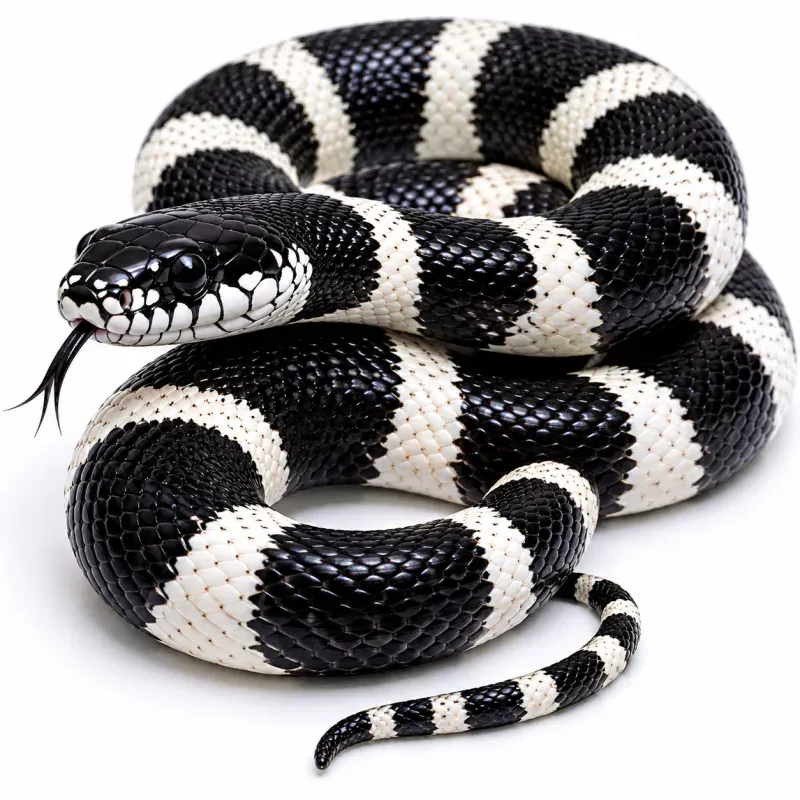
Species Overview
King snakes (Lampropeltis getula complex) are famous for eating other snakes — including venomous rattlesnakes, to which they are immune. In captivity, they're bold, active, and enthusiastic feeders. They rarely refuse meals, making them ideal for keepers frustrated by picky ball pythons.
The Lampropeltis getula complex includes several subspecies and locales, such as the California king snake (L. getula californiae), the desert king snake (L. getula splendida), and the Mexican black king snake (L. getula nigrita). These snakes are native to a wide range of habitats across North America, from deserts to woodlands, which makes them adaptable to captivity. Their name "king" comes from their habit of eating other snakes, including venomous species, thanks to a natural immunity to their venom.
In the wild, king snakes are opportunistic hunters, feeding on rodents, birds, lizards, and other snakes. In captivity, they thrive on a diet of frozen-thawed rodents. Their hardiness, manageable size, and striking patterns make them a top choice for both beginners and experienced keepers.
Enclosure Setup
Minimum: 40-gallon breeder (36"×18") for adults. Substrate: aspen or cypress mulch. At least two hides, climbing branches, fake plants. Escape-proofing is critical — they're strong and curious. Use locking clips.
King snakes are active and curious, so a larger enclosure is always better. A 40-gallon breeder tank is the minimum for an adult, but a 4'×2'×2' enclosure (120 gallons) is ideal, providing ample space for exploration and exercise. For juveniles, a 10-gallon tank is suitable, but they will quickly outgrow it.
Step-by-Step Enclosure Setup
- Choose the enclosure: Start with a 10-gallon for juveniles, upgrade to a 40-gallon breeder or larger for adults. A front-opening enclosure is easier for access and reduces stress.
- Add substrate: Spread 2–3 inches of aspen shavings or cypress mulch. Avoid cedar or pine.
- Install heating: Place an under-tank heater (UTH) on one side, connected to a thermostat. Set the warm side to 82–85°F (28–29°C) and basking spot to 88–90°F (31–32°C).
- Add hides: Place one hide on the warm side and one on the cool side. Ensure they are snug but allow turning around.
- Add décor: Include climbing branches (sturdy, no sharp edges) and fake plants for enrichment.
- Place water dish: A large, shallow dish on the cool side for soaking and drinking. Clean and refill daily.
- Secure the lid: Use locking clips or a secure latch. Test all gaps.
Substrate Options
Choose a substrate that retains humidity but doesn't stay wet, as king snakes can develop scale rot in overly damp conditions. Aspen shavings are excellent for burrowing and are low in humidity. Cypress mulch holds moisture better and is suitable for slightly more humid environments. Avoid cedar or pine shavings, as their oils can cause respiratory issues. For a more naturalistic look, a mix of topsoil and sand can be used, but ensure it's free of fertilizers and pesticides.
Hides and Décor
Provide at least two hides: one on the warm side and one on the cool side. Hides should be snug enough that the snake feels secure but large enough for it to turn around. You can use commercially available reptile caves, half logs, or even DIY options like overturned flower pots with an entrance cut out. Climbing branches (ensure they are sturdy and not sharp) and fake plants add enrichment and help the snake feel secure. A water dish large enough for soaking should be provided, and it should be placed on the cool side to maintain humidity.
Escape-Proofing
King snakes are notorious escape artists. They can push against lids and squeeze through tiny gaps. Always use a locking screen lid or a front-opening enclosure with a secure latch. Check the enclosure regularly for any gaps or wear. A snake that escapes can be injured or lost, so prevention is key.
Heating
| Zone | Temperature |
|---|---|
| Basking | 88–90°F (31–32°C) |
| Warm side | 82–85°F (28–29°C) |
| Cool side | 72–76°F (22–24°C) |
| Night | 68–73°F (20–23°C) |
Maintaining a proper thermal gradient is essential for your king snake's health. Use an under-tank heater (UTH) or a ceramic heat emitter (CHE) connected to a thermostat to regulate temperatures. A basking spot of 88–90°F (31–32°C) should be provided at one end, while the cool side should stay between 72–76°F (22–24°C). At night, temperatures can drop to 68–73°F (20–23°C), which is safe and even beneficial for their circadian rhythm.
Thermostat Setup
Never rely on a heat pad without a thermostat; it can overheat and cause severe burns. Place the thermostat probe directly on the substrate above the heat source and set it to the desired temperature. For a basking spot, use a basking bulb or CHE, but ensure it's guarded to prevent direct contact with the snake. Monitor temperatures with a digital thermometer with probes on both the warm and cool sides.
Lighting
King snakes do not require UVB lighting, but a low-level UVB (2-5%) can be beneficial for vitamin D3 synthesis, especially if you're not supplementing calcium. Provide a consistent day/night cycle of 12-14 hours of light in summer and 10-12 in winter. Avoid leaving bright lights on at night; use a CHE or a night-specific bulb if additional heat is needed.
Seasonal Care
King snakes experience natural seasonal changes in the wild, and replicating some of these cycles can support their health and breeding behavior. While captive snakes don't require full brumation, many keepers choose to simulate a mild winter cooling period to encourage natural rhythms.
Spring and Summer
During the active season, maintain the standard temperature gradient and feed on the regular schedule. Day length should be 12–14 hours of light. This is the time for growth and activity; ensure fresh water is always available and clean.
Autumn
As days shorten, you may gradually reduce daylight to 10–12 hours. Some keepers begin a short cooling period in late autumn, but this is optional for non-breeding pets. If you choose to brumate, reduce temperatures gradually over 2–3 weeks, lowering the warm side to 65–70°F (18–21°C) and the cool side to 55–60°F (13–16°C). Do not feed during brumation, and provide a shallow water dish.
Winter
If brumating, maintain the cool temperatures for 6–10 weeks, then gradually warm back up over 2 weeks. For non-brumating snakes, keep the normal gradient but reduce daylight to 10 hours. Watch for increased hiding and reduced appetite, which is normal.
Post-Brumation
After warming up, offer a small meal within a few days. Monitor for any signs of illness, as brumation can stress the immune system. Always consult a reptile vet before starting a brumation cycle.
Feeding
Frozen-thawed mice: every 7 days for juveniles, every 10–14 days for adults. Critical: Never house king snakes together — they will eat each other. This is not a myth.
King snakes are enthusiastic feeders and will readily accept frozen-thawed prey. This is safer than live prey, which can injure your snake. Always thaw the prey in the refrigerator or in a sealed bag in warm water, never in the microwave, as it can cook the prey and cause internal burns. Use tongs to offer the prey, and wiggle it to simulate live movement.
Prey Size
As a general rule, choose prey that is about the same width as the thickest part of your snake's body. For juveniles, a pinky or fuzzy mouse is appropriate; for adults, a small adult mouse or even a rat (depending on size) is suitable. Overfeeding can lead to obesity, so stick to the schedule.
Feeding Schedule
| Age | Frequency | Prey Size |
|---|---|---|
| Juvenile (under 1 year) | Every 7 days | Pinky to fuzzy mouse |
| Adult (1-3 years) | Every 10-14 days | Adult mouse or small rat |
| Senior (over 5 years) | Every 14-21 days | Adult mouse (smaller if less active) |
After feeding, avoid handling your snake for at least 24-48 hours to prevent regurgitation. If your snake regurgitates, wait 10-14 days before offering food again, and check your temperatures — regurgitation is often a sign of stress or improper heat.
Step-by-Step Feeding Process
- Thaw the prey: Place the frozen rodent in the refrigerator overnight or in a sealed bag in warm water for 20-30 minutes. Never microwave.
- Warm the prey: Just before feeding, warm the prey to about 100°F (38°C) using warm water or a hair dryer. This mimics body heat.
- Offer with tongs: Use long tongs to hold the prey by the tail and wiggle it near the snake's head.
- Wait for the strike: The snake will strike and constrict. Once it has a firm grip, release the prey.
- Leave it: Allow the snake to swallow in peace. Do not handle for 24-48 hours.
Cost Breakdown
Owning a king snake involves several one-time and recurring costs. Here's a typical budget breakdown for a beginner, based on current market averages.
| Item | Estimated Cost (USD) |
|---|---|
| Enclosure (40-gallon breeder) | $100–$200 |
| Under-tank heater (UTH) | $20–$40 |
| Thermostat | $30–$60 |
| Thermometer (digital with probes) | $15–$30 |
| Hides (2) | $10–$30 |
| Water dish | $5–$15 |
| Substrate (per bag) | $10–$20 |
| Climbing branches and décor | $15–$40 |
| Feeding tongs | $5–$15 |
| Initial setup total | $210–$450 |
| Frozen-thawed mice (per month) | $10–$20 |
| Electricity (heat, per month) | $5–$15 |
| Annual vet check (if needed) | $50–$100 |
These are estimates; prices vary by brand and region. Investing in quality equipment upfront, especially a reliable thermostat, can save on vet bills later.
Handling
King snakes can be nippy as juveniles but calm with regular handling. Use a snake hook to signal "not food time." Wash hands after handling other reptiles before touching your king snake (they smell prey).
Regular handling helps your king snake become tame and docile. Start with short sessions (5-10 minutes) a few times a week, gradually increasing as your snake becomes comfortable. Always support the snake's body, allowing it to move freely through your hands. Avoid grabbing or restraining it, as this can cause stress.
Signing with a Hook
Use a snake hook or a gloved hand to gently lift the snake from its enclosure, signaling that it's not feeding time. This helps reduce feeding responses. If the snake is in a "feeding mode" (e.g., if you smell like prey), it may strike. Always wash your hands with soap and water (or use hand sanitizer) before handling, and never handle immediately after feeding.
Handling Frequency
For best results, handle your king snake 2-3 times per week, but not right after a meal or during shedding. Respect its body language: if it's hissing, striking, or trying to escape, give it a break. With patience, most king snakes become very tame.
Popular Morphs
King snakes come in a stunning variety of morphs, thanks to selective breeding. Some popular ones include:
- California King Snake — The classic black and white banded morph, often with a brown or yellow tinge.
- Mexican Black King Snake — A virtually solid black snake with a glossy sheen; highly sought after.
- Albino — Lacking melanin, showing yellow, white, and orange patterns.
- Hypomelanistic — Reduced black pigment, resulting in lighter, more pastel colors.
- Striped — Longitudinal striping instead of bands.
- Banana — A yellow and black morph that resembles a banana.
- Ghost — A combination of hypomelanistic and anerythristic (reduced red), giving a grayish appearance.
Each morph has its own genetic inheritance, and some are more challenging to breed. For beginners, a standard California king snake is recommended due to its hardiness and ease of care. If you're interested in a specific morph, research the breeder and the specific care requirements—some morphs may have subtle health differences.
Morph Comparison Table
| Morph | Appearance | Genetics | Difficulty |
|---|---|---|---|
| California King | Black and white bands | Wild type | Easy |
| Mexican Black | Solid black with gloss | Recessive | Easy |
| Albino | Yellow, white, orange | Recessive (tyrosinase negative) | Moderate |
| Hypomelanistic | Reduced black, pastel | Recessive | Moderate |
| Striped | Longitudinal stripes | Incomplete dominant | Moderate |
| Banana | Yellow and black | Recessive | Moderate |
| Ghost | Grayish, reduced red/black | Combination | Advanced |
Health & Common Issues
King snakes are generally hardy, but they can face a few common health issues. Being aware of these can help you catch problems early.
Respiratory Infections
Symptoms include wheezing, open-mouth breathing, and excess mucus. These are often caused by low temperatures or high humidity. Ensure your gradient is correct, and if you suspect an infection, consult a reptile veterinarian.
Scale Rot
This is a bacterial infection caused by consistently wet substrate. Look for blisters or discolored scales. Remove the snake, clean the enclosure, and switch to a drier substrate. In severe cases, see a vet.
Parasites
Both internal and external parasites can affect king snakes. Signs include weight loss, lethargy, and visible mites. A vet can test for internal parasites and prescribe treatment. Mites can be treated with reptile-safe products and thorough cleaning.
Obesity
Overfeeding is a common issue because king snakes are always eager to eat. Obesity can lead to fatty liver disease and shortened lifespan. Stick to the feeding schedule and monitor body condition — a healthy snake should have a rounded but not overly thick body, with a visible waistline.
Regurgitation
If your snake regurgitates its meal, it's a sign of stress, incorrect temperature, or handling too soon after feeding. Wait 10-14 days before offering food again, and double-check your temperatures.
Troubleshooting Common Problems
Even with the best care, issues can arise. Here are some common problems and solutions.
Refusing Food
While king snakes rarely refuse food, it can happen. If your snake refuses a meal, check the temperature gradient, and make sure the prey is warm enough (but not too hot). Some snakes may go off food before shedding. If the refusal persists, consult a vet.
Nipping
Juveniles may be nippy, but this usually subsides with regular handling. If your snake is nipping, it may be a feeding response. Use a hook to remove it from the enclosure, and wash your hands to remove any prey scent.
Escape
If your snake escapes, remain calm. Search systematically, starting in warm, dark places. Check under appliances, in closets, and near heat sources. To prevent future escapes, secure all openings.
Difficulty Shedding
If your snake has stuck shed, increase humidity by misting the enclosure or providing a humid hide (a hide with damp sphagnum moss). Soaking the snake in shallow lukewarm water can also help. Ensure the water dish is large enough for soaking.
Pitfalls to Avoid
- Co-habitation: King snakes are cannibalistic. One per enclosure. Period.
- Feeding too often: Their "always hungry" behavior leads to overfeeding.
- Handling with prey-scented hands: You smell like food. Wash hands.
- Live prey: Unnecessary for these enthusiastic feeders. Frozen-thawed is safer.
- Improper heating: Without a thermostat, you risk burns or cold stress.
- Using unsafe substrate: Cedar and pine are toxic.
Frequently Asked Questions
Can king snakes live together?
No, king snakes are cannibalistic and will eat each other if housed together. They must be housed separately.
How often should I feed my adult king snake?
Adult king snakes should be fed every 10-14 days, with the prey size being about the same width as the snake's thickest part.
Why is my king snake refusing to eat?
King snakes rarely refuse food, but if they do, check the temperature gradient, prey temperature, and whether the snake is about to shed. If the refusal persists, consult a vet.
What is the best substrate for a king snake?
Aspen shavings or cypress mulch are ideal. Avoid cedar and pine, which contain harmful oils.
Do king snakes need UVB lighting?
No, king snakes do not require UVB lighting, but a low-level UVB (2-5%) can be beneficial for vitamin D3 synthesis, especially if you're not supplementing calcium.
What should I do if my king snake regurgitates its meal?
If your snake regurgitates, wait 10-14 days before offering food again, and check your temperatures — regurgitation is often a sign of stress or improper heat.
How can I tell if my king snake is overweight?
A healthy king snake should have a rounded but not overly thick body, with a visible waistline. Overfeeding is a common issue, so stick to the feeding schedule.
Related Reading
- King Snake Feeding Guide — Diet schedule and prey size chart.
- King Snake Morph Guide — California King to Mexican Black morphs.
- King Snake Temperature Guide — Heat gradient and thermostat setup.
Check optimal temps, calculate feeding, and find your perfect species match.
References
- Rossi, J. (2006). The King Snake Manual. Advanced Vivarium Systems.
- Bartlett, R. D., & Bartlett, P. (2009). King Snakes and Milk Snakes. Barron's Educational Series.
- de Vosjoli, P. (2004). The Herpetoculture of King Snakes. Advanced Vivarium Systems.
🐾 Join the Community
See how other keepers set up their enclosures, ask questions, and share your experience.
🛠️ Apply What You Learned
Check optimal temps, calculate feeding schedules, and get calcium dosage — all personalized for your species.
Comments