Hognose Snake Care: Setup, Feeding & Handling
Introduction
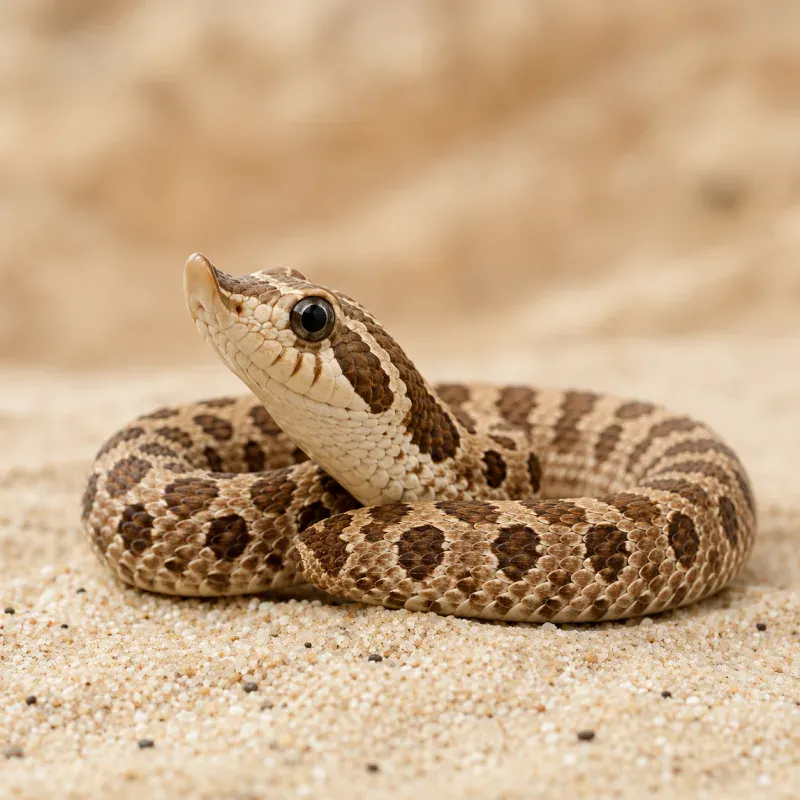
The Western Hognose Snake (Heterodon nasicus) is a small, rear-fanged colubrid native to the Great Plains of North America. Known for their upturned snouts, dramatic defensive displays, and manageable size, hognoses have become a favorite among intermediate reptile keepers. Despite their theatrical bluffing—hissing, spreading a cobra-like hood, and even playing dead—they are generally docile and rarely bite. This guide covers everything you need to know to keep a healthy, thriving hognose snake, from enclosure setup to advanced feeding strategies and health troubleshooting.
Enclosure Setup & Substrate
Minimum Enclosure Size
Hognose snakes are terrestrial burrowers. A 20-gallon long tank (30″ × 12″ × 12″) is sufficient for an adult male; females, which grow larger, may need a 40-gallon breeder (36″ × 18″ × 16″). Juveniles can start in a 10-gallon or similarly sized tub. Front-opening enclosures are preferred for easy access and reduced stress. When choosing an enclosure, consider that hognoses are escape artists—ensure a tight-fitting lid or sliding locks.
For a more naturalistic setup, you can use a bioactive enclosure with a drainage layer, substrate, and clean-up crew (isopods and springtails). However, this requires more maintenance and is generally recommended for experienced keepers.
Substrate Options
Hognoses love to dig. Provide 3–4 inches of substrate that holds burrows well. Top choices include:
- Aspen shavings – excellent for burrowing, low humidity retention, and easy spot cleaning.
- Coconut coir or cypress mulch – better for humidity, but can be dusty when dry; monitor for respiratory irritation.
- Reptile-safe sand/soil mix (up to 40% sand) – mimics natural habitat, but avoid pure sand as it can cause impaction if ingested.
Avoid pine or cedar shavings, as their oils are toxic to reptiles. Also avoid substrates with added dyes or chemicals. For quarantine or simple setups, paper towels or butcher paper are safe and easy to replace, though they don't allow burrowing.
Decor & Hides
Provide at least two hides (warm and cool sides) that are snug and dark. Add cork bark, flat stones, or slate pieces for basking and rubbing against during sheds. Clutter the enclosure with leaf litter or fake plants to make the snake feel secure. You can also add a humid hide (a container with damp sphagnum moss) on the warm side to aid shedding. Ensure all decor is stable and cannot collapse on the snake. For burrowing species, provide deep substrate in a corner where the snake can create tunnels.
Heating & Lighting
Temperature Gradient
| Zone | Temperature (°F) | Temperature (°C) |
|---|---|---|
| Basking surface | 90–95 | 32–35 |
| Warm side ambient | 85–90 | 29–32 |
| Cool side ambient | 70–75 | 21–24 |
| Nighttime drop | 65–70 | 18–21 |
Use a ceramic heat emitter, radiant heat panel, or under-tank heater controlled by a thermostat. Never use heat rocks—they can cause severe burns. Place the heat source on one side to create a gradient. Use a digital thermometer with probes on both ends to monitor temperatures. A thermostat is essential to prevent overheating; set it to the desired basking temperature and check regularly.
Lighting
Hognoses do not require UVB lighting for survival, but low-level UVB (2–5%) can benefit their circadian rhythm and vitamin D synthesis. Provide a 12-hour day/night cycle using a simple timer. If you use UVB, ensure it is a tube or compact fluorescent specifically for reptiles, and replace the bulb every 6–12 months as output diminishes. Avoid strong UVB that could cause eye damage or overexposure.
Humidity & Hydration
Western Hognoses come from semi-arid grasslands. Maintain humidity between 30–50%, with a slight increase (50–60%) during shedding. Use a digital hygrometer to monitor. Provide a water dish large enough for soaking, placed on the cool side. Misting the substrate lightly once a week can help with shedding issues. If the snake has stuck shed, provide a humid hide (a container with damp sphagnum moss).
To raise humidity temporarily, mist the enclosure with a spray bottle (using dechlorinated water) or place a larger water dish. Avoid making the substrate soggy, as this can lead to scale rot. For shedding, you can also gently soak the snake in lukewarm water (80–85°F) for 10–15 minutes, but never leave unsupervised.
Diet & Feeding: Frozen-Thawed Mice
Hognose snakes are toad specialists in the wild, but captive-bred individuals readily accept frozen-thawed mice. Never feed live rodents—they can injure your snake. Offer prey that is about the same width as the snake’s widest body part. For hatchlings, this may be a pinky mouse; for adults, a hopper or adult mouse.
Feeding Schedule
- Hatchlings (under 6 months): Every 5–7 days (pinky mice)
- Juveniles (6–12 months): Every 7–10 days (fuzzy mice)
- Adults (over 1 year): Every 10–14 days (hopper or adult mice)
Thaw frozen mice in warm water (not boiling) and offer with tongs. Ensure the prey is completely thawed and warmed to about 100°F (body temperature) by placing it in a plastic bag in warm water for 20–30 minutes. Some hognoses are picky eaters; scenting a mouse with a toad (using a shed or commercially available scent) may help. If your snake refuses food for more than 2–3 weeks, check temperatures and reduce handling. Also, try feeding at dusk or in a separate container to reduce stress.
Troubleshooting Picky Eaters
If your hognose refuses food, consider the following:
- Temperature too low: Ensure basking spot is 90–95°F; low temps can suppress appetite.
- Stress: Too much handling or a busy environment can cause refusal. Give them a week without handling.
- Scenting: Rub the mouse against a toad (if available) or use a commercial scenting product (e.g., 'Toad Scent' by Reptilinks).
- Prey size: Offer a smaller prey item than usual; some hognoses prefer smaller meals.
- Feeding method: Try leaving the mouse in the enclosure overnight, or wiggle it with tongs more actively.
If your snake hasn't eaten for over a month, consult a reptile veterinarian to rule out underlying health issues.
Handling & Temperament
Hognoses are generally gentle but known for their defensive displays. When threatened, they may:
- Hiss loudly and flatten their neck (cobra-like hood)
- False strike (head-butt with mouth closed)
- Play dead (roll onto back, mouth open, tongue hanging out)
These behaviors are bluffing—they rarely bite, and bites are usually from feeding confusion. To handle safely:
- Approach from the side, not above (predator mimicry)
- Support the body fully; never grab the head
- Start with short, 5-minute sessions, gradually increasing to 10–15 minutes as the snake becomes comfortable
- Wash hands before handling to remove food scents
- Avoid handling 48 hours after feeding to prevent regurgitation
Hognoses are rear-fanged and produce a mild venom that can cause localized swelling in humans (rarely serious). Bites should be cleaned and monitored. If you experience severe symptoms (e.g., difficulty breathing, significant swelling), seek medical attention immediately, though this is extremely rare.
Morph Varieties
Western Hognose morphs are bred for color and pattern. Popular morphs include:
| Morph | Description | Price Range |
|---|---|---|
| Normal/Wild-type | Brown/tan with dark blotches | $50–$100 |
| Albino | Yellow/orange with red eyes | $200–$400 |
| Axanthic | Grayscale, lacks yellow pigment | $300–$600 |
| Snow (Albino + Axanthic) | White/cream with faint pattern | $400–$800 |
| Superconda | Reduced pattern, dark background | $600–$1,200 |
| Lavender | Pastel purple tones | $500–$1,000 |
Morphs do not affect care requirements, but some lines may have genetic health issues (e.g., bug-eyed or kinked spines) due to poor breeding. Always buy from a reputable breeder who can provide lineage details. When purchasing a morph, ask about the parent's health and any known genetic issues. Avoid extremely inbred lines, as they may have lower immune systems.
Common Health Issues
- Respiratory infections: Caused by low temperatures or high humidity. Symptoms: wheezing, bubbles at mouth, open-mouth breathing. Treat by correcting temps and consulting a vet.
- Stuck shed: Usually due to low humidity. Provide a humid hide and gentle soaking. Check for retained eye caps, which can cause eye infections if left.
- Mites: Tiny black or red dots on the snake or in water dish. Use reptile-safe mite treatment and deep-clean enclosure. Quarantine new snakes for at least 30 days to prevent mites.
- Obesity: Overfeeding or lack of exercise. Feed appropriate-sized prey on schedule. An obese hognose will have a rounded body and a visible fat pad near the tail. Reduce feeding frequency and increase handling for exercise (but not after meals).
- Picky eating: Common in hognoses. Try scenting with toad, offering at dusk, or reducing handling.
- Regurgitation: Can occur from handling too soon after feeding, incorrect temperatures, or prey too large. If regurgitation occurs, wait 2 weeks before feeding again, and ensure temperatures are correct.
- Scale rot: Caused by prolonged wet substrate. Symptoms: discolored, raised scales. Dry out the enclosure and consult a vet if severe.
Common Mistakes to Avoid
- Overhandling: Causes stress and feeding strikes. Wait 48 hours after feeding before handling.
- Incorrect temps: Too cold → regurge or RI; too hot → burns. Always use a thermostat.
- Live prey: Rodents can bite and injure your snake. Always use frozen-thawed.
- Poor substrate: Sand alone can cause impaction. Use a mix or aspen.
- Ignoring shedding: Check for retained eye caps or toe sheds.
- Not using a thermostat: This is the #1 cause of temperature-related deaths. A thermostat regulates the heat source to prevent overheating.
- Feeding too frequently: Can lead to obesity and shorten lifespan. Stick to the schedule.
- Using a heat rock: These are extremely dangerous and can cause fatal burns. Always use a thermostat-controlled heat source.
Advanced Care & Enrichment
For keepers looking to provide even better care, consider these advanced tips:
- Bioactive setup: A bioactive enclosure with live plants, isopods, and springtails can provide naturalistic enrichment and reduce cleaning. Ensure the substrate mix is well-draining and use leaf litter for hiding spots.
- Climbing opportunities: Although terrestrial, hognoses will occasionally climb. Provide sturdy branches or cork bark for enrichment.
- Feeding variety: Some keepers offer quail eggs or scenting with frog/toad scents to mimic natural diet. Always ensure prey is appropriately sized.
- Environmental enrichment: Rotate decor, add new scents (safe, non-toxic), or provide a shallow dig box with different substrate textures.
Breeding Notes
Breeding hognoses requires a brumation period (a cooling period of 8–10 weeks at 55–60°F) to stimulate reproduction. Only attempt breeding if you have healthy adults and a plan for the offspring. Females may lay 4–23 eggs in a clutch, which need to be incubated at 84–86°F for about 60 days. Hatchlings should be housed separately to avoid stress and aggression.
If you're not breeding, avoid brumation as it can be stressful for non-breeding snakes.
Conclusion
Western Hognose Snakes are rewarding pets with unique personalities and manageable care needs. By providing a proper enclosure, correct heating, a diet of frozen-thawed mice, and respecting their bluffing nature, you’ll enjoy years of fascination with these charming serpents. Always purchase from ethical breeders and consult a reptile veterinarian for any health concerns. With their quirky antics and docile temperament, hognoses make excellent companions for dedicated keepers.
Frequently Asked Questions
Are hognose snakes venomous?
Hognose snakes are rear-fanged and produce a mild venom that can cause localized swelling in humans (rarely serious). Bites should be cleaned and monitored, but severe reactions are extremely rare.
What is the ideal enclosure size for a hognose snake?
A 20-gallon long tank (30″ × 12″ × 12″) is sufficient for an adult male; females, which grow larger, may need a 40-gallon breeder (36″ × 18″ × 16″). Juveniles can start in a 10-gallon or similarly sized tub.
Why is my hognose snake refusing to eat?
Picky eating is common in hognoses. Try scenting a mouse with a toad (using a shed or commercially available scent), offering at dusk, reducing handling, or checking that temperatures are correct. If refusal lasts more than 2–3 weeks, consult a vet.
Can I feed my hognose snake live mice?
Never feed live rodents—they can bite and injure your snake. Always use frozen-thawed mice, thawed in warm water and offered with tongs.
Related Reading
- Hognose Snake Feeding: Solutions for Fussy Eaters — Learn how to deal with picky hognose eaters, offering proven tricks and alternative food options.
- Hognose Snake Morphs: Albino, Anaconda & More — Discover popular hognose morphs like albino and anaconda, plus their genetics and price ranges.
- Reptile UVB Lighting Guide: Ferguson Zones & Bulb Selection — Understand UVB requirements for reptiles, including Ferguson zones and how to pick the right bulb.
- Reptile Vitamins & Supplements: Calcium With or Without D3 — Find out when to use calcium with D3 versus without, and how to supplement your reptile properly.
- Ball Python Temperature Guide: Heat Gradient & Thermostat — Learn how to set up a proper temperature gradient and why a thermostat is essential for reptile tanks.
Check optimal temps, calculate feeding, and find your perfect species match.
References
- Rossi, J. (2015). The Hognose Snake: A Complete Guide. Reptile Publications.
- De Vosjoli, P. (2007). Hognose Snakes: A Guide to Care and Breeding. Advanced Vivarium Systems.
- Barten, S. (2019). Reptile Medicine and Surgery. Elsevier.
🐾 Join the Community
See how other keepers set up their enclosures, ask questions, and share your experience.
🛠️ Apply What You Learned
Check optimal temps, calculate feeding schedules, and get calcium dosage — all personalized for your species.
Comments