Gargoyle Gecko Care: Complete Beginner's Guide
Species Overview
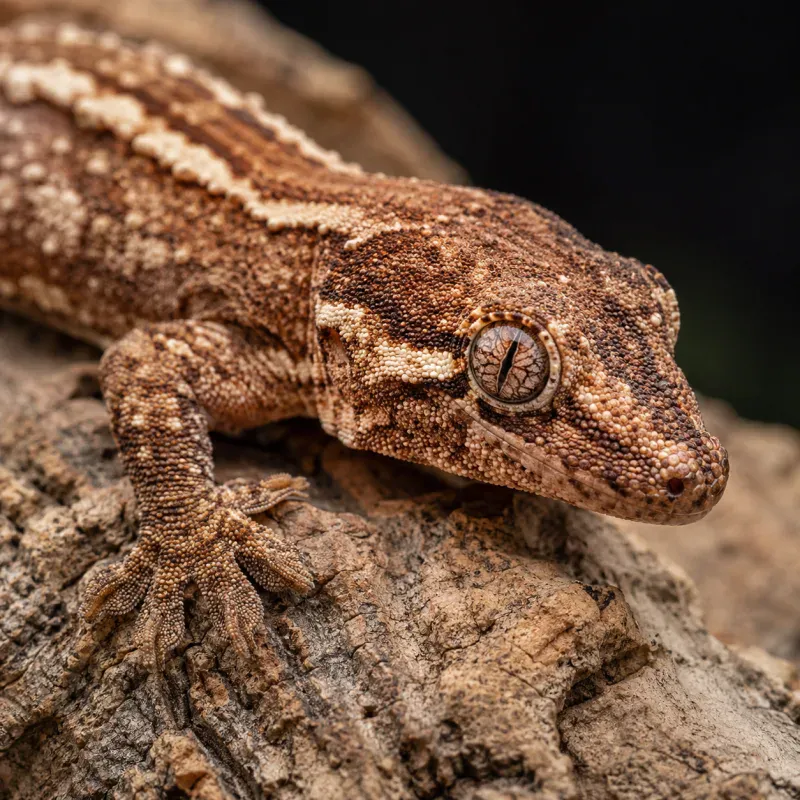
The gargoyle gecko (Rhacodactylus auriculatus) is the crested gecko's heavier, bumpier cousin from New Caledonia. Same easy care: they thrive on powdered complete diet, no live insects required. Tend to be slightly more robust and less jumpy than cresteds. They are named for the bony bumps on their heads, which resemble gargoyles. These geckos are nocturnal, arboreal, and native to the southern end of New Caledonia's main island, Grande Terre.
Gargoyle geckos are an excellent choice for beginners and experienced keepers alike. Their care is forgiving, they don't need live insects, and they are generally docile. They come in a variety of colors and patterns, making them a visually appealing pet. With proper care, they can live 15–20 years in captivity.
Enclosure Setup
Minimum: 18"×18"×24" (arboreal) for a single adult. This size provides adequate vertical space for climbing. For a juvenile, a smaller enclosure like a 12"×12"×18" can be used initially, but be prepared to upgrade as they grow. A larger enclosure is always better; consider a 24"×18"×36" for a breeding pair or if you want a more naturalistic setup.
Substrate: ABG mix for bioactive, paper towels for monitoring. ABG mix (a blend of peat moss, coconut fiber, charcoal, and orchid bark) supports live plants and beneficial microfauna in a bioactive setup. Paper towels are ideal for quarantine or when monitoring health, as they are easy to clean and allow you to spot feces or regurgitation. Avoid loose substrates like sand or wood shavings, which can cause impaction if ingested.
Furniture and Decor: Cork bark tubes, bamboo ledges, live plants (pothos, snake plants), feeding ledge. These provide climbing opportunities, hiding spots, and a sense of security. Cork bark tubes are excellent for hiding and climbing. Bamboo ledges offer horizontal resting spots. Live plants not only look great but also help maintain humidity and provide cover. Pothos and snake plants are hardy and thrive in tropical conditions. A feeding ledge is essential to place the food dish at a height the gecko will find, mimicking their natural feeding behavior.
Foliage Cover: 70–80% foliage cover needed to feel secure. Gargoyle geckos are arboreal and shy; they need dense foliage to hide in during the day. Without adequate cover, they become stressed, which can lead to health issues. Use artificial plants, live plants, or a combination to achieve the recommended coverage. Place plants strategically to create a canopy and hiding spots near the top and middle of the enclosure.
Step-by-Step Enclosure Setup
- Choose a glass terrarium with front-opening doors or a top screen. Ensure it is at least 18"×18"×24" for an adult.
- Clean the enclosure with a reptile-safe disinfectant and rinse thoroughly.
- Add a drainage layer (e.g., hydroballs) 1–2 inches deep if using a bioactive setup. This prevents waterlogging.
- Lay down substrate (ABG mix or paper towels) to a depth of 2–3 inches for bioactive, or a single layer for paper towels.
- Install climbing structures: cork bark tubes, bamboo poles, and branches. Secure them firmly so they don't fall.
- Add live plants: pothos, snake plants, bromeliads, or ferns. Plant them in the substrate or in pots buried in the substrate.
- Place a feeding ledge at a height where the gecko can easily access it. Attach it to the glass with suction cups or a magnetic mount.
- Add a water dish (optional) at the bottom, but misting is the primary water source.
- Install a hygrometer and thermometer at the mid-level of the enclosure to monitor conditions.
- Mist the enclosure to establish humidity, then let it dry out slightly before adding the gecko.
Common Mistakes in Enclosure Setup
- Too small enclosure: A 10-gallon tank is not sufficient for an adult gargoyle gecko. They need vertical space to climb.
- No drainage layer in bioactive: Without it, substrate becomes waterlogged, leading to mold and bacterial growth.
- Insufficient foliage: An open enclosure stresses the gecko. Always aim for 70–80% cover.
- Using a heat lamp: Heat lamps can dry out the enclosure and cause overheating. Use a low-wattage ceramic heat emitter or a heat mat on a thermostat if supplemental heat is needed.
Temperature & Humidity
| Period | Temperature |
|---|---|
| Day | 72–78°F (22–26°C) |
| Night | 65–72°F (18–22°C) |
Like cresteds, >80°F is dangerous. Gargoyle geckos are sensitive to high temperatures; sustained heat above 80°F can be lethal. In warm climates, air conditioning is essential to keep the enclosure within safe limits. Avoid placing the enclosure near windows, heat vents, or direct sunlight.
Humidity: Spike to 80% at night, let dry to 50–60% during day. This mimics their natural tropical habitat. To achieve this, mist the enclosure heavily in the evening, and allow it to dry out during the day. Use a hygrometer to monitor humidity levels. In particularly dry environments, you may need to mist twice a day, but always allow a drying period to prevent fungal growth.
Heating Options
- Ceramic heat emitter (CHE): Low wattage (e.g., 25–50W) on a thermostat to provide gentle heat without light. Place it on one side of the enclosure to create a gradient.
- Heat mat: Attach to the side of the enclosure (not the bottom) and use a thermostat. Heat mats are less effective for arboreal geckos but can help raise ambient temperature.
- Room heating: In most homes, room temperature is sufficient. Only use supplemental heat if the room drops below 65°F at night.
Monitoring and Troubleshooting
- Use a digital thermometer with a probe placed at the upper and lower levels of the enclosure to check for gradients.
- If the enclosure is too hot: Move it to a cooler room, reduce heating, and increase ventilation.
- If humidity is too low: Mist more frequently, add a larger water dish, or use a fogger. Ensure the substrate is not bone dry.
- If humidity is too high: Increase ventilation by opening vents or using a mesh top. Reduce misting frequency.
Diet (CGD)
Same Pangea or Repashy CGD as crested geckos: 1 part powder to 2 parts water, replaced every 24–48 hours. This complete diet provides all necessary nutrients, vitamins, and minerals. No live insects are required, though they can be offered as an occasional treat. Optional insects (dusted crickets/dubia) 1–2×/week for adult geckos; juveniles may be offered insects more frequently, but the CGD should remain the staple.
Feeding Schedule
- Juveniles (under 1 year): Offer fresh CGD daily. Remove uneaten food after 24 hours.
- Adults: Offer CGD every other day or 3–4 times per week. Remove after 24–48 hours.
- Insects: Once or twice a week, dust with calcium and vitamin D3 supplement. Offer only appropriately sized insects (no larger than the space between the gecko's eyes).
Preparing CGD
- Mix 1 part CGD powder with 2 parts water in a small dish.
- Stir until smooth, with a consistency like a thick milkshake.
- Place the dish on the feeding ledge.
- Remove uneaten CGD after 24–48 hours to prevent spoilage.
Common Diet Mistakes
- Overfeeding insects: Too many insects can lead to obesity and nutritional imbalance. Stick to 1–2 times per week.
- Not dusting insects: Crickets and dubia roaches need to be dusted with calcium and vitamin D3 to prevent metabolic bone disease.
- Leaving CGD out too long: Bacteria can grow, causing digestive issues. Replace every 24–48 hours.
- Feeding only fruit: Gargoyle geckos need the complete nutrition of CGD, not just fruit puree.
Handling
Generally calmer than cresteds but can be territorial. Let them walk onto your hand. They can regenerate lost tails (unlike cresteds). This is a unique feature; if a gargoyle gecko drops its tail, it will regrow over time, though the new tail may look different.
How to Handle Safely
- Wait 2–3 weeks after bringing your gecko home before handling to allow it to acclimate.
- Wash your hands and ensure they are free of lotions or residues.
- Approach slowly from the side, not from above (which mimics a predator).
- Gently coax the gecko onto your hand by placing your hand flat in front of it. Let it walk onto you; never grab or squeeze.
- Support the body with your other hand if needed.
- Keep handling sessions short (5–10 minutes) initially, gradually increasing as the gecko becomes comfortable.
- Never grab the tail — it may drop as a defense mechanism. If it drops, keep the enclosure clean to prevent infection, and the tail will regenerate.
Signs of Stress
- Tail dropping is a clear sign of extreme stress.
- Excessive hiding or refusing food.
- Defensive posturing (open mouth, hissing).
- Darkened coloration can indicate stress or illness.
Handling Mistakes
- Handling too soon: New geckos need time to settle; handling too early can cause stress and illness.
- Grabbing from above: This triggers a predator response.
- Handling during the day: They are nocturnal; handling during the day interrupts their sleep cycle.
- Forcing handling: If the gecko runs away, don't chase it. Let it come to you.
Avoid These Errors
- Overheating: Sustained >80°F is lethal. Air conditioning essential in warm climates.
- No misting routine: Without nightly humidity spikes, they dehydrate.
- Inadequate foliage: Open enclosures stress them. 70%+ plant cover needed.
- Handling too soon: Wait 2–3 weeks before handling new arrivals.
Additional Common Mistakes
- Using a heat lamp: Can cause overheating and dehydration. Use a thermostat-controlled CHE or heat mat instead.
- Providing a water bowl as the only water source: They prefer to drink droplets from misting. Always mist and provide a bowl as backup.
- Not providing a temperature gradient: The enclosure should have a warm side and a cooler side so the gecko can regulate its body temperature.
- Ignoring signs of illness: Lethargy, weight loss, or abnormal feces require immediate veterinary attention.
Frequently Asked Questions
Do gargoyle geckos need live insects?
No, live insects are not required. They thrive on a complete powdered diet (CGD) like Pangea or Repashy, which provides all necessary nutrients. Insects can be offered as an occasional treat 1–2 times per week, but they are not essential.
Can gargoyle geckos drop their tails and regrow them?
Yes, unlike crested geckos, gargoyle geckos can drop their tails as a defense mechanism and will regenerate them over time. The new tail may look different, but it is functional. Avoid grabbing the tail to prevent this stress response.
What is the ideal temperature for a gargoyle gecko?
Daytime temperatures should be 72–78°F (22–26°C), and nighttime temperatures should drop to 65–72°F (18–22°C). Temperatures above 80°F are dangerous and can be lethal. Use a thermostat to regulate any supplemental heating.
How long should I wait before handling a new gargoyle gecko?
Wait 2–3 weeks after bringing your gecko home before handling. This allows it to acclimate to its new environment and reduces stress. Start with short handling sessions and gradually increase as the gecko becomes comfortable.
Related Reading
- Gargoyle Gecko Morph Guide — Striped, blotched, reticulated morphs.
- Crested Gecko Care Guide — Similar New Caledonian gecko comparison.
- Bioactive Enclosure Guide — Step-by-step planted vivarium.
Check optimal temps, calculate feeding, and find your perfect species match.
References
- de Vosjoli, P. (2005). The Gargoyle Gecko: Rhacodactylus auriculatus. Advanced Vivarium Systems.
- Repashy, A. (2010). Crested Gecko and Rhacodactylus Care. Repashy Ventures.
🐾 Join the Community
See how other keepers set up their enclosures, ask questions, and share your experience.
🛠️ Apply What You Learned
Check optimal temps, calculate feeding schedules, and get calcium dosage — all personalized for your species.
Comments