Gargoyle Gecko Care: Complete Species Guide
Introduction
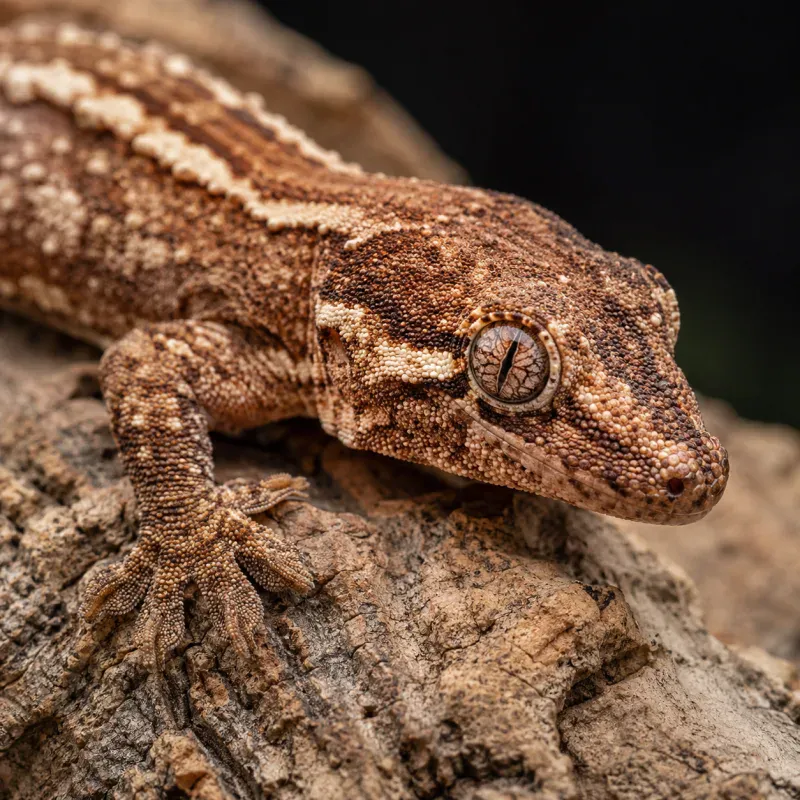
Gargoyle geckos (Rhacodactylus auriculatus) are one of the most rewarding pet reptiles for both beginners and experienced keepers. Native to the southern portion of New Caledonia, these arboreal lizards are named for the bony, horn-like bumps on their heads that resemble gargoyle statues. They are closely related to crested geckos but have distinct care requirements and temperaments. This comprehensive guide covers everything you need to know to provide a thriving environment for your gargoyle gecko.
Enclosure Setup
A single adult gargoyle gecko requires a minimum 18x18x24-inch (45x45x60 cm) enclosure. Larger is always better, as these geckos are active climbers. A 24x18x36-inch (60x45x90 cm) tank is ideal for a pair or trio. Use a front-opening terrarium for easy access and to minimize stress.
Step-by-Step Enclosure Assembly
- Choose the enclosure: Select a front-opening terrarium of appropriate size. Ensure it has a ventilated lid for airflow.
- Add substrate: Spread 2–3 inches of moisture-retentive substrate (e.g., Eco Earth) on the bottom. For juveniles, use paper towels or reptile carpet to prevent impaction.
- Install climbing structures: Place cork bark tubes and flats vertically and horizontally. Secure branches (driftwood or grapevine) so they are stable and can support the gecko's weight.
- Add plants: Use live or artificial plants like pothos, bromeliads, or ficus. They provide cover and climbing opportunities. Ensure they are non-toxic.
- Provide hiding spots: Add coconut huts or cork rounds at different heights. Gargoyle geckos feel secure when they have multiple hide options.
- Set up a humid hide: Place a small plastic container with damp sphagnum moss on the warm side. This aids shedding.
- Add a water dish: Use a shallow dish with dechlorinated water. Clean and refill daily.
- Install thermometers and hygrometer: Place them at both warm and cool ends to monitor conditions.
Substrate
Choose a moisture-retentive substrate to maintain humidity. Options include:
- Eco Earth (coconut fiber)
- Organic topsoil mixed with sphagnum moss
- Reptile bark (orchid bark)
- Bioactive setups with leaf litter and clean-up crews (isopods, springtails)
Avoid pine or cedar shavings, which are toxic. Spot-clean daily and replace substrate every 2–3 months. For bioactive setups, you may only need to replace substrate annually if the clean-up crew is thriving.
Furniture & Décor
Gargoyle geckos need vertical climbing space. Provide:
- Cork bark tubes and flats for hiding and climbing
- Branches (sterilized driftwood or grapevine)
- Live or artificial plants (pothos, bromeliads, ficus)
- Hiding spots (coconut huts, cork rounds)
- Ventilated lid for airflow
Ensure all items are securely placed to prevent falls. Avoid sharp edges that could injure your gecko. When using live plants, ensure they are reptile-safe and free of pesticides.
Heating & Lighting
Gargoyle geckos are nocturnal and do not require intense UVB lighting, but low-level UVB (2–5%) can benefit their overall health and calcium metabolism. Provide a photoperiod of 12 hours of light and 12 hours of darkness.
Temperature
Maintain a temperature gradient:
- Basking spot: 78–82°F (25–28°C)
- Cool side: 70–75°F (21–24°C)
- Nighttime drop: 65–70°F (18–21°C)
Use a ceramic heat emitter or low-wattage heat mat on a thermostat. Avoid heat lamps that produce bright light at night. Never exceed 85°F (29°C), as this can be fatal. Always use a thermostat to prevent overheating.
Lighting Options
| Lighting Type | Purpose | Recommended Wattage |
|---|---|---|
| UVB (2–5%) | Calcium metabolism | 5–10W |
| LED grow light | Plant growth (if live plants) | 10–20W |
| Ceramic heat emitter | Nighttime heat | 40–60W |
Use a timer to maintain a consistent photoperiod. Avoid leaving lights on 24/7, as this disrupts the gecko's circadian rhythm.
Humidity & Misting
Gargoyle geckos require moderate to high humidity (60–80%). Mist the enclosure twice daily with dechlorinated water to maintain moisture. Use a hygrometer to monitor levels. A humid hide (plastic container with damp sphagnum moss) can help during shedding.
Allow the enclosure to dry out slightly between mistings to prevent mold and respiratory infections. In arid climates, a cool-mist humidifier on a timer can help.
Misting Schedule
- Morning: Mist thoroughly to achieve 80% humidity. This mimics morning dew.
- Evening: Mist lightly to maintain 60–70% humidity overnight.
If you notice stuck shed, increase misting frequency or provide a humid hide. Always use dechlorinated water to avoid chlorine exposure.
Diet & Feeding
Gargoyle geckos are omnivorous. Their diet should consist of:
- Commercial powdered diet (e.g., Repashy Crested Gecko Diet, Pangea Fruit Mix) – 80% of diet
- Live insects (crickets, dubia roaches, black soldier fly larvae) – 20% of diet
- Occasional fruit treats (mashed banana, papaya, mango) – no citrus
Feed powdered diet 3–4 times per week for adults, daily for juveniles. Gut-load insects with calcium-rich food and dust with calcium powder (without D3) every other feeding. Provide a shallow water dish for drinking and soaking.
Adults eat 4–6 insects once or twice per week. Juveniles need smaller insects (1/4-inch) daily.
Feeding Schedule by Age
| Age | Powdered Diet | Insects | Frequency |
|---|---|---|---|
| Juvenile (0–6 months) | Daily | 1/4-inch insects, 3–4 per day | Insects daily |
| Subadult (6–12 months) | 4 times/week | Small crickets, 4–6 per feeding | Insects 2–3 times/week |
| Adult (12+ months) | 3–4 times/week | Adult crickets, 4–6 per feeding | Insects 1–2 times/week |
Always dust insects with calcium powder (without D3) every other feeding. If you provide UVB lighting, you can use calcium with D3 occasionally, but avoid over-supplementation.
Fruit Treats
Offer mashed banana, papaya, or mango once a week as a treat. Avoid citrus fruits, which can cause digestive issues. Remove uneaten fruit within 24 hours to prevent mold.
Handling & Temperament
Gargoyle geckos are generally docile but can be skittish. They are not as handleable as crested geckos and may tail-drop when stressed. Handle gently and infrequently, especially during the first few weeks of ownership. Let the gecko walk onto your hand; never grab or restrain. Support the body fully. Handling sessions should be short (5–10 minutes) and in a quiet, warm room.
Signs of stress include tail wagging, hissing, and jumping. If your gecko shows these, return it to its enclosure and try again later. Never handle during shedding or after feeding.
Building Trust
- Start slow: Begin by placing your hand in the enclosure for a few minutes daily, allowing the gecko to get used to your scent.
- Offer treats: Feed a small insect or fruit treat from your hand to create positive associations.
- Short sessions: Once the gecko is comfortable, start with 5-minute handling sessions, gradually increasing to 10 minutes.
- Be consistent: Handle once or twice a week at most to avoid stress.
Common Health Issues
- Metabolic Bone Disease (MBD): Caused by calcium deficiency. Symptoms include lethargy, tremors, and soft jaw. Prevent with calcium supplementation and UVB.
- Respiratory Infections: Signs include wheezing, open-mouth breathing, and nasal discharge. Usually due to low humidity or dirty substrate. Increase ventilation and humidity; see a vet.
- Tail Loss: Gargoyle geckos can drop their tails as a defense. The tail will not regenerate. Keep the enclosure clean to prevent infection. Avoid handling the tail.
- Parasites: Mites and internal worms. Quarantine new geckos and have a fecal exam done by a reptile vet.
- Shedding Issues: Stuck shed on toes or eyes. Increase humidity and provide a humid hide. Soak the gecko in shallow lukewarm water if needed.
Detailed Health Care
MBD Prevention: Dust insects with calcium powder (without D3) every other feeding. Provide UVB lighting (2–5%) for 12 hours a day. If you notice symptoms, consult a reptile vet immediately.
Respiratory Infection Treatment: Increase humidity to 70–80% and ensure proper ventilation. Clean the enclosure thoroughly. A vet may prescribe antibiotics.
Tail Loss Care: Keep the stump clean and dry. Use paper towels as substrate until healed. Monitor for signs of infection (redness, swelling).
Parasite Control: Quarantine new geckos for 30 days. Have a fecal exam done annually. Treat with vet-prescribed antiparasitics if needed.
Shedding Assistance: Provide a humid hide with damp sphagnum moss. If stuck shed persists, soak the gecko in shallow lukewarm water (80°F) for 10 minutes, then gently remove shed with a cotton swab.
Gargoyle Gecko vs. Crested Gecko: Key Differences
| Feature | Gargoyle Gecko | Crested Gecko |
|---|---|---|
| Size | 7–9 inches (18–23 cm) | 8–10 inches (20–25 cm) |
| Lifespan | 15–20 years | 15–20 years |
| Temperament | More skittish; less handleable | More docile; easier to handle |
| Tail | Prehensile; rarely drops | Prehensile; commonly drops |
| Diet | More insect-dependent | More fruit-dependent |
| Humidity | 60–80% | 50–70% |
| Activity | Nocturnal; less active during day | Nocturnal; more active at night |
| Price | $100–300 | $50–200 |
While both species are from New Caledonia and share similar care, gargoyle geckos are slightly more challenging due to their higher humidity needs and less forgiving temperament. They are ideal for intermediate keepers who want a unique, long-lived pet.
Pitfalls to Watch For
- Overhandling: Stresses the gecko and can lead to tail loss. Limit handling to once or twice per week.
- Incorrect Humidity: Too dry causes shedding issues; too wet leads to respiratory infections. Use a hygrometer and mist accordingly.
- Poor Diet: Feeding only fruit or only insects. Provide a balanced diet with commercial powder and live prey.
- Improper Heating: Overheating is deadly. Always use a thermostat and monitor temperatures.
- Using Loose Substrate for Juveniles: Can cause impaction if ingested. Use paper towels or reptile carpet for babies.
- Skipping Vet Visits: Annual check-ups and fecal exams help catch health issues early.
Troubleshooting Common Issues
| Problem | Cause | Solution |
|---|---|---|
| Stuck shed | Low humidity | Increase misting; provide humid hide |
| Lethargy | Overheating or MBD | Check temps; consult vet |
| Wheezing | Respiratory infection | Increase humidity; see vet |
| Tail drop | Stress | Reduce handling; keep clean |
| Refusing food | Stress or illness | Check husbandry; vet if persistent |
By following this guide, you’ll provide a safe, enriching home for your gargoyle gecko. With proper care, these fascinating lizards can be a beloved part of your family for decades.
Frequently Asked Questions
What is the ideal enclosure size for a single adult gargoyle gecko?
An 18x18x24-inch (45x45x60 cm) enclosure is the minimum for one adult. Larger is better, and a 24x18x36-inch (60x45x90 cm) tank is recommended for a pair or trio.
How often should I feed my adult gargoyle gecko insects?
Adults should be fed 4–6 insects once or twice per week, in addition to a powdered diet 3–4 times per week. Juveniles need smaller insects daily.
What temperature should I maintain in the enclosure?
Keep a basking spot of 78–82°F (25–28°C), a cool side of 70–75°F (21–24°C), and a nighttime drop to 65–70°F (18–21°C). Never exceed 85°F (29°C).
Can gargoyle geckos drop their tails and regenerate them?
Yes, they can drop their tails as a defense mechanism, but unlike some geckos, the tail will not regenerate. Keep the enclosure clean to prevent infection and avoid handling the tail.
Related Reading
- Gargoyle Gecko Care: Complete Beginner's Guide — A practical beginner's overview covering housing, feeding, and daily care essentials.
- Gargoyle Gecko Morphs: Striped, Blotched & Reticulated — Explore the fascinating color and pattern variations found in gargoyle geckos.
- Crested Gecko Diet Guide: CGD Rotation & Insects — Learn about crested gecko diets, including CGD rotation and insect supplementation.
- Crested Gecko Temperature & Lighting Guide — Discover optimal temperature ranges and lighting needs for crested geckos.
- Reptile Vitamins & Supplements: Calcium With or Without D3 — Understand calcium and vitamin D3 supplementation to keep your gecko healthy.
Check optimal temps, calculate feeding, and find your perfect species match.
References
- de Vosjoli, P. (2015). Rhacodactylus: The Complete Guide to their Selection and Care. Advanced Vivarium Systems.
- Repashy, A. (2018). Crested Gecko and Gargoyle Gecko Care. Repashy Ventures.
- Pangea Reptile. (2020). Gargoyle Gecko Care Sheet. Pangea Reptile LLC.
🐾 Join the Community
See how other keepers set up their enclosures, ask questions, and share your experience.
🛠️ Apply What You Learned
Check optimal temps, calculate feeding schedules, and get calcium dosage — all personalized for your species.
Comments