Blue-Tongue Skink Care: Setup, Diet & Handling
Species Overview
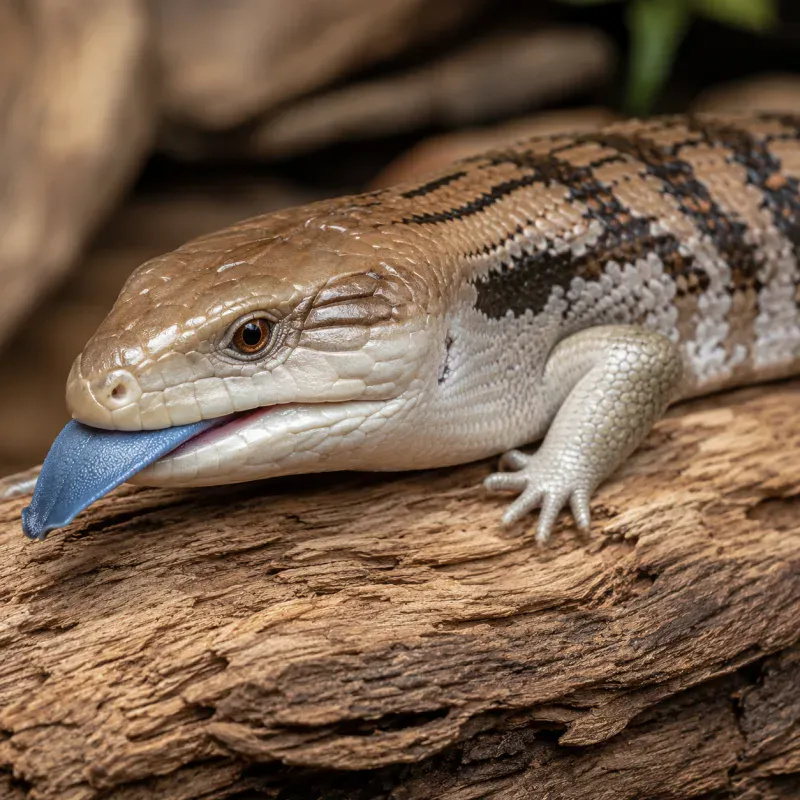
The blue-tongue skink (Tiliqua scincoides) is regularly described as the most intelligent pet lizard. They recognize their keepers, beg for food, and are calm and tolerant. Native to Australia, they are diurnal, terrestrial omnivores with strikingly blue tongues used to startle predators.
These skinks are part of the genus Tiliqua, which includes several subspecies and related species from Australia, Indonesia, and New Guinea. The most common in the pet trade are the Eastern blue-tongue (Tiliqua scincoides scincoides) and the Northern blue-tongue (Tiliqua scincoides intermedia), both from Australia, as well as the Indonesian blue-tongue (Tiliqua gigas). Each has slightly different humidity and temperature needs, so it's important to know exactly which species you have.
Blue-tongues are known for their distinctive blue tongue, which they flash when threatened to startle predators. This behavior is accompanied by a hiss and an open-mouth display. Despite this defensive mechanism, they are generally docile and rarely bite if handled correctly.
Enclosure Setup
Minimum: 4'×2'×2' (120 gallon) PVC or wood enclosure. Glass tanks don't hold heat well. Substrate: 4+ inches of cypress mulch or coco coir — they love to burrow. Provide multiple hides, a large water bowl, and a flat basking rock.
Choosing the Right Enclosure
Blue-tongue skinks are terrestrial and need floor space more than height. A 4'×2'×2' enclosure is the absolute minimum for an adult, but bigger is always better. A 6'×2'×2' or larger will be appreciated by these active foragers. PVC and wood enclosures are recommended because they insulate well and hold heat and humidity better than glass aquariums. Glass tanks lose heat quickly and can make it difficult to maintain the warm temperatures blue-tongues need.
Furniture and Decor
- Hides: Provide at least two hides — one on the warm side and one on the cool side. Hides should be snug and dark to make the skink feel secure.
- Water bowl: A large, heavy water bowl that won't tip over. Clean and refill daily.
- Basking rock: A flat rock, like slate or flagstone, placed directly under the basking light. This absorbs heat and provides a natural basking surface.
- Climbing opportunities: Although terrestrial, blue-tongues may enjoy low branches or logs to climb over. Ensure they are stable and not too high to prevent falls.
- Plants: Live or artificial plants add cover and humidity. Safe live plants include pothos, spider plant, and snake plant.
Step-by-Step Enclosure Setup Guide
Setting up a new enclosure properly from day one prevents stress and health issues later. Follow this sequence to create a safe, functional habitat for your blue-tongue skink.
- Choose the enclosure: Select a 4'×2'×2' (120 gallon) PVC or wood enclosure. Avoid glass tanks as they do not hold heat well.
- Install heating equipment: Place a basking bulb (halogen or mercury vapor) over the basking rock on one side. Connect it to a dimming thermostat. If needed for nighttime, install a ceramic heat emitter (CHE) or deep heat projector (DHP) that emits no light.
- Set up UVB lighting: Mount a T5 HO 10.0 tube (e.g., ReptiSun 10.0 or Arcadia 12%) over the warm side, covering about half the enclosure. Position it so the skink can bask within 12–18 inches of it.
- Add substrate: Spread 4–6 inches of humidity-retaining substrate (cypress mulch, coco coir, or a bioactive mix) across the floor. Ensure it is deep enough for burrowing.
- Place furniture: Add at least two hides—one on the warm side and one on the cool side. Place a flat basking rock directly under the basking light. Add a large, heavy water bowl and optional low branches or live plants.
- Verify temperatures: Use digital thermometers with probes and an infrared temperature gun to confirm the basking surface is 100–105°F (38–41°C), warm side 85–90°F (29–32°C), and cool side 75–80°F (24–27°C). Adjust the thermostat as needed.
- Monitor humidity: Mist the enclosure daily and check humidity levels with a hygrometer. For Indonesian species, aim for 60–80% humidity; for Australian species, slightly lower is acceptable.
Heating & UVB
| Zone | Temperature |
|---|---|
| Basking surface | 100–105°F (38–41°C) |
| Warm side | 85–90°F (29–32°C) |
| Cool side | 75–80°F (24–27°C) |
| Night | 65–75°F (18–24°C) |
UVB: T5 HO 10.0 tube covering half the enclosure — they are diurnal baskers.
Heating Equipment
Use a combination of overhead heating and a thermostat. A basking bulb (e.g., halogen or mercury vapor) should be placed over the basking rock and connected to a dimming thermostat to maintain the correct surface temperature. Avoid heat rocks, which can cause burns. For nighttime, if temperatures drop below 65°F (18°C), use a ceramic heat emitter (CHE) or a deep heat projector (DHP) that doesn't emit light.
Temperature Gradients
Maintain a clear temperature gradient from the basking spot to the cool side. This allows the skink to thermoregulate. Use a digital thermometer with probes to measure temperatures in each zone. The basking surface temperature should be measured with an infrared temperature gun for accuracy.
UVB Lighting
Blue-tongue skinks are diurnal and require UVB to synthesize vitamin D3, which is essential for calcium absorption. A T5 HO 10.0 tube (like ReptiSun 10.0 or Arcadia 12%) should be placed over the warm side, covering about half the enclosure. Replace the bulb every 6–12 months, even if it still emits visible light, as UVB output decreases over time. Position the bulb so the skink can bask within 12–18 inches of it.
Substrate Comparison Table
Choosing the right substrate is crucial for burrowing and humidity retention. Here is a quick comparison of common options:
| Substrate | Humidity Retention | Burrowing Suitability | Notes |
|---|---|---|---|
| Cypress mulch | High | Excellent | Safe, natural, holds moisture well |
| Coco coir | High | Excellent | Dust-free, peat-based, retains moisture |
| Organic topsoil mix | Medium-High | Good | Mix with play sand; avoid fertilizers/pesticides |
| Bioactive mix | High | Excellent | Includes cleanup crew; reduces maintenance |
| Walnut shell, pine, cedar | Low | Poor | Avoid—harmful if ingested or causes respiratory issues |
Substrate Depth
BTS are burrowers. Provide 4–6 inches of humidity-retaining substrate. Spot-clean daily, full change every 2–3 months. A bioactive setup reduces maintenance dramatically.
Substrate Options
- Cypress mulch: Holds humidity well and is safe for burrowing.
- Coco coir: A peat-based substrate that also retains moisture and is dust-free.
- Organic topsoil: Can be mixed with play sand for a more natural texture. Avoid any soil with fertilizers or pesticides.
- Bioactive mix: A blend of topsoil, sand, and coconut fiber, with leaf litter and springtails/isopods for cleanup.
Important: Avoid substrates like walnut shell, pine, or cedar shavings, which can be harmful if ingested or cause respiratory issues.
Maintenance
Spot-clean droppings daily and remove soiled substrate. A full substrate change is needed every 2–3 months, or more often if not bioactive. In a bioactive setup, the cleanup crew (isopods and springtails) will break down waste, and you only need to add leaf litter and replace substrate occasionally.
Omnivorous Diet
| Food Group | % of Diet | Examples |
|---|---|---|
| Vegetables/greens | 50% | Collard, dandelion, squash, green beans |
| Protein | 40% | Dubia roaches, snails, earthworms, lean turkey |
| Fruit | 10% | Berries, mango, fig |
High-quality wet dog food (grain-free) can be used 1–2×/week as protein. Supplement calcium (no D3) 2×/week.
Feeding Schedule
Juveniles should be fed daily, while adults can be fed every other day or 3–4 times a week. Adjust portions based on the skink's body condition — they should have a rounded, but not obese, appearance.
Food Preparation
Chop vegetables and greens into small, bite-sized pieces. Mix protein and vegetables together in a bowl. Dust the entire salad with calcium powder (without D3) twice a week, and a multivitamin once a week. For insects, gut-load them 24 hours before feeding and dust them with calcium.
Foods to Avoid
- Avocado, rhubarb, and onion (toxic)
- Citrus fruits (too acidic)
- Iceberg lettuce (no nutritional value)
- Wild-caught insects (may carry pesticides)
- Cat or dog food with high fat or artificial ingredients
Hydration
Provide a large, shallow water bowl and mist the enclosure daily to maintain humidity. Some skinks may drink from droplets on leaves. Ensure the water is fresh and clean.
Estimated Cost Breakdown
Setting up a blue-tongue skink enclosure involves an initial investment plus ongoing costs. Below is a rough estimate based on typical prices for new equipment. Actual costs may vary.
| Item | Estimated Cost (USD) | Notes |
|---|---|---|
| Enclosure (4'×2'×2' PVC) | $300–$500 | Wood can be cheaper; glass not recommended |
| Heating equipment (basking bulb, thermostat, CHE/DHP) | $100–$200 | Thermostat is essential for safety |
| UVB lighting (T5 HO 10.0 fixture + bulb) | $80–$150 | Replace bulb every 6–12 months |
| Substrate (initial fill) | $30–$60 | Bioactive may cost more upfront |
| Furniture (hides, water bowl, basking rock, plants) | $50–$100 | Can use natural items like slate and logs |
| Thermometers/hygrometer | $20–$40 | Digital with probes recommended |
| Ongoing food (weekly) | $10–$20 | Vegetables, insects, and supplements |
| Routine vet check-up (annual) | $50–$100 | Not always needed but recommended |
Handling
BTS are one of the most handleable reptiles. Support their entire body — short legs mean they feel insecure dangling. 15–30 minute sessions daily build trust. They rarely bite but can deliver a painful pinch.
Step-by-Step Handling
- Wash your hands and let the skink see you approaching.
- Gently scoop the skink from underneath, supporting the chest and abdomen.
- Place the skink on your palm and allow it to walk between your hands.
- Keep sessions short (15–30 minutes) and gradually increase as the skink becomes comfortable.
- Always supervise handling and avoid sudden movements that might startle the skink.
Reading Body Language
If a skink hisses, opens its mouth, or shows its blue tongue, it's feeling threatened. Back off and give it time to calm down. With regular, gentle handling, most blue-tongues become tolerant and even enjoy being handled.
Seasonal Care Considerations
Blue-tongue skinks may experience seasonal changes in behavior and metabolism, especially those from temperate regions. Adjust your care routine accordingly.
Spring and Summer
- Increased activity: Skinks may be more active and have a higher appetite. Offer food more frequently (adults can be fed every other day).
- Longer daylight hours: Maintain a consistent 12-hour light cycle. Ensure UVB is on for the full photoperiod.
- Monitor temperatures: Ambient room temperatures may rise; check that the cool side does not exceed 80°F (27°C). Adjust heating as needed.
Autumn and Winter
- Reduced activity: Some skinks may become less active and eat less. This is normal; do not force feeding.
- Brumation possibility: Some blue-tongues may undergo a period of reduced activity (brumation) during winter. If your skink shows signs (e.g., hiding more, eating less), reduce temperatures slightly and provide a cooler hide, but always keep a basking spot available. Consult a vet if you are unsure.
- Nighttime heating: If temperatures drop below 65°F (18°C) at night, use a ceramic heat emitter or deep heat projector to maintain the minimum.
Where Things Go Wrong
- Too little UVB: Without adequate UVB, MBD develops fast in these basking skinks.
- Monotonous diet: Feeding only dog food or only insects leads to deficiencies.
- Wrong humidity: Indonesian species need 60–80%. Research which subspecies you have.
- Small enclosure: They're active. A 40-gallon breeder is too small for adults.
Additional Pitfalls
- Improper temperatures: Too cool can cause respiratory infections and poor digestion.
- Over-supplementation: Too much vitamin D3 or calcium can cause health issues. Follow the recommended schedule.
- Using loose substrate that's dusty: Can cause respiratory irritation. Choose humidity-retaining substrates.
- Not providing a water bowl: Dehydration can lead to kidney problems.
Troubleshooting Common Health Issues
| Symptom | Possible Cause | Solution |
|---|---|---|
| Lethargy, loss of appetite | Incorrect temperatures or illness | Check temps, consult a reptile vet |
| Soft jaw, tremors | Metabolic bone disease (MBD) | Increase UVB, calcium supplementation, vet visit |
| Wheezing, bubbles from nose | Respiratory infection | Raise temps, vet visit |
| Skin stuck on toes | Low humidity | Increase humidity, provide a humid hide |
Related Reading
- Blue Tongue Skink Diet Guide — Complete omnivore feeding with 50/40/10 ratio formula.
- Reptile Heating Guide — UTH vs overhead heating comparison.
- Best Reptile Substrate Guide — Substrate options for burrowing skinks.
Frequently Asked Questions
What is the minimum enclosure size for an adult blue-tongue skink?
The minimum enclosure size is 4'×2'×2' (120 gallon), made of PVC or wood. Glass tanks are not recommended because they don't hold heat well.
What are the recommended basking and cool-side temperatures for a blue-tongue skink?
The basking surface should be 100–105°F (38–41°C), the warm side 85–90°F (29–32°C), and the cool side 75–80°F (24–27°C). Nighttime temperatures should drop to 65–75°F (18–24°C).
What is the 50/40/10 diet ratio for blue-tongue skinks?
The diet should consist of 50% vegetables/greens, 40% protein, and 10% fruit. Examples include collard greens, dubia roaches, and berries, respectively.
How often should calcium be supplemented for a blue-tongue skink?
Supplement with calcium (without D3) twice per week. The article also notes that high-quality grain-free wet dog food can be used as a protein source 1–2 times per week.
What is the best substrate for a blue-tongue skink?
Cypress mulch and coco coir are excellent choices because they retain humidity and allow burrowing. A bioactive mix with topsoil, sand, and coconut fiber is also great for naturalistic setups. Avoid walnut shell, pine, or cedar shavings.
How often should I replace the UVB bulb?
Replace the T5 HO 10.0 UVB bulb every 6–12 months, even if it still emits visible light, because UVB output decreases over time.
What should I do if my blue-tongue skink stops eating?
Check that temperatures are within the recommended ranges (basking 100–105°F, warm side 85–90°F, cool side 75–80°F). If temperatures are correct and the skink still refuses food for more than a week, consult a reptile veterinarian.
Can I use a glass aquarium for my blue-tongue skink?
Glass tanks are not recommended because they don't hold heat well, making it difficult to maintain the required temperatures. PVC or wood enclosures are better for insulation.
Check optimal temps, calculate feeding, and find your perfect species match.
References
- Kaplan, M. (2019). Blue-Tongued Skinks. Reptile Care Series.
- Vosjoli, P. (2018). The Blue-Tongued Skink: A Complete Guide. Advanced Vivarium Systems.
🐾 Join the Community
See how other keepers set up their enclosures, ask questions, and share your experience.
🛠️ Apply What You Learned
Check optimal temps, calculate feeding schedules, and get calcium dosage — all personalized for your species.
Comments