Blue Tongue Skink Diet: Complete Omnivore Feeding Guide
Omnivore Diet Basics
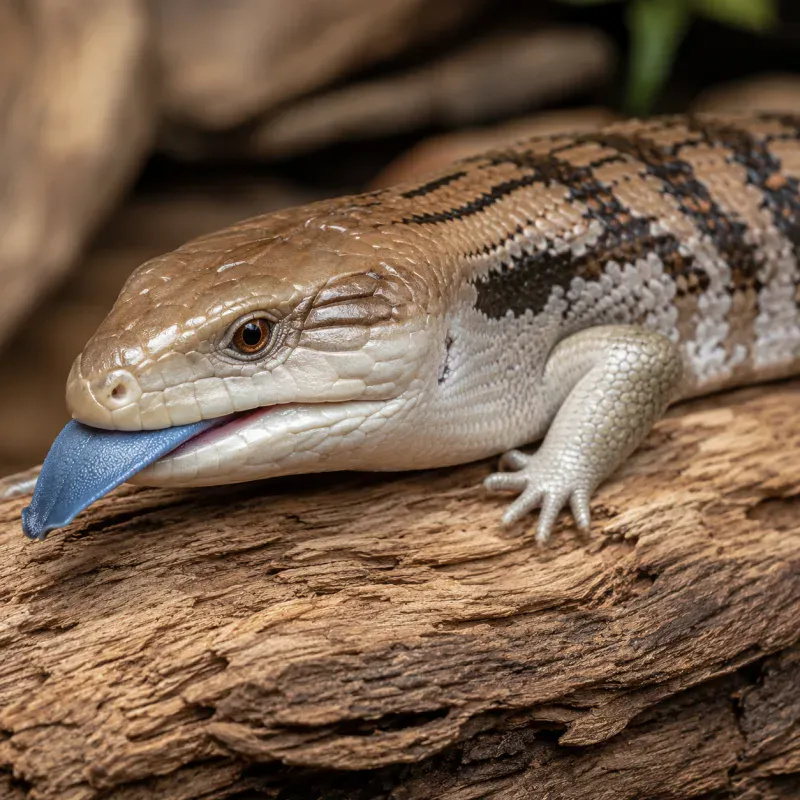
Blue-tongue skinks are true omnivores — they need both animal protein and plant matter in every meal. A proper BTS diet is roughly 50% vegetables/greens, 40% protein, and 10% fruit. Variety across food groups is the single most important factor for long-term health.
This ratio mimics their natural foraging behavior in the wild, where they consume insects, snails, carrion, leafy greens, and fallen fruit. In captivity, replicating this diversity prevents nutritional deficiencies and obesity. Always offer a mixed bowl rather than single-ingredient meals.
Why Ratios Matter
The 50/40/10 split ensures adequate fiber, protein, and micronutrients. Too much protein can strain kidneys; too much fruit spikes sugar intake. Stick to the ratio for a healthy, active skink.
Protein Sources (40%)
Rotate through these options — never feed only one protein source:
- Dubia roaches — the gold standard insect protein. High in calcium relative to phosphorus, low in fat. Gut-load them 24 hours before feeding.
- Canned snails (no salt added) — BTS adore snails, and they're calcium-rich. Rinse before serving.
- Earthworms / nightcrawlers — excellent staple. Buy from reputable suppliers to avoid pesticide contamination.
- High-quality grain-free wet dog food — 1–2× per week as a convenient protein boost. Choose brands with real meat as the first ingredient (Merrick, Wellness Core). Avoid formulas with artificial colors, corn, or wheat.
- Cooked lean turkey or chicken — occasional, plain, no seasoning. Shred into small pieces.
- Hard-boiled egg — once every 2–3 weeks, chopped with shell for calcium. The shell provides a natural calcium boost.
How to Offer Protein
Insects should be dusted with supplements (see schedule below) and offered live in a shallow dish. Dog food and cooked meats can be mixed with vegetables. Always remove uneaten protein after 30–60 minutes to prevent spoilage.
Common Protein Mistakes
- Feeding only dog food — lacks variety and can lead to picky eating.
- Offering wild-caught insects — risk of pesticides and parasites.
- Overfeeding fatty insects like waxworms — obesity risk.
Vegetable Staples (50%)
Chop or grate everything finely — BTS are not chewers:
- Collard greens, mustard greens, dandelion greens, turnip greens — daily staples. These are calcium-rich and low in oxalates.
- Butternut squash, acorn squash — grated raw or lightly steamed. Steaming softens them for easier digestion.
- Green beans, snap peas — chopped small. Good source of fiber.
- Bell peppers — red, yellow, orange (all colors). High in vitamin C.
- Zucchini — grated, good for hydration.
How to Prepare Vegetables
Use a box grater or food processor to create small, bite-sized pieces. Mix dark leafy greens with squash and peppers for variety. Avoid iceberg lettuce — it's mostly water and offers little nutrition.
Vegetable Variety Table
| Vegetable | Frequency | Notes |
|---|---|---|
| Collard greens | Daily | Calcium-rich, staple |
| Mustard greens | Daily | Peppery flavor, high in vitamins |
| Dandelion greens | Daily | Natural diuretic, calcium source |
| Turnip greens | Daily | Mild taste, good rotation |
| Butternut squash | 2–3×/week | Grate raw or steam |
| Acorn squash | 2–3×/week | Similar to butternut |
| Green beans | 2–3×/week | Chop finely |
| Snap peas | 1–2×/week | High in sugar, moderate |
| Bell peppers | 2–3×/week | All colors, vitamin C |
| Zucchini | 2–3×/week | Hydrating, low calorie |
Fruit & Ratios (10%)
Fruit is a treat, not a staple. Offer small amounts 1–2× per week: blueberries, raspberries, mango, fig, papaya, banana (tiny piece). Avoid citrus fruits and grapes in large quantities. Overfeeding fruit causes loose stool and obesity.
Fruit Serving Suggestions
Cut fruit into small cubes or slices. Remove seeds and pits (e.g., mango pit, fig seeds are fine). Offer fruit as a topping or separate dish. Monitor stool — if loose, reduce fruit frequency.
Fruit Comparison Table
| Fruit | Frequency | Notes |
|---|---|---|
| Blueberries | 1–2×/week | Antioxidants, low sugar |
| Raspberries | 1–2×/week | Fiber, vitamin C |
| Mango | 1×/week | High sugar, use sparingly |
| Fig | 1×/week | Calcium boost, but high sugar |
| Papaya | 1×/week | Digestive enzymes |
| Banana | Occasional | Tiny piece only — high sugar |
| Citrus (avoid) | Never | Acidic, can cause stomach upset |
| Grapes (avoid large quantities) | Rarely | High sugar, potential toxicity in excess |
Supplement Schedule
- Calcium (no D3): Lightly dust 2–3× per week.
- Calcium with D3: 1× per week if UVB is present; 2× if no UVB.
- Multivitamin: 1× per week.
How to Dust Effectively
Place insects or wet food in a plastic bag with a pinch of supplement. Shake gently to coat. For vegetables, sprinkle lightly and mix. Avoid over-dusting — a light coating is sufficient.
Supplement Schedule Table
| Supplement | With UVB | Without UVB |
|---|---|---|
| Calcium (no D3) | 2–3×/week | 2–3×/week |
| Calcium with D3 | 1×/week | 2×/week |
| Multivitamin | 1×/week | 1×/week |
Foods to never feed: Avocado, onion, garlic, rhubarb, raw potato, processed meats, cat food (too high in protein and taurine for regular use).
Why Avoid These Foods?
- Avocado: contains persin, toxic to reptiles.
- Onion/garlic: can cause hemolytic anemia.
- Rhubarb: high in oxalates, binds calcium.
- Raw potato: contains solanine, toxic.
- Processed meats: high in sodium and preservatives.
- Cat food: excessive protein and taurine, can cause kidney issues.
Feeding Schedule by Age
Juveniles (under 1 year) need daily feeding to support growth. Adults (over 1 year) can be fed every 2–3 days. Adjust portion sizes to maintain a healthy body condition — ribs should not be visible, but no excess fat rolls.
Juvenile Feeding
Offer a mix of 50% greens, 40% protein, 10% fruit daily. Insects should be small (crickets, dubia nymphs). Dust supplements per schedule.
Adult Feeding
Feed every 2–3 days with the same ratio. Reduce protein slightly if activity is low. Monitor weight monthly.
Feeding Schedule Table
| Age | Frequency | Portion Size |
|---|---|---|
| Juvenile (0–12 months) | Daily | Small bowl, ~5% body weight |
| Adult (1+ year) | Every 2–3 days | Medium bowl, ~3–5% body weight |
Hydration Needs
Provide a shallow water dish at all times. Change daily. Also mist the enclosure lightly to maintain humidity. Some skinks enjoy soaking — ensure the dish is easy to exit.
Troubleshooting Common Feeding Issues
Picky Eating
If your skink refuses certain foods, mix them with favorites. Gradually reduce the favorite to encourage acceptance. Never starve your skink — it can lead to health issues.
Obesity
Cut back on high-fat proteins (dog food, eggs) and fruits. Increase leafy greens. Ensure exercise by providing a large enclosure with hiding spots.
Loose Stool
Reduce fruit intake, especially high-sugar fruits. Check for parasites if issues persist. Ensure vegetables are not too watery.
Impaction Risk
Avoid large, hard pieces of food. Always chop finely. Provide proper temperatures (basking spot 95–100°F) for digestion.
Frequently Asked Questions
Can blue-tongue skinks eat dog food as a staple?
High-quality grain-free wet dog food can be offered 1–2× per week as a protein boost, but it should not be the sole protein source. Rotate with insects and snails for nutritional variety.
How often should I feed my adult blue-tongue skink?
Adults (over 1 year) should be fed every 2–3 days with a balanced mix of 50% vegetables, 40% protein, and 10% fruit. Adjust portion sizes based on body condition.
Do blue-tongue skinks need UVB lighting for calcium absorption?
UVB is beneficial but not strictly required if you supplement with calcium with D3. Without UVB, provide calcium with D3 twice a week; with UVB, once a week is sufficient.
What foods are toxic to blue-tongue skinks?
Never feed avocado, onion, garlic, rhubarb, raw potato, processed meats, or cat food. These can cause toxicity, anemia, or nutritional imbalances.
Related Reading
Check optimal temps, calculate feeding, and find your perfect species match.
References
- Kaplan, M. (2019). Blue-Tongued Skinks: A Comprehensive Guide. Herp Press.
- Vosjoli, P. (2020). The Art of Keeping Reptiles. Advanced Vivarium Systems.
- Girard, F. (2021). Reptile Nutrition and Feeding. Zoo Med Laboratories.
🐾 Join the Community
See how other keepers set up their enclosures, ask questions, and share your experience.
🛠️ Apply What You Learned
Check optimal temps, calculate feeding schedules, and get calcium dosage — all personalized for your species.
Comments