Blue-Tongue Skink Enclosure & Heating Guide
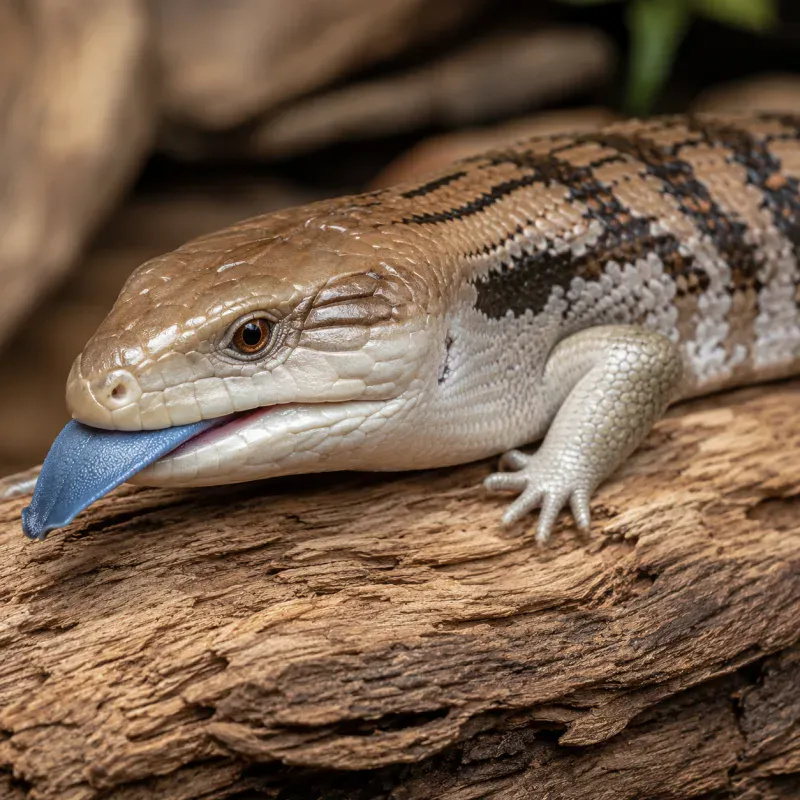
Enclosure Setup: PVC & Minimum Size
Blue-tongue skinks (Tiliqua spp.) are terrestrial, burrowing lizards that require spacious, well-ventilated enclosures. PVC enclosures are ideal because they retain heat and humidity better than glass tanks, are lightweight, and easy to clean. For a single adult, the minimum enclosure size is 4′ × 2′ × 2′ (120 × 60 × 60 cm), though larger is always better. Juveniles can start in a 20-gallon long (30″ × 12″ × 12″) but should be upgraded within 6–12 months.
Choose a PVC enclosure with front-opening doors for easy access and a secure locking mechanism. Ensure the top has a mesh or solid section for mounting heat lamps and UVB fixtures. Avoid enclosures with excessive ventilation slots that can cause heat loss; instead, opt for adjustable vents on the sides.
Substrate Depth & Choice
Blue-tongue skinks are natural burrowers, so provide a deep, loose substrate layer of at least 4–6 inches (10–15 cm). Ideal substrates include a mix of organic topsoil (no fertilizers or perlite), play sand, and coconut coir in a 40:40:20 ratio. This mix holds humidity well and allows burrowing. Avoid aspen shavings, pine, or cedar as they can cause respiratory issues. For bioactive setups, add a drainage layer and leaf litter.
Spot clean daily and fully replace substrate every 2–3 months, or more frequently if soiled. A humidity hide filled with damp sphagnum moss can aid shedding.
Step-by-Step Enclosure Assembly
- Choose the enclosure: Select a PVC enclosure at least 4′ × 2′ × 2′ for an adult. Ensure it has front-opening doors and a secure lock.
- Set up ventilation: Adjust side vents to allow moderate airflow. Avoid excessive top ventilation; a solid top with a small mesh section for lamps is ideal.
- Install heating: Place a ceramic heat emitter (CHE) or halogen flood bulb on one side, connected to a thermostat. Position the heat source 8–12 inches above the basking spot.
- Add lighting: Mount a linear UVB bulb (T5 HO, 5–7% UVB) covering 2/3 of the enclosure length. Place it on the same side as the basking spot.
- Lay substrate: Mix organic topsoil, play sand, and coconut coir (40:40:20) to a depth of 4–6 inches. Add a drainage layer if making a bioactive setup.
- Decorate: Provide hides on both warm and cool sides, a large water dish, and climbing branches or logs if desired.
- Monitor: Place digital thermometers with probes on both sides and a hygrometer in the middle. Adjust thermostats to reach target temperatures.
Common Substrate Mistakes
- Using sand alone: Pure sand can cause impaction if ingested. Always mix with topsoil and coir.
- Choosing dusty substrate: Avoid substrates that produce dust, as they can irritate the respiratory tract.
- Not providing enough depth: Shallow substrate prevents burrowing, causing stress and potential skin issues.
Heating & Lighting: Basking Temps & UVB
Blue-tongue skinks are ectothermic and require a thermal gradient to regulate body temperature. Use a ceramic heat emitter (CHE) or a halogen flood bulb for the basking spot. Place the heat source on one side of the enclosure to create a hot side and a cool side.
| Parameter | Target Range |
|---|---|
| Basking surface temperature | 95–105°F (35–40°C) |
| Warm side ambient (air) | 85–90°F (29–32°C) |
| Cool side ambient (air) | 70–75°F (21–24°C) |
| Nighttime temperature | 65–70°F (18–21°C) |
Use a thermostat to regulate all heat sources and prevent overheating. A digital thermometer with probes on both sides is essential for monitoring. For UVB, provide a linear UVB bulb (5–7% UVB, T5 HO) covering 2/3 of the enclosure length. UVB is critical for vitamin D3 synthesis and calcium metabolism. Replace UVB bulbs every 6–12 months even if they still emit light. Place the basking spot directly under the UVB bulb, 8–12 inches away.
Choosing the Right Heat Source
| Heat Source | Pros | Cons | Best Use |
|---|---|---|---|
| Ceramic Heat Emitter (CHE) | No light, long-lasting, good for night heat | Can dry out air, needs thermostat | Nighttime or supplemental heat |
| Halogen Flood Bulb | Provides bright light and heat, mimics sun | Short lifespan, can overheat without thermostat | Daytime basking |
| Mercury Vapor Bulb | Provides both UVB and heat | Expensive, can overheat small enclosures | Large enclosures |
| Heat Mat | Low profile, inexpensive | Poor heat penetration, can cause burns if not regulated | Supplemental heat only |
Thermostat Setup & Troubleshooting
Always connect heat sources to a thermostat. Set the thermostat probe near the basking spot to maintain 95–105°F. If the basking spot is too hot, raise the lamp or reduce wattage. If too cool, lower the lamp or increase wattage. For night temperatures, use a CHE on a separate thermostat set to 65–70°F.
Humidity & Hydration
Blue-tongue skinks need moderate humidity (40–60%) with occasional spikes to 70–80% during shedding. Measure humidity with a digital hygrometer. Mist the enclosure lightly in the morning and evening, and provide a large water dish that the skink can soak in (change daily). For extra humidity, use a humid hide filled with damp sphagnum moss on the warm side.
If humidity is too low, add a larger water dish, mist more frequently, or use a substrate that retains moisture (e.g., coconut coir). Too high humidity can lead to respiratory infections or scale rot, so ensure good ventilation.
How to Create a Humid Hide
- Take a plastic container with a lid and cut an entrance hole large enough for your skink.
- Fill the container with damp sphagnum moss (not soaking wet).
- Place the hide on the warm side of the enclosure to keep it warm and humid.
- Mist the moss daily to maintain moisture. Replace the moss weekly to prevent mold.
Signs of Humidity Problems
- Too low: Hard, stuck shed, dry skin, frequent soaking.
- Too high: Wheezing, nasal discharge, red or blistered skin.
Diet & Feeding Schedule
Blue-tongue skinks are omnivores. A balanced diet consists of 50% animal protein, 40% vegetables/greens, and 10% fruit. Offer a variety of feeder insects (crickets, dubia roaches, mealworms, superworms) and occasional pinky mice (adults only). Vegetables include collard greens, dandelion greens, squash, and carrots. Fruits like berries and mango can be given as treats.
Feeding schedule:
- Juveniles (under 1 year): Daily feeding – small insects + veggie mix
- Adults (over 1 year): Every 2–3 days – larger prey + veggie mix
Dust insects with calcium powder (without D3) every other feeding, and use a multivitamin once a week. Always provide fresh water. Avoid feeding wild-caught insects, avocado, rhubarb, or citrus.
Sample Weekly Menu for Adults
| Day | Protein | Vegetables/Greens | Fruit (Treat) |
|---|---|---|---|
| Monday | 5-6 dubia roaches | Collard greens, shredded squash | Blueberries (2-3) |
| Thursday | 4-5 crickets + 2 superworms | Dandelion greens, grated carrot | Mango (small cube) |
| Sunday | Pinky mouse (optional, adults only) | Mixed greens, bell pepper | None |
Supplementation Schedule
- Calcium (without D3): Dust insects every other feeding.
- Multivitamin: Dust insects once a week.
- Vitamin D3: Not needed if UVB is provided; if UVB is unavailable, use calcium with D3 occasionally, but UVB is always preferred.
Handling & Temperament
Blue-tongue skinks are generally docile but can be nervous when young. Start handling sessions short (5–10 minutes) and gradually increase. Support the body fully with both hands; never grab the tail (they can drop it). Signs of stress include hissing, puffing up, and displaying the blue tongue. If your skink shows these, give it space.
Regular handling (3–4 times per week) helps build trust. Wash hands before and after handling to avoid spreading bacteria. Avoid handling during shedding or after a large meal.
Building Trust with Your Skink
- Allow 1–2 weeks for your new skink to settle in without handling.
- Start by placing your hand in the enclosure for a few minutes daily, letting the skink approach you.
- Gently scoop the skink from below, supporting the chest and hindquarters.
- Keep sessions short and positive, offering a treat like a piece of fruit after handling.
- Gradually increase duration as the skink becomes more comfortable.
Signs of a Stressed Skink
- Hissing or puffing up
- Displaying the blue tongue
- Tail twitching or dropping
- Attempting to bite
If these occur, return the skink to its enclosure and try again later. Never force handling.
Common Health Issues
Blue-tongue skinks are hardy but can develop problems if husbandry is off.
- Metabolic bone disease (MBD): Caused by lack of UVB or calcium. Symptoms: soft jaw, tremors, lethargy. Prevent with proper UVB and calcium supplementation.
- Respiratory infections (RI): Usually from low temps or high humidity. Signs: wheezing, nasal discharge, open-mouth breathing. Treat by correcting temps and humidity, and see a vet.
- Scale rot: From wet substrate. Look for discolored, raised scales. Fix by drying out the enclosure and cleaning the affected area with diluted betadine.
- Parasites: Internal (worms) or external (mites). Annual fecal exams are recommended.
- Obesity: Overfeeding high-fat foods (rodents, superworms). Stick to a balanced diet and monitor body condition.
Preventive Health Checklist
- Provide UVB lighting and replace bulbs every 6–12 months.
- Maintain proper temperatures and humidity as per the table above.
- Spot clean daily and replace substrate regularly.
- Schedule annual vet check-ups with fecal exams.
- Monitor weight and body condition monthly.
Errors to Avoid
- Using glass tanks: They lose heat and humidity quickly. PVC or wood enclosures are far better.
- Shallow substrate: Skinks need 4–6 inches to burrow; shallow substrate causes stress.
- No UVB: Even if you supplement D3, UVB is essential for long-term health.
- Overheating or underheating: Without a thermostat, basking spots can exceed 110°F, causing burns, or drop too low.
- Feeding only insects or only veggies: An unbalanced diet leads to deficiencies.
- Handling too soon: New skinks need 1–2 weeks to settle in before handling.
Comparison: PVC vs. Glass vs. Wood Enclosures
| Feature | PVC | Glass (Aquarium) | Wood (Melamine) |
|---|---|---|---|
| Heat retention | Excellent | Poor | Good |
| Humidity retention | Excellent | Poor | Good (if sealed) |
| Weight | Light | Heavy | Heavy |
| Cost | Moderate–High | Low | Moderate |
| Ease of cleaning | Easy | Moderate | Moderate (sealed) |
| Customization | High | Low | High |
PVC is the top choice for blue-tongue skinks due to its balance of insulation, weight, and durability.
Frequently Asked Questions
What is the minimum enclosure size for an adult blue-tongue skink?
The minimum enclosure size for a single adult blue-tongue skink is 4′ × 2′ × 2′ (120 × 60 × 60 cm), though larger is always better. Juveniles can start in a 20-gallon long (30″ × 12″ × 12″) but should be upgraded within 6–12 months.
Do blue-tongue skinks need UVB lighting?
Yes, UVB is critical for vitamin D3 synthesis and calcium metabolism. Provide a linear UVB bulb (5–7% UVB, T5 HO) covering 2/3 of the enclosure length. Replace UVB bulbs every 6–12 months even if they still emit light.
What should I do if my blue-tongue skink stops eating?
First, check that the enclosure temperatures and humidity are within the target ranges: basking 95–105°F, warm side 85–90°F, cool side 70–75°F, and humidity 40–60%. If conditions are correct, consider if the skink is shedding or stressed. If the skink refuses food for more than 1–2 weeks or shows other symptoms, consult a reptile veterinarian.
Can I use a glass aquarium for my blue-tongue skink?
Glass aquariums are not ideal because they lose heat and humidity quickly. PVC or wood enclosures are far better for heat and humidity retention. If you must use a glass tank, you'll need to insulate it and monitor humidity closely.
Related Reading
- Blue-Tongue Skink Care Guide — Complete husbandry manual.
- Blue-Tongue Skink Diet Guide — 50/40/10 omnivore formula.
- Reptile Heating Guide — Heat source comparison.
Check optimal temps, calculate feeding, and find your perfect species match.
References
- Kaplan, M. (2019). Blue-Tongued Skinks: A Complete Guide. Herp Care Collection.
- de Vosjoli, P. (2003). The Lizard Keeper's Handbook. Advanced Vivarium Systems.
- McLeod, L. (2021). Blue-Tongue Skink Care Sheet. The Spruce Pets.
🐾 Join the Community
See how other keepers set up their enclosures, ask questions, and share your experience.
🛠️ Apply What You Learned
Check optimal temps, calculate feeding schedules, and get calcium dosage — all personalized for your species.
Comments
No account needed — corrections, updates and questions are all welcome. For a full question with photos, the community Q&A is the better place.