Tokay Gecko Taming: Handle & Build Trust
Introduction
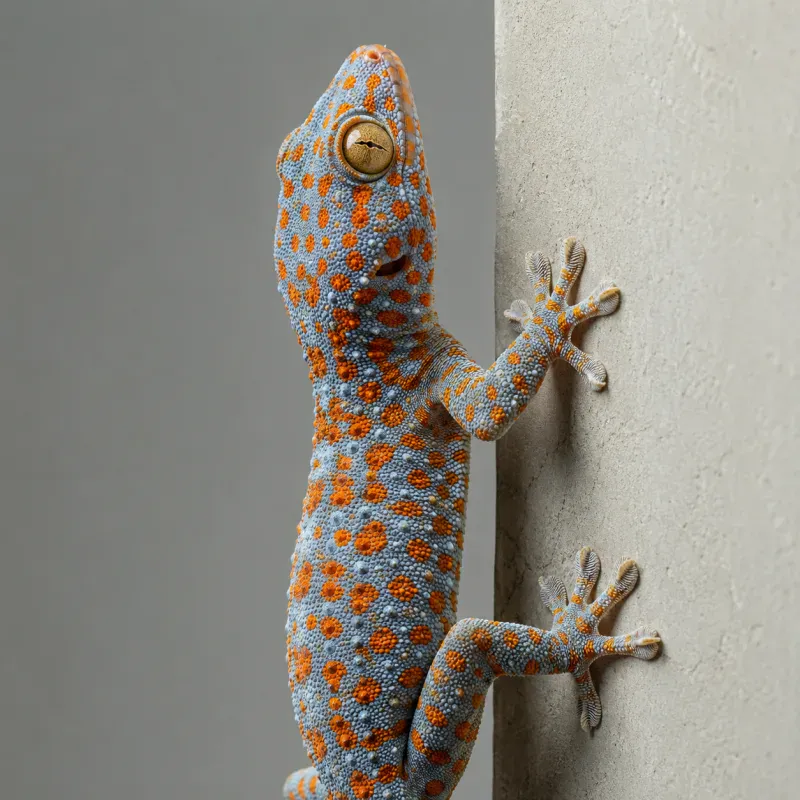
The Tokay Gecko (Gekko gecko) is one of the most striking and vocal gecko species in the pet trade, known for its vibrant blue-gray body with orange spots and its aggressive, territorial temperament. While their reputation for biting and loud barking can intimidate novice keepers, with patience and the right approach, Tokay Geckos can be tamed into calm, handleable companions. This guide provides evidence-backed methods for building trust, preventing bites, and even target training your Tokay Gecko, ensuring a safer and more rewarding experience for both you and your pet.
Understanding Tokay Gecko Behavior
Tokay Geckos are naturally defensive and territorial. In the wild, they are solitary ambush predators that rely on camouflage and aggression to deter threats. When threatened, they open their mouths wide, hiss, bark, and bite with remarkable force—their jaws can deliver a painful pinch that often draws blood. Understanding this behavior is the first step to taming: you must respect their fear and never force handling.
Key behavioral traits include:
- Nocturnal activity: They are most active at night, so handling should occur during their waking hours (evening or early morning).
- Territoriality: They bond strongly to their enclosure and may become stressed if removed too quickly.
- Vocalization: The famous "to-kay" call is a mating or territorial signal, not necessarily aggression.
- Bite response: Bites are defensive, not predatory. They release quickly if you remain calm and do not pull away.
Enclosure Setup for Taming Success
A proper enclosure reduces stress and makes taming easier. Tokay Geckos require vertical space with plenty of hiding spots. A 20-gallon tall tank (24 x 12 x 16 inches) is the minimum for one adult, but larger is better (36 x 18 x 24 inches recommended).
Essential Elements
- Vertical climbing branches: Use cork bark, bamboo, or driftwood to create a network of perches.
- Hides: Provide at least two hides (one warm, one cool) plus a humid hide (e.g., a plastic container with damp sphagnum moss).
- Live plants: Pothos, bromeliads, and ficus help maintain humidity and provide cover.
- Substrate: Coconut fiber or orchid bark; avoid loose substrates that cause impaction if ingested.
- Water dish: Shallow, heavy bowl for drinking and soaking.
Heating, Lighting, and Humidity
Tokay Geckos are tropical and require specific conditions to thrive:
| Parameter | Day | Night |
|---|---|---|
| Temperature (basking spot) | 85–90°F (29–32°C) | 70–75°F (21–24°C) |
| Ambient temperature | 78–82°F (25–28°C) | 70–75°F (21–24°C) |
| Humidity | 60–80% (spike to 90% after misting) | 70–80% |
| Lighting | 12–14 hours UVB (5–7% T5) | Dark (red/blue night lights not needed) |
Heating: Use a ceramic heat emitter or deep heat projector on a thermostat. Avoid heat rocks, which cause burns. Lighting: Provide UVB (5–7% T5) for 12–14 hours daily; Tokay Geckos benefit from UVB for vitamin D synthesis. Humidity: Mist the enclosure 2–3 times daily with a hand sprayer or automatic system. Use a hygrometer to monitor; low humidity causes shedding problems.
Diet and Feeding
Tokay Geckos are insectivores with a voracious appetite. A varied diet is crucial for health and tameness because food is a powerful positive reinforcement tool.
Staple Foods
- Crickets: Gut-loaded and dusted with calcium + D3 powder at every feeding for adults, every feeding for juveniles.
- Dubia roaches: High in protein, less chitin than crickets.
- Mealworms and superworms: Occasional treats (high in fat).
- Silkworms and hornworms: Excellent hydrating options.
Feeding Schedule
- Juveniles (under 6 months): Daily, 4–6 appropriately sized insects.
- Adults: Every other day, 6–8 insects.
- Target training: Use tongs to offer food; this builds trust and reduces bite risk.
Taming and Handling: Step-by-Step Trust Building
Taming a Tokay Gecko requires patience—expect weeks to months. Never grab or restrain the gecko; this triggers defensive biting.
Phase 1: Acclimation (First 2 Weeks)
- Do not handle; let the gecko settle in its new home.
- Spend time near the enclosure talking softly so it associates your presence with safety.
- Offer food via tongs; if the gecko refuses, leave the food in a dish.
Phase 2: Hand Association (Weeks 3–6)
- Place your hand flat inside the enclosure (palm up) for 5–10 minutes daily, without moving.
- If the gecko approaches, remain still; let it sniff or lick your hand.
- Offer a treat (e.g., a waxworm) from your palm to create positive association.
Phase 3: Voluntary Handling (After 6 Weeks)
- Once the gecko willingly climbs onto your hand, slowly lift it a few inches, then return it.
- Gradually increase handling time to 5–10 minutes, always in a quiet, warm room.
- Never handle during shedding or after feeding (risk of regurgitation).
Bite Prevention and Response
- Read body language: If the gecko arches its back, opens its mouth, or hisses, back off.
- Use a soft cloth or glove: For initial handling, wear thin cotton gloves to reduce fear of human scent.
- If bitten: Do not pull away—this can tear skin. Gently blow on the gecko's face or run cool water over its snout; it will release. Clean the wound with soap and water; seek medical attention if swelling occurs.
Target Training: Advanced Trust Building
Target training uses a visual cue (a target stick) to guide the gecko to a specific location for food. This reduces stress and makes handling safer.
Materials
- A chopstick or thin dowel with a brightly colored end (e.g., red or yellow tape).
- Tong feeders and a treat (e.g., a hornworm).
Steps
- Introduce the target: Place the target near the gecko's front; when it looks at or touches it, immediately offer a treat from tongs.
- Repeat daily: Move the target slightly farther each session; the gecko will learn to follow it.
- Use for handling: Once the gecko reliably touches the target, use it to guide the gecko onto your hand or a transport container.
Target training works because it gives the gecko control over interactions, reducing fear. Sessions should be 5–10 minutes, 2–3 times per week.
Common Health Issues
- Metabolic Bone Disease (MBD): Caused by calcium deficiency or lack of UVB. Symptoms include tremors, swollen limbs, and soft jaw. Prevent with proper supplementation and UVB.
- Dysecdysis (bad shed): Low humidity causes stuck shed, especially on toes and eyes. Provide a humid hide and mist daily.
- Respiratory infections: Symptoms include wheezing, bubbles at mouth, lethargy. Caused by low temperatures or drafty enclosures. Increase heat and consult a vet.
- Mouth rot (stomatitis): Swollen, red gums with pus. Requires veterinary antibiotics.
- Parasites: Internal (worms) or external (mites). Quarantine new geckos and have fecal exams done.
What Not to Do
- Handling too soon: Stress can cause anorexia and death. Wait at least 2 weeks.
- Using heat rocks: Tokay Geckos have sensitive bellies and can suffer fatal burns.
- Overfeeding: Obesity shortens lifespan. Stick to portion sizes.
- Ignoring humidity: Chronic low humidity leads to shedding issues and respiratory problems.
- Using bare hands for scared geckos: Always use tongs for feeding and target training until trust is established.
- Co-habitation: Tokay Geckos are solitary; housing two together (especially males) leads to fighting and injury.
Conclusion
Taming a Tokay Gecko is a rewarding journey that transforms a feared biter into a curious, interactive pet. By respecting its natural behavior, providing optimal husbandry, and using positive reinforcement through target training, you can build a bond that lasts the gecko's 10–20 year lifespan. Remember: patience and consistency are key. Never rush the process, and always prioritize the gecko's comfort over your desire to handle it. With time, your Tokay Gecko may even climb onto your hand willingly—a triumph of trust that few reptile keepers achieve.
Related Reading
Check optimal temps, calculate feeding, and find your perfect species match.
References
- de Vosjoli, P. (2004). The Lizard Keeper's Handbook. Advanced Vivarium Systems.
- McLeod, L. (2021). Tokay Gecko Care Sheet. The Spruce Pets.
- Mader, D. R. (2006). Reptile Medicine and Surgery. Saunders.
- Rossi, J. V. (2010). The Tokay Gecko: A Complete Guide to Care and Breeding. TFH Publications.
🐾 Join the Community
See how other keepers set up their enclosures, ask questions, and share your experience.
🛠️ Apply What You Learned
Check optimal temps, calculate feeding schedules, and get calcium dosage — all personalized for your species.
Comments
No account needed — corrections, updates and questions are all welcome. For a full question with photos, the community Q&A is the better place.