Russian Tortoise Enclosure: Indoor & Outdoor
Introduction
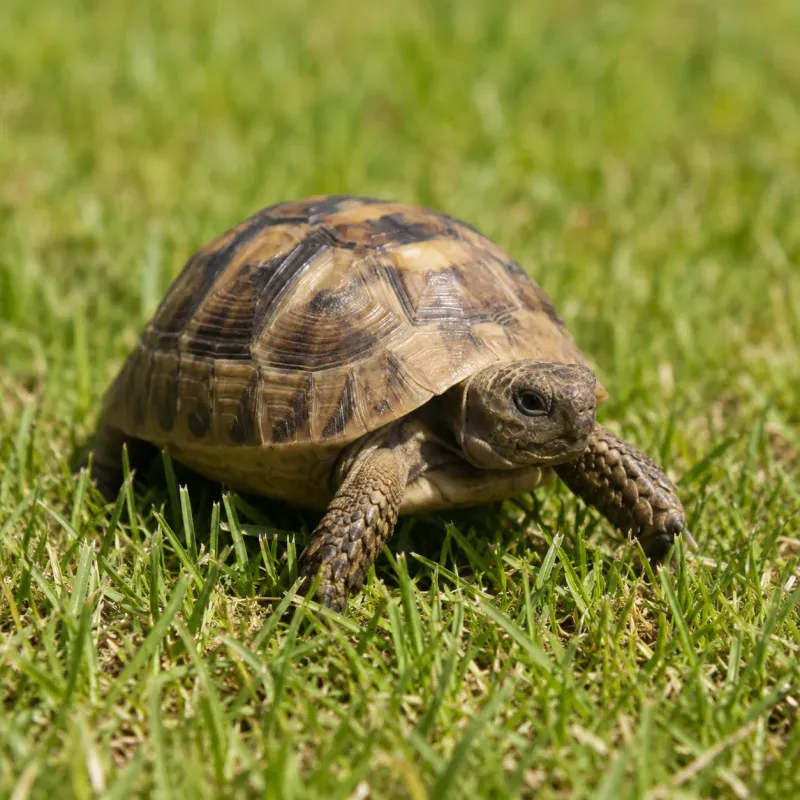
The Russian Tortoise (Testudo horsfieldii), also known as the Horsfield's tortoise, is a popular pet due to its manageable size, hardy nature, and engaging personality. Native to arid regions of Central Asia, this species requires a carefully designed enclosure that mimics its natural habitat. This guide covers everything you need to know about setting up a proper indoor or outdoor habitat, including substrate, heating, UVB lighting, and humidity management.
Indoor vs Outdoor Housing
Choosing between indoor and outdoor housing depends on your climate, space, and commitment. Both options have distinct advantages and challenges.
Indoor Enclosures
Indoor setups are ideal for year-round control, especially in colder climates. A minimum enclosure size for one adult Russian Tortoise is 4 ft x 2 ft (1.2 m x 0.6 m), but larger is always better. Use a solid-sided enclosure like a tortoise table, a large plastic bin, or a custom wooden vivarium. Avoid glass aquariums as they restrict airflow and can cause stress. Ensure walls are at least 12 inches (30 cm) high to prevent escapes.
Key indoor requirements:
- Solid floor to hold substrate depth of 4–6 inches (10–15 cm)
- Good ventilation (screen top or side vents)
- Escape-proof construction
- Easy access for cleaning
Outdoor Enclosures
Outdoor housing is preferred when temperatures allow (above 60°F/15°C during the day). A secure outdoor pen provides natural sunlight, grazing opportunities, and more space. Build a sturdy frame with wood or metal, and bury the walls at least 6–12 inches (15–30 cm) deep to prevent digging escapes. Cover the top with wire mesh to protect against predators. Provide shaded areas using plants, rocks, or a hide box.
| Feature | Indoor | Outdoor |
|---|---|---|
| Climate control | Full control | Weather-dependent |
| Space | Limited | Can be large |
| Natural UVB | Requires artificial UVB | Natural sunlight |
| Predator risk | Low | Moderate to high |
| Year-round use | Yes | Seasonal |
Choosing the Right Option
Consider your local climate: if winter temperatures drop below 60°F (15°C) for extended periods, indoor housing or a heated indoor-outdoor hybrid is necessary. If you have a secure yard with mild weather, outdoor housing can be a summer haven. Many keepers use indoor enclosures as a base and move tortoises outdoors during warm months.
Substrate Choices
Substrate must retain some humidity while allowing burrowing. Russian Tortoises naturally dig and burrow in arid, sandy soils. Avoid substrates that are too dry (e.g., pure sand) or too wet (e.g., cypress mulch).
Recommended substrates:
- Coco coir and topsoil mix (50/50) – excellent moisture retention and burrowing. Use organic, chemical-free topsoil.
- Play sand and topsoil mix (40/60) – allows digging but can be dusty; mist lightly.
- Orchard bark or reptile bark – good for burrowing but low moisture; add damp sphagnum moss in a humid hide.
Avoid: Calcium sand, walnut shells, pine/cedar shavings, and pure sand (impaction risk). Depth should be 4–6 inches (10–15 cm) to allow full burrowing.
Substrate Comparison Table
| Substrate | Moisture Retention | Burrowing Ease | Dust Level | Safety |
|---|---|---|---|---|
| Coco coir + topsoil (50/50) | High | Excellent | Low | Safe if organic |
| Play sand + topsoil (40/60) | Medium | Good | Medium | Safe if not pure sand |
| Orchard bark | Low | Good | Low | Safe, but add moss |
| Calcium sand | Low | Poor | High | Dangerous (impaction) |
| Walnut shells | Low | Poor | High | Dangerous (sharp edges) |
How to Set Up Substrate
- Clean the enclosure with a reptile-safe disinfectant.
- Lay a 4–6 inch (10–15 cm) layer of your chosen substrate.
- Mist lightly to achieve a slightly damp consistency (not wet).
- Spot-clean daily and replace the entire substrate monthly.
Heating and Lighting
Proper thermoregulation is critical for digestion, metabolism, and immune function. Russian Tortoises are ectothermic and require a thermal gradient.
Heating Equipment
Use a ceramic heat emitter (CHE) or a basking bulb (incandescent or halogen) for the warm end. CHEs produce no light, ideal for nighttime heat. Basking bulbs provide both heat and light. Connect to a thermostat to prevent overheating.
- Basking spot temperature: 95–100°F (35–38°C)
- Cool side temperature: 70–75°F (21–24°C)
- Nighttime temperature: 60–70°F (15–21°C)
Use a digital thermometer with probe at tortoise level. Avoid heat rocks—they can cause burns.
Setting Up a Thermal Gradient
- Place the heat source at one end of the enclosure.
- Use a thermostat to maintain the basking temperature.
- Monitor both ends with digital thermometers.
- Adjust bulb wattage or height to achieve the gradient.
UVB Lighting
UVB is essential for vitamin D3 synthesis and calcium metabolism. Without UVB, tortoises develop metabolic bone disease (MBD).
- UVB bulb type: T5 HO linear fluorescent (e.g., Arcadia 12% or Zoo Med 10.0) or compact fluorescent (less effective). Mercury vapor bulbs provide both UVB and heat but must be used with caution.
- Placement: Mount 12–18 inches (30–45 cm) from basking spot, with no glass or plastic blocking UVB.
- Photoperiod: 12–14 hours of light per day. Replace bulbs every 6–12 months (UVB output degrades).
Outdoor housing provides natural UVB, but ensure shaded areas are available.
Lighting Schedule and Maintenance
- Use a timer to maintain consistent photoperiod.
- Mark replacement dates on a calendar.
- Clean bulbs monthly to remove dust.
Humidity and Hydration
Russian Tortoises are from arid regions but still need moderate humidity (30–50%) to prevent dehydration and shell problems. Low humidity can cause pyramiding and respiratory issues.
- Measure humidity with a digital hygrometer placed in the cool side.
- Increase humidity by misting the substrate (not the tortoise) lightly each morning, or by placing a shallow water dish in the enclosure.
- Provide a humid hide filled with damp sphagnum moss to allow self-regulation.
- Soak your tortoise in shallow, warm water (85–90°F / 29–32°C) for 15–20 minutes, 2–3 times per week. This encourages drinking and hydration.
Always provide fresh, clean water in a shallow dish that cannot be tipped over.
Creating a Humid Hide
- Use a plastic container with an entrance hole.
- Fill with damp sphagnum moss.
- Place in the cool side of the enclosure.
- Re-mist the moss every 2–3 days.
Troubleshooting Low Humidity
- If humidity is below 30%, increase misting frequency.
- Add a larger water dish to increase evaporation.
- Cover part of the screen top to retain moisture.
Diet and Feeding
A high-fiber, low-protein diet mimics their natural forage. Feed a variety of dark leafy greens, weeds, and grasses.
Staples (80% of diet):
- Dandelion greens, collard greens, mustard greens, turnip greens, endive, escarole, romaine lettuce (in moderation)
- Grasses and hay (timothy, orchard grass) – offer fresh or dried
- Edible weeds: clover, plantain, hibiscus leaves, mulberry leaves
Treats (10–15%):
- Carrots (grated), bell peppers, squash, berries (rarely)
- Commercial tortoise pellets (e.g., Mazuri) once weekly
Avoid: Spinach, kale (high oxalates), broccoli, cabbage, fruits (high sugar), animal protein, and iceberg lettuce (no nutritional value).
Calcium supplementation: Dust food with calcium powder (without D3 if UVB provided) 2–3 times per week. Use a multivitamin once weekly.
Feeding Schedule and Portions
- Feed daily in the morning, offering an amount roughly the size of the tortoise's shell.
- Remove uneaten food after 2–3 hours to prevent spoilage.
- Provide fresh water daily.
Handling and Behavior
Russian Tortoises are generally docile but can be stressed by excessive handling. Handle gently and infrequently—no more than a few minutes per session.
- Always support the body fully with both hands.
- Never pick up by the legs or tail.
- Supervise children closely.
- Watch for signs of stress: hiding, hissing, biting, or withdrawing into the shell.
Provide enrichment: rocks, logs, tunnels, and shallow digging areas to encourage natural behaviors.
Enrichment Ideas
- Bury edible plants in the substrate for foraging.
- Arrange rocks and logs to create climbing challenges.
- Rotate decorations to keep the environment novel.
Common Health Issues
With proper care, Russian Tortoises are hardy, but common problems include:
- Metabolic Bone Disease (MBD): Caused by insufficient UVB or calcium. Symptoms include soft shell, lethargy, and deformed limbs. Prevention is key—provide UVB and calcium.
- Respiratory Infections (RI): Signs: nasal discharge, open-mouth breathing, wheezing. Caused by low temperatures, humidity, or drafts. Increase heat and humidity; consult a vet.
- Pyramiding: Abnormal upward growth of shell scutes due to low humidity or high protein. Maintain humidity 30–50% and avoid high-protein foods.
- Parasites: Internal (roundworms, coccidia) or external (ticks, mites). Fecal exams annually.
- Shell Rot: Bacterial/fungal infection from damp substrate. Keep enclosure clean and dry. Treat with betadine and vet care.
Quarantine new tortoises for 90 days and have a reptile veterinarian for annual checkups.
When to See a Vet
- Any signs of respiratory distress.
- Soft or deformed shell.
- Loss of appetite for more than 3 days.
- Abnormal feces or worms in stool.
Watch Out For These Issues
- Too small enclosure: Leads to obesity, stress, and inactivity. Minimum 4x2 ft.
- Improper substrate: Sand or gravel causes impaction; moist substrates cause shell rot.
- No UVB or incorrect UVB: Artificial UVB is mandatory indoors. Replace bulbs regularly.
- Overfeeding protein: Causes pyramiding and kidney damage. Stick to leafy greens.
- Incorrect temperatures: No basking spot or cool side leads to illness.
- Neglecting humidity: Leads to dehydration and pyramiding.
- Housing multiple males together: Males are territorial and may fight.
Mistake Prevention Tips
- Measure enclosure dimensions before purchasing.
- Use a thermostat and timers for heating and lighting.
- Test substrate moisture with your hand—should feel like a wrung-out sponge.
- Keep a care log to track temperatures, humidity, and feeding.
Frequently Asked Questions
What is the minimum enclosure size for a Russian tortoise?
The minimum enclosure size for one adult Russian Tortoise is 4 ft x 2 ft (1.2 m x 0.6 m), but larger is always better. This applies to indoor enclosures; outdoor pens can be much larger.
Can I use a glass aquarium for my Russian tortoise?
No, glass aquariums are not recommended because they restrict airflow and can cause stress. Use a solid-sided enclosure like a tortoise table, a large plastic bin, or a custom wooden vivarium.
How often should I replace the UVB bulb?
Replace UVB bulbs every 6–12 months, even if they still emit visible light, because UVB output degrades over time. This is crucial for preventing metabolic bone disease.
What should I do if my tortoise stops eating?
If your tortoise stops eating for more than 3 days, check the enclosure temperatures, humidity, and UVB. If all are correct, consult a reptile veterinarian, as loss of appetite can indicate illness.
Related Reading
- Russian Tortoise Care: Complete Species Guide — Covers all aspects of owning a Russian tortoise beyond enclosure basics.
- Russian Tortoise Diet Guide: Safe Greens, Weeds & Schedule — Learn what to feed your Russian tortoise for optimal health.
- Russian Tortoise Health: Diseases & Prevention — Identify common health issues and how to prevent them.
- Reptile UVB Lighting Guide: Ferguson Zones & Bulb Selection — Understand UVB requirements to properly light your tortoise's enclosure.
- Reptile Vitamins & Supplements: Calcium With or Without D3 — Discover essential supplements for a balanced tortoise diet.
Check optimal temps, calculate feeding, and find your perfect species match.
References
- Highfield, A. C. (2009). Practical Encyclopedia of Keeping and Breeding Tortoises and Freshwater Turtles. Carapace Press.
- Gurley, R. (2002). The Russian Tortoise (Testudo horsfieldii) in Captivity. Serpent's Tale Natural History Book Distributors.
🐾 Join the Community
See how other keepers set up their enclosures, ask questions, and share your experience.
🛠️ Apply What You Learned
Check optimal temps, calculate feeding schedules, and get calcium dosage — all personalized for your species.
Comments
No account needed — corrections, updates and questions are all welcome. For a full question with photos, the community Q&A is the better place.