Feeder Insects: Crickets vs Dubia vs Worms
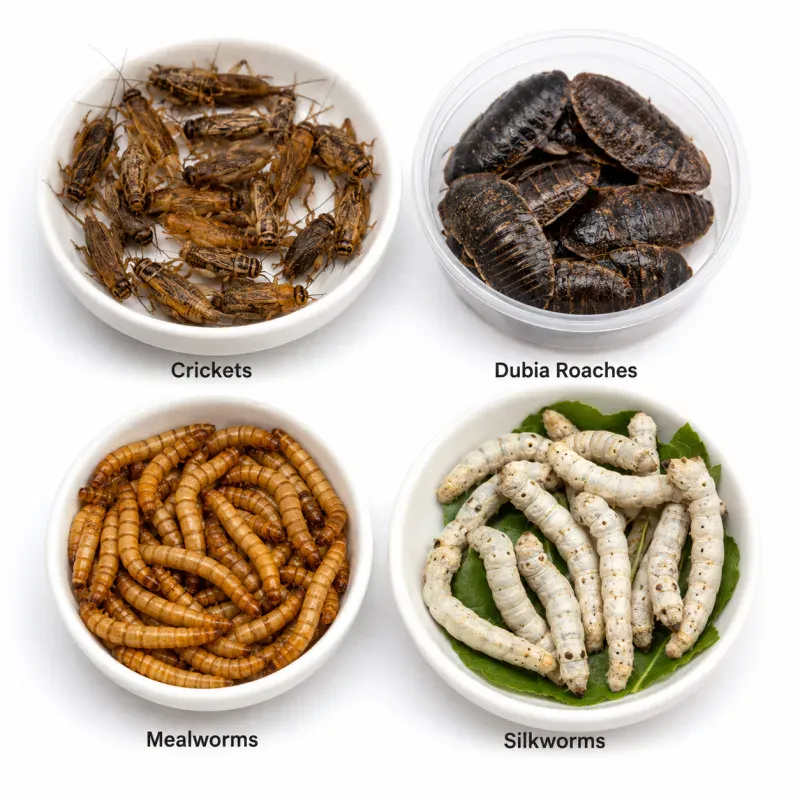
Feeder insects are the cornerstone of most reptile diets, but not all bugs are created equal. This guide compares the three most popular feeder types—crickets, dubia roaches, and mealworms/superworms—across nutrition, cost, ease of care, and behavioral impact. You'll learn how to gut-load, dust, and rotate feeders to meet your reptile's specific needs.
Nutritional Comparison: The Numbers That Matter
Nutritional values vary by species, life stage, and diet. The table below shows average values for adult insects (as-fed, moisture included).
| Feeder | Protein (%) | Fat (%) | Calcium (mg/kg) | Phosphorus (mg/kg) | Ca:P Ratio |
|---|---|---|---|---|---|
| Cricket (Acheta domesticus) | 21 | 6 | 200 | 2200 | 0.09 |
| Dubia roach (Blaptica dubia) | 23 | 4 | 150 | 1900 | 0.08 |
| Mealworm (Tenebrio molitor) | 20 | 13 | 100 | 1800 | 0.06 |
| Superworm (Zophobas morio) | 19 | 17 | 120 | 1700 | 0.07 |
Key takeaways:
- Dubia roaches have the best protein-to-fat ratio (23% protein, 4% fat).
- Crickets are moderate in fat but have a poor Ca:P ratio (0.09) without gut-loading.
- Mealworms and superworms are high in fat (13–17%) and should be treats, not staples.
- All insects are calcium-poor; dusting and gut-loading are essential.
Crickets: The Classic Staple
Crickets are the most widely available and inexpensive feeder. They are active, which stimulates natural hunting behavior in reptiles.
Pros and Cons
- Pros: Low cost, high availability, good protein, encourages exercise.
- Cons: Short lifespan (6–8 weeks), noisy, smelly, can escape, may carry parasites if wild-caught.
Housing and Care
Keep crickets in a ventilated bin with egg cartons for hiding. Provide a moisture source (water crystals or fresh veggies) and a dry food (chicken mash or commercial cricket diet). Temperature: 70–85°F (21–29°C).
Gut-loading for Crickets
Feed crickets a calcium-rich diet 24–48 hours before offering to your reptile. Use commercial gut-load formulas or a mix of dark leafy greens (collard, mustard), carrots, and sweet potatoes. Avoid feeding them only oatmeal—it's low in calcium.
Dubia Roaches: The Nutrient-Dense Alternative
Dubia roaches (Blaptica dubia) are a tropical roach species that has become a favorite among reptile keepers due to their superior nutrition and ease of care.
Why Choose Dubia?
- Higher protein and lower fat than crickets.
- Quiet, odorless, and cannot climb smooth surfaces or fly.
- Long lifespan (up to 2 years), making them a good investment for breeding.
- Less likely to escape compared to crickets.
Housing and Care
Dubia need a warm, humid environment (85–95°F, 60–70% humidity). Use a plastic tub with a heat mat and egg crates. Feed them fresh fruits and vegetables, plus a high-protein roach chow. They breed readily, so you can maintain a colony.
Gut-loading for Dubia
Same principle as crickets: offer calcium-rich foods 24–48 hours before feeding. Because dubia are larger, they can hold more gut-load, making them more nutritious per insect.
Worms: Mealworms, Superworms, and Others
Worms are high in fat and should be used as treats or for species that need extra calories (e.g., juvenile reptiles, breeding females).
Mealworms
- Nutrition: 20% protein, 13% fat, Ca:P 0.06.
- Care: Keep in a container with bran/oatmeal substrate and a slice of potato for moisture. Cool temperatures (50–60°F) slow metamorphosis.
- Use: Offer sparingly due to high fat and chitin (hard exoskeleton) which can cause impaction in small reptiles.
Superworms
- Nutrition: 19% protein, 17% fat.
- Care: Similar to mealworms but they require individual housing to pupate. They are more aggressive and can bite.
- Use: Even higher fat than mealworms—use only as an occasional treat.
Other Worms (Waxworms, Hornworms, Butterworms)
- Waxworms: Very high fat (25%)—only for picky eaters or to add weight.
- Hornworms: High moisture, low fat; good for hydration but low in protein.
- Butterworms: Moderate fat, high calcium (but still need dusting).
Cost and Availability Comparison
Prices vary by region and season, but general trends are:
| Feeder | Cost per 100 (approx.) | Availability | Ease of Breeding |
|---|---|---|---|
| Crickets | $5–$10 | High (pet stores, online) | Moderate (need heat, space) |
| Dubia roaches | $10–$20 | Good (online, some stores) | Easy (once established) |
| Mealworms | $3–$6 | Very high | Very easy |
| Superworms | $5–$8 | High | Difficult (individual pupation) |
Long-term cost: Dubia roaches are more expensive upfront but breed easily, reducing long-term costs if you maintain a colony. Crickets are cheap but die quickly, leading to frequent purchases.
Gut-Loading and Dusting: Essential Steps
Gut-loading and dusting are non-negotiable for any feeder insect, as all are calcium-poor.
Gut-Loading
Feed insects a nutrient-dense diet for 24–48 hours before offering them to your reptile. Use a commercial gut-load product or a homemade mix:
- Dark leafy greens (collard, mustard, dandelion)
- Carrots, sweet potatoes, squash
- Citrus fruits (in moderation)
- Commercial gut-load formulas (e.g., Repashy, Fluker's)
Avoid feeding insects only oatmeal or bran—these are low in calcium and high in phosphorus.
Dusting
Dust insects with a calcium powder (with or without vitamin D3) immediately before feeding. Use a shake bag or a small container. For most reptiles, dust every feeding with calcium, and a multivitamin 1–2 times per week.
Tips:
- Dust only the amount you will feed immediately—dusted insects lose their coating quickly.
- Use phosphorus-free calcium for best results.
- For nocturnal reptiles, use calcium without D3; for diurnal, D3 is beneficial.
Feeding Schedules by Reptile Type
Different reptiles have different needs. Here's a general guide:
| Reptile | Feeder Type | Frequency | Portion |
|---|---|---|---|
| Leopard gecko | Crickets or dubia | Every other day (adults) | 2–3 insects per feeding |
| Bearded dragon (adult) | Dubia or crickets | Daily (adults) / 3x daily (juvies) | 10–20 insects |
| Crested gecko | Dubia (small) | 2–3x per week | 3–5 insects |
| Chameleon | Crickets | Daily | 10–15 insects |
| Aquatic turtles | Mealworms (treat) | 1–2x per week | 5–10 worms |
Adjust based on age, size, and activity level. Juveniles need more frequent feedings (daily), while adults can be fed less often.
Common Mistakes to Avoid
- Feeding only one feeder type: Variety ensures balanced nutrition and prevents pickiness.
- Skipping gut-loading: Without it, insects are calcium-poor, leading to metabolic bone disease.
- Dusting too early: Dust right before feeding to avoid loss of powder.
- Overfeeding high-fat worms: Can cause obesity and fatty liver disease.
- Leaving insects in the enclosure: Crickets can bite your reptile and cause stress; remove uneaten insects after 15–30 minutes.
- Using wild-caught insects: Risk of pesticides and parasites.
How to Choose the Right Feeder for Your Reptile
Consider these factors:
- Reptile size: Small reptiles need small insects (pinhead crickets, small dubia).
- Nutritional needs: Growing reptiles need more protein; breeding females need extra fat.
- Feeding behavior: Active hunters (chameleons) prefer crickets; slow eaters may do better with dubia (they don't escape).
- Allergies: Some keepers are allergic to crickets (they produce dust); dubia are hypoallergenic.
- Budget: Crickets are cheapest upfront; dubia breeding is cost-effective long-term.
Frequently Asked Questions
Which feeder insect has the best protein-to-fat ratio?
Dubia roaches have the highest protein (23%) and lowest fat (4%) among the common feeders, making them the most nutritionally balanced staple for most reptiles.
Can I feed only mealworms to my reptile?
No, mealworms are high in fat (13%) and have a poor calcium-to-phosphorus ratio (0.06). They should be used as occasional treats, not a staple, to avoid obesity and nutritional deficiencies.
How long should I gut-load insects before feeding?
Gut-load for 24–48 hours before offering them to your reptile. This ensures the insects' digestive tracts are filled with nutritious food, boosting their calcium and vitamin content.
Do I need to dust insects if I gut-load them?
Yes, dusting is still necessary because even gut-loaded insects have low calcium levels. Dust with calcium powder at every feeding, and use a multivitamin 1–2 times per week.
Related Reading
- How to Breed Dubia Roaches: Complete Guide — Learn to start and maintain a dubia roach colony for a steady feeder supply.
- Reptile Vitamins & Supplements: Calcium With or Without D3 — Understand calcium and D3 needs to properly dust feeder insects for your reptile.
- Reptile UVB Lighting Guide: Ferguson Zones & Bulb Selection — Discover how UVB lighting affects insect-eating reptiles and choose the right bulb.
- Corn Snake Feeding Guide: Schedule, Mouse Sizes & Tips — Get a feeding schedule and prey size tips for a snake that eats rodents, not insects.
- Crested Gecko Diet Guide: CGD Rotation & Insects — See how to balance commercial diet with feeder insects for crested geckos.
Check optimal temps, calculate feeding, and find your perfect species match.
References
- Finke, M.D. (2015). Complete nutrient content of four species of feeder insects. Zoo Biology.
- Barker, D. (2017). The Reptile Feeding Manual. Herpetological Publishing.
- Pough, F.H. (2016). Herpetology: An Introductory Biology of Amphibians and Reptiles. Sinauer Associates.
🐾 Join the Community
See how other keepers set up their enclosures, ask questions, and share your experience.
🛠️ Apply What You Learned
Check optimal temps, calculate feeding schedules, and get calcium dosage — all personalized for your species.
Comments
No account needed — corrections, updates and questions are all welcome. For a full question with photos, the community Q&A is the better place.