Leopard Tortoise Health: Shell Rot & Diseases
Introduction
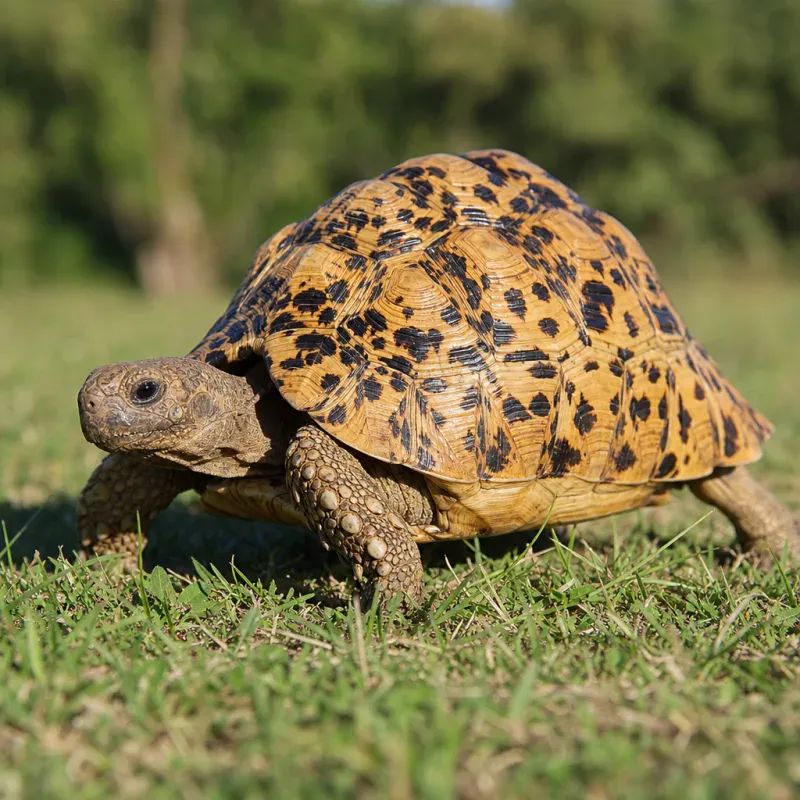
The leopard tortoise (Stigmochelys pardalis) is a hardy, long-lived species native to the savannas of eastern and southern Africa. With proper husbandry, these tortoises can live 50–100 years in captivity. However, they are susceptible to several health issues—most of which stem from suboptimal care. This guide covers the most common diseases, shell rot prevention, respiratory infections, and veterinary care to help you keep your leopard tortoise healthy for decades.
Enclosure Setup
Leopard tortoises need spacious, dry enclosures. Indoors, a single adult requires a minimum of 8 ft x 4 ft (2.4 m x 1.2 m) floor space. Outdoors, a predator-proof pen of at least 100 sq ft (9.3 sq m) is ideal. Use solid walls (at least 18 in / 45 cm high) that the tortoise cannot see through, to reduce stress.
Substrate
Choose a substrate that retains some moisture without becoming wet. A mix of 60% topsoil (no fertilizers or additives) and 40% play sand works well. Avoid cedar or pine shavings, which release aromatic oils that can cause respiratory irritation. Cypress mulch is acceptable but keep it dry.
Hides and Decor
Provide at least two hides—one on the warm side and one on the cool side. Use half-logs, cork bark, or commercially available reptile caves. Add flat rocks for basking and to help wear down nails and beak.
Heating and Lighting
Leopard tortoises are ectothermic and require a thermal gradient to regulate body temperature.
Basking Spot
Use a basking bulb (75–100W) to create a hotspot of 95–100°F (35–38°C). The ambient temperature on the warm side should be 85–90°F (29–32°C), and the cool side 75–80°F (24–27°C). Nighttime temperatures can drop to 65–70°F (18–21°C).
UVB Lighting
UVB is essential for vitamin D3 synthesis and calcium metabolism. Use a linear T5 HO 10.0 UVB bulb (e.g., Arcadia or Zoo Med) spanning at least half the enclosure. Replace the bulb every 6–12 months, even if it still emits visible light. Provide a 12-hour photoperiod.
Thermostats and Timers
Use a thermostat to control basking bulbs and a timer for UVB. This prevents overheating and ensures consistent day/night cycles.
Humidity and Hydration
Leopard tortoises come from semi-arid regions and prefer low humidity (40–60%). High humidity (>70%) combined with poor ventilation promotes shell rot and respiratory infections. However, hatchlings need slightly higher humidity (60–70%) to prevent dehydration.
Water
Provide a shallow, sturdy water dish that the tortoise can easily enter and exit. Change water daily. Soak your tortoise 2–3 times per week for 15–20 minutes in warm (85°F / 29°C) water. This encourages hydration and bowel movements.
Diet and Feeding
A proper diet is the cornerstone of health. Leopard tortoises are strict herbivores.
Staples
Feed a variety of dark leafy greens and grasses: dandelion greens, collard greens, mustard greens, turnip greens, endive, escarole, and Bermuda grass hay. Grass hay should make up at least 50% of the diet for adults to provide fiber and wear down the beak.
Calcium and Supplements
Dust food with a calcium powder (without vitamin D3 if using UVB) 3–4 times per week. Use a multivitamin once weekly. Avoid high-oxalate foods like spinach and beet greens, which bind calcium.
Foods to Avoid
Never feed protein (meat, dog/cat food), fruit (too much sugar), or iceberg lettuce (no nutrition). Also avoid rhubarb, avocado, and chocolate, which are toxic.
Handling and Stress Reduction
Leopard tortoises are generally docile but can become stressed by excessive handling. Limit handling to necessary health checks, soaking, and enclosure cleaning.
Proper Handling Technique
Support the entire body with both hands—never lift by the legs or tail. A tortoise that feels secure will not struggle. If it retreats into its shell, wait for it to relax before moving it.
Signs of Stress
Stress can manifest as refusal to eat, hiding excessively, or pacing along enclosure walls. Reduce handling and ensure the enclosure has adequate hides and visual barriers.
Common Health Issues
Shell Rot
Shell rot is a bacterial or fungal infection of the shell, often caused by prolonged exposure to wet substrate or poor ventilation. Symptoms include soft spots, discoloration, foul odor, and pitting. Prevention: keep substrate dry, provide UVB, and avoid high humidity. Treatment: gently clean with dilute betadine (povidone-iodine) solution, apply an antifungal ointment (e.g., silver sulfadiazine), and keep the tortoise dry. Severe cases require veterinary debridement and antibiotics.
Respiratory Infections
Respiratory infections (RI) are common in leopard tortoises due to drafts, low temperatures, or high humidity. Symptoms include nasal discharge, open-mouth breathing, wheezing, and lethargy. Prevention: maintain proper temperature gradient (basking 95–100°F) and avoid drafts. Treatment: increase ambient temperature by 5°F, provide a warm soak, and consult a vet for antibiotics (e.g., enrofloxacin or ceftazidime).
Metabolic Bone Disease (MBD)
MBD results from inadequate UVB or calcium. Symptoms include soft shell, pyramiding (abnormal shell growth), and limb weakness. Prevention: provide UVB 12 hours daily, calcium supplementation, and a balanced diet. Treatment: correct husbandry immediately; severe cases need injectable calcium and vitamin D3 from a vet.
Parasites
Internal parasites (e.g., pinworms, coccidia) and external parasites (e.g., ticks) can affect wild-caught tortoises. Symptoms: weight loss, diarrhea, or visible ticks. Prevention: fecal exams every 6–12 months; quarantine new tortoises. Treatment: deworming medications prescribed by a vet.
Prolapsed Organs
Prolapse of the cloaca or penis can occur from straining due to constipation or parasites. This is an emergency—keep the tissue moist with lubricating jelly and seek immediate veterinary care.
Veterinary Care
Find a veterinarian experienced with reptiles, ideally a board-certified herpetological vet. Schedule annual check-ups including a physical exam, fecal analysis, and blood work if needed. For any signs of illness (e.g., lethargy, discharge, appetite loss), consult a vet promptly. Never try to treat serious conditions with home remedies.
Quarantine
Always quarantine new tortoises for 90 days in a separate enclosure. Observe for signs of illness and have a fecal test done before introducing them to your existing tortoise.
Pitfalls and How to Avoid Them
| Mistake | Consequence | Solution |
|---|---|---|
| Incorrect temperature gradient | Respiratory infections, poor digestion | Use thermostat, monitor with digital thermometer |
| High humidity | Shell rot, fungal infections | Keep substrate dry, improve ventilation |
| Poor UVB or calcium | Metabolic bone disease, pyramiding | Replace UVB bulb every 6 months, supplement calcium |
| Overfeeding fruit or protein | Diarrhea, kidney damage, obesity | Feed only greens and grass hay |
| Handling too much | Stress, reduced appetite | Limit handling to necessary tasks |
| No quarantine | Disease transmission | Quarantine new arrivals 90 days |
Conclusion
By providing a spacious, well-heated enclosure with proper UVB, a high-fiber diet, and low humidity, you can prevent most health issues in leopard tortoises. Regular veterinary check-ups and a watchful eye for early symptoms will ensure your Stigmochelys pardalis lives a long, healthy life. Remember: prevention is always better than treatment.
Related Reading
- Leopard Tortoise Care: The Spotted Grazer of the Sav...
- Leopard Tortoise Diet Guide: Grass and Hay Varieties...
- Leopard Tortoise Enclosure Guide: Indoor and Outdoor...
Check optimal temps, calculate feeding, and find your perfect species match.
References
- Highfield, A. (2018). Tortoise Health and Husbandry. Carapace Press.
- Girling, S. (2013). Veterinary Nursing of Exotic Pets. Wiley-Blackwell.
- Mader, D. R. (2006). Reptile Medicine and Surgery. Saunders Elsevier.
- Boyer, T. H., & Boyer, D. M. (2015). The Reptile Health Guide. Reptile Publications.
🐾 Join the Community
See how other keepers set up their enclosures, ask questions, and share your experience.
🛠️ Apply What You Learned
Check optimal temps, calculate feeding schedules, and get calcium dosage — all personalized for your species.
Comments