Leopard Tortoise Diet: Grass, Hay & Safe Weeds
Introduction
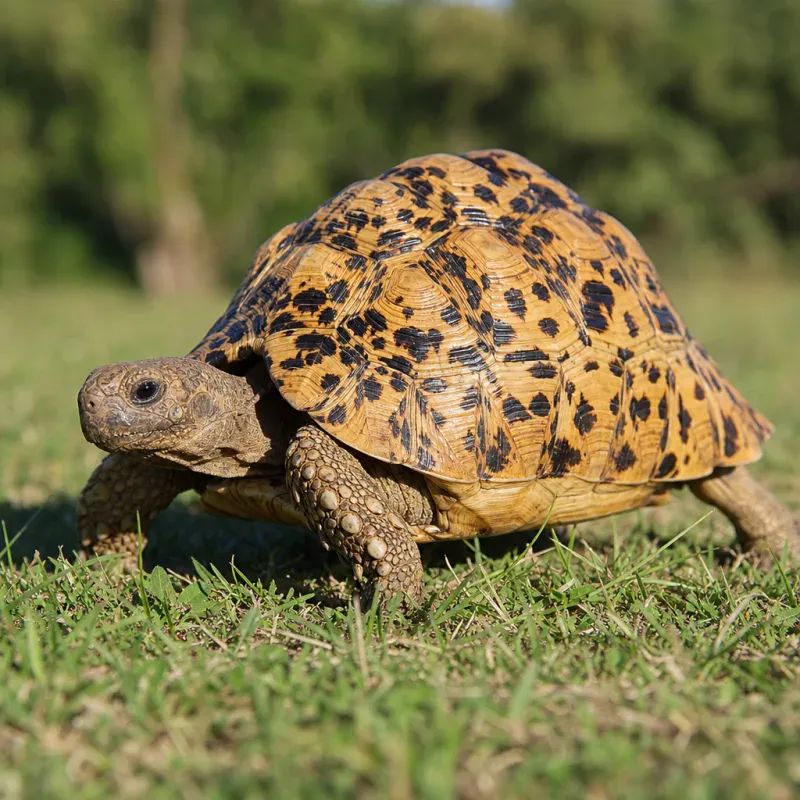
The Leopard Tortoise (Stigmochelys pardalis) is a large, grazing tortoise native to the savannas of eastern and southern Africa. In the wild, they roam vast grasslands, consuming a diet composed almost entirely of fibrous grasses and weeds. Replicating this natural diet in captivity is essential for proper growth, shell development, and digestive health. This guide provides evidence-based recommendations on grass and hay varieties, safe weeds, calcium supplementation, and feeding schedules to keep your Leopard Tortoise thriving.
Leopard tortoises are one of the largest mainland tortoise species, reaching up to 18 inches (45 cm) and 40 pounds (18 kg). Their digestive systems are adapted to process large volumes of low-nutrient, high-fiber plant material. In captivity, many owners unknowingly feed too much fruit, protein, or nutrient-poor greens, leading to obesity, pyramiding, and metabolic bone disease. This guide will help you build a diet that mimics their natural forage, ensuring a long, healthy life of 80+ years.
Before making any dietary changes, consult with a reptile veterinarian, especially if your tortoise has existing health issues. This guide is for educational purposes and should not replace professional advice.
Grass and Hay Varieties
Grass should form the bulk (70–80%) of your Leopard Tortoise's diet. Offer a variety of fresh grasses and high-quality hays to ensure fiber intake and prevent obesity. Fiber is crucial for gut motility and preventing diarrhea or constipation. Leopard tortoises in the wild graze for hours, so offering unlimited grass/hay mimics that natural behavior and keeps their beak trimmed.
Recommended Grasses
- Bermuda grass (Cynodon dactylon) – High in fiber, low in protein, widely available. It's a staple in many tortoise diets and can be grown indoors in trays.
- Timothy hay – Excellent fiber source; avoid alfalfa due to high protein and calcium content. Timothy is a cool-season grass that's easy to find in pet stores.
- Orchard grass – Soft, palatable, and low in oxalates. Good for picky eaters or young tortoises.
- Meadow hay – Mixed grasses, provides variety and enrichment. Look for hay that is green and smells sweet, not dusty or moldy.
- Buffel grass – Native to Africa, good for grazing tortoises. If you live in a warm climate, you can grow it outdoors.
Hays to Avoid
- Alfalfa hay – Too high in protein and calcium; can cause shell pyramiding and kidney issues. Alfalfa is a legume, not a grass, and is too rich for tortoises.
- Clover hay – High protein; use sparingly, if at all. Clover is also a legume and can cause bloating if overfed.
Fresh grass can be grown indoors in trays (using wheatgrass or Bermuda grass seeds) or sourced from pesticide-free lawns. If you collect grass from outside, avoid areas treated with fertilizers, herbicides, or pesticides. Hay should be stored in a dry, cool place to prevent mold. Always check hay for dust or moisture before offering it to your tortoise.
If you're using fresh grass, make sure it's not too long — cut it into manageable pieces for young tortoises. For adults, you can leave it longer to encourage natural grazing behavior.
Safe Weeds and Plants
Weeds and leafy greens make up the remaining 20–30% of the diet. They provide vitamins, minerals, and hydration. Always wash and chop into bite-sized pieces to prevent choking and make it easier for your tortoise to eat. Wild weeds are often more nutritious than store-bought greens because they are grown in natural soil.
Safe Weeds
- Dandelion (Taraxacum officinale) – Leaves and flowers; high in calcium and vitamin A. Dandelion is a favorite among tortoises and easy to find in yards.
- Plantain (Plantago major, Plantago lanceolata) – Broadleaf and narrowleaf; excellent fiber. Plantain is a common weed that grows in many climates.
- Hibiscus leaves and flowers – Rich in antioxidants. The flowers are a great treat and add color to the diet.
- Mallow (Malva spp.) – Soft, palatable leaves. Mallow is a wild relative of okra and is very safe.
- Chickweed (Stellaria media) – High moisture, good for hydration. Chickweed is a cool-season weed that's packed with nutrients.
- Clover (Trifolium spp.) – Use sparingly due to protein content. If you feed clover, mix it with other weeds.
Safe Leafy Greens
- Collard greens – High in calcium and fiber.
- Mustard greens – Peppery flavor, rich in vitamins.
- Turnip greens – Good calcium source.
- Endive – Crisp and hydrating.
- Escarole – Similar to endive, low in oxalates.
- Romaine lettuce (occasional, as it is low in nutrients) – Use as a hydration booster in hot weather.
Plants to Avoid
- Spinach, Swiss chard, beet greens – High oxalates bind calcium, leading to kidney stones and metabolic bone disease.
- Broccoli, cabbage, kale – High goitrogens; limit to occasional treats. Goitrogens interfere with thyroid function.
- Iceberg lettuce – No nutritional value; it's mostly water and can cause diarrhea.
- Fruits – Only as rare treats (e.g., strawberry, melon) due to sugar content. In the wild, tortoises rarely eat fruit.
- Animal protein – Never feed meat, dog food, or cat food. Tortoises are herbivores; protein causes kidney failure and pyramiding.
- Rhubarb, avocado, and tomato leaves – Toxic to tortoises.
When foraging for weeds, be 100% sure of the plant's identity. Use a plant identification app or consult a local expert. Avoid weeds from roadsides or areas that may have been sprayed with chemicals.
Calcium Supplementation
Calcium is critical for shell growth, bone density, and egg production in females. Leopard Tortoises have high calcium requirements due to their rapid growth and large size. Without adequate calcium, they can develop metabolic bone disease (MBD), which causes soft shells and deformities.
Supplementation Guidelines
- Use a pure calcium carbonate powder without added phosphorus or Vitamin D3 (if tortoise has UVB exposure). Too much D3 can cause hypercalcemia.
- Dust food with calcium powder at every feeding for juveniles (under 3 years) and 3–4 times per week for adults.
- Provide a cuttlebone or calcium block in the enclosure for self-regulation. Tortoises will chew on it if they need calcium.
- If using a multivitamin, choose one low in Vitamin A to avoid toxicity. Vitamin A excess can cause skin shedding and organ damage.
Calcium-to-Phosphorus Ratio
Target a Ca:P ratio of 2:1 or higher. The foods listed above naturally have good ratios. Avoid high-phosphorus foods like grains and seeds. Phosphorus binds calcium, making it unavailable. Even if you supplement calcium, a high-phosphorus diet can negate its benefits.
To calculate the Ca:P ratio of a food, look up its nutritional value. For example, dandelion leaves have a ratio of about 2.8:1, which is excellent. Spinach has a ratio of 0.6:1, which is poor.
Feeding Schedule
Leopard Tortoises are grazers and should have access to food throughout the day. A structured schedule helps prevent overfeeding and obesity. In the wild, they spend 6–8 hours a day foraging. In captivity, you can mimic this by offering food in the morning and letting them graze.
Daily Feeding
- Offer fresh grass and hay ad libitum as the base. This should always be available.
- Provide a handful of weeds/greens in the morning. The amount depends on the tortoise's size.
- Remove uneaten greens after 2–3 hours to prevent spoilage. In hot weather, greens can wilt and become unappealing.
- Provide fresh water daily in a shallow dish. The dish should be shallow enough for the tortoise to climb out easily.
Weekly Schedule
- Monday–Friday: Grass/hay base + variety of safe weeds. Rotate the weeds to provide different nutrients.
- Saturday: Calcium dusted greens + a small treat (e.g., hibiscus flower). This is a good day to offer a calcium boost.
- Sunday: Fast day (no greens) – only grass/hay and water. Mimics natural grazing patterns and prevents obesity.
Portion Control
Juveniles (under 1 year) should eat as much as they want in 15–20 minutes. They are growing quickly and need more protein and calcium. Adults can be fed a pile of greens roughly the size of their shell. Monitor weight monthly; a healthy tortoise gains slowly and maintains a smooth shell. A sudden weight gain may indicate overfeeding.
If your tortoise is overweight, reduce the amount of greens and focus more on hay. If it's underweight, increase the variety of weeds and ensure it's eating enough.
Hydration and Water
Although Leopard Tortoises get much of their water from food, they still need fresh water daily. Dehydration can cause constipation and kidney stones. Here are some tips:
- Provide a shallow water dish large enough for the tortoise to soak in. Soaking helps with hydration and shedding.
- Mist the enclosure and food lightly to increase humidity, especially for juveniles.
- If your tortoise is not drinking, soak it in warm water (85–90°F) for 15–20 minutes twice a week.
- In hot weather, offer water-rich weeds like chickweed to help with hydration.
Signs of dehydration include sunken eyes, dry skin, and thick urates (the white part of their waste). If you notice these, increase soaks and water availability.
Lessons From Experienced Keepers
- Overfeeding fruit: Sugar causes diarrhea and obesity. Fruit should be a rare treat, not a staple.
- Using only iceberg lettuce: No nutritional value; leads to malnutrition. Iceberg is 96% water and lacks fiber.
- Not providing UVB: UVB light is essential for Vitamin D3 synthesis and calcium absorption. Without UVB, calcium supplements are useless.
- Feeding too much protein: Causes pyramiding and kidney damage. Stick to grasses and weeds.
- Ignoring hydration: Dehydration causes constipation and kidney stones. Always provide water.
- Supplementing with D3 if tortoise has UVB: Can cause hypercalcemia. If you have UVB, use calcium without D3.
- Feeding from a bowl instead of scattering: Scatter food to encourage natural foraging behavior.
- Not varying the diet: A monotonous diet can lead to nutrient deficiencies. Rotate greens and weeds.
Comparison Table: Common Foods for Leopard Tortoises
| Food | Type | Ca:P Ratio | Frequency | Notes |
|---|---|---|---|---|
| Bermuda grass | Grass | 2:1 | Daily | Base diet |
| Timothy hay | Hay | 1.5:1 | Daily | Fiber source |
| Dandelion leaves | Weed | 2.8:1 | Daily | High calcium |
| Collard greens | Leafy green | 14:1 | 2–3x/week | Excellent calcium source |
| Spinach | Leafy green | 0.6:1 | Avoid | High oxalates |
| Strawberry | Fruit | 0.5:1 | Once/month | Treat only |
| Orchard grass | Hay | 1.4:1 | Daily | Soft and palatable |
| Hibiscus flower | Flower | 1.2:1 | Weekly | Antioxidant treat |
| Endive | Leafy green | 1.1:1 | Weekly | Low oxalate |
Troubleshooting Feeding Issues
Even with the best intentions, you may encounter feeding problems. Here are common issues and solutions:
Picky Eaters
Some tortoises refuse new foods. Mix new greens with favorites like dandelion. Gradually increase the proportion of new food over 1–2 weeks. You can also chop food finely so they can't pick out only the preferred bits.
Loss of Appetite
If your tortoise stops eating, check the temperature and lighting. Leopard tortoises need a basking spot of 95–100°F (35–38°C) and a cool side of 75–80°F (24–27°C). If temperatures are too low, they won't eat. Also, check for signs of illness like nasal discharge or lethargy. Consult a vet if the issue persists.
Diarrhea
Diarrhea is often caused by too much fruit, sugary foods, or sudden diet changes. Remove treats and stick to a high-fiber diet of grass and hay. Ensure the tortoise is hydrated.
Constipation
Constipation can result from dehydration or a lack of fiber. Increase water intake and offer more fibrous weeds like plantain. Warm soaks can help stimulate bowel movements.
Pyramiding (Abnormal Shell Growth)
Pyramiding is caused by excess protein, low humidity, and insufficient calcium. Ensure your diet is 80% grass/hay, provide a humid hide, and supplement calcium as directed.
Conclusion
A proper diet is the cornerstone of Leopard Tortoise health. By emphasizing grasses and hays, supplementing with safe weeds, providing calcium, and following a consistent feeding schedule, you can prevent common health issues like pyramiding, obesity, and metabolic bone disease. Always research new foods and consult a reptile veterinarian for personalized advice. With the right nutrition, your Leopard Tortoise can live 80+ years in excellent condition.
Remember, every tortoise is unique. Observe your tortoise's eating habits, weight, and shell condition, and adjust the diet as needed. A healthy tortoise is active, has a smooth shell, and produces regular, well-formed droppings. If you're ever in doubt, reach out to a reptile specialist.
FAQ
Can I feed my Leopard Tortoise fruit?
Fruit should be a rare treat, offered no more than once a month. Wild Leopard Tortoises rarely encounter fruit, and the high sugar content can cause diarrhea, obesity, and disrupt their gut flora. If you want to offer a treat, stick to berries or melon in very small pieces.
What is the best hay for a Leopard Tortoise?
Timothy hay and orchard grass are excellent choices because they are high in fiber and low in protein. Bermuda hay is also good, especially if you can find it. Avoid alfalfa and clover hay due to their high protein content, which can lead to shell pyramiding.
How often should I dust food with calcium?
Juveniles (under 3 years) should have their food dusted with calcium at every feeding. Adults need calcium dusting 3–4 times per week. If you provide a cuttlebone in the enclosure, the tortoise can self-regulate its intake. Always use calcium without Vitamin D3 if you have UVB lighting.
Can I feed my Leopard Tortoise weeds from my yard?
Yes, if you are certain they are safe and have not been treated with pesticides, herbicides, or fertilizers. Wash them thoroughly and chop them into small pieces. Avoid weeds from roadsides or areas frequented by pets. When in doubt, use a plant identification app or consult a local expert.
Related Reading
Check optimal temps, calculate feeding, and find your perfect species match.
References
- https://www.merckvetmanual.com/exotic-and-laboratory-animals/reptiles/nutrition-of-reptiles
- https://www.reptilesmagazine.com/leopard-tortoise-care/
- https://www.thesprucepets.com/leopard-tortoise-1236891
- https://tortoiseforum.org/threads/leopard-tortoise-diet.173244/
🐾 Join the Community
See how other keepers set up their enclosures, ask questions, and share your experience.
🛠️ Apply What You Learned
Check optimal temps, calculate feeding schedules, and get calcium dosage — all personalized for your species.
Comments
No account needed — corrections, updates and questions are all welcome. For a full question with photos, the community Q&A is the better place.