Fire Skink Care: Enclosure & Feeding Guide
Introduction to Fire Skinks
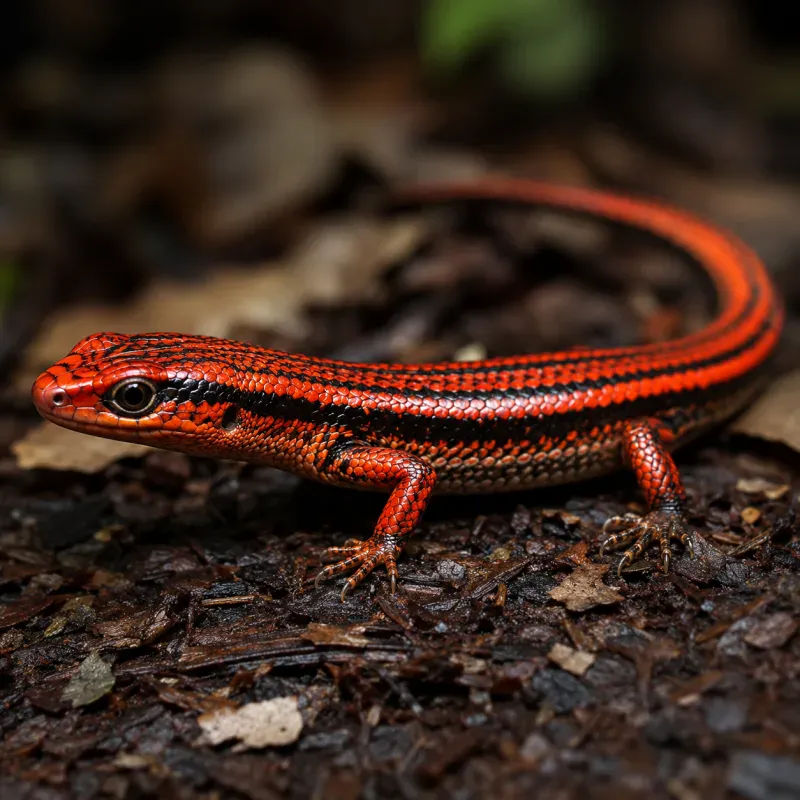
The Fire Skink (Lepidothyris fernandi) is a strikingly beautiful lizard native to the tropical forests of West Africa. With its bright red, orange, and black bands, it is a popular choice among intermediate reptile keepers. Fire Skinks are semi-fossorial, spending most of their time burrowing in loose, moist substrate. They are generally shy but can become accustomed to gentle handling with patience. This guide covers all aspects of Fire Skink husbandry, from enclosure setup to feeding and health.
\n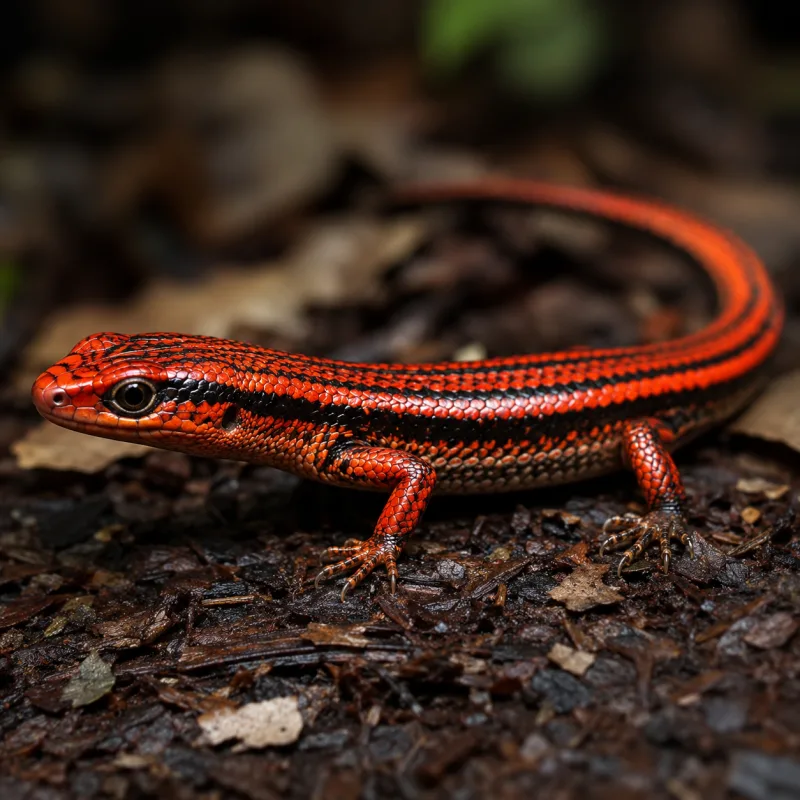
Enclosure Setup
Fire Skinks are active burrowers and need a horizontally oriented enclosure with ample floor space. A single adult requires at least a 40-gallon breeder tank (36" x 18" x 16"), but larger is always better. For a pair or trio, a 75-gallon tank or custom enclosure is recommended. The enclosure must have a secure, well-ventilated lid to prevent escapes and maintain humidity.
Substrate for Burrowing
Substrate is the most critical element for Fire Skinks. They need a deep, loose, moisture-retentive substrate to dig and feel secure. A mix of 60% organic topsoil (no fertilizers or perlite), 30% fine-grade cypress mulch, and 10% play sand works well. Coconut coir or eco-earth can also be used. The depth should be at least 4–6 inches to allow full burrowing. Mist the substrate daily to maintain a slightly damp (but not waterlogged) consistency. Avoid substrates like reptile carpet, bark chips, or gravel, which can cause impaction or respiratory issues.
Decor and Hides
Provide multiple hiding spots: a humid hide (plastic container with damp sphagnum moss), a dry hide on the warm side, and a cool-side hide. Cork bark tubes, half-logs, and leafy plants (real or artificial) add cover and climbing opportunities. Leaf litter (magnolia or oak leaves) helps retain humidity and mimics the forest floor.
Heating and Lighting
Fire Skinks are ectothermic and require a thermal gradient to regulate their body temperature.
| Parameter | Target Value |
|---|---|
| Basking spot | 90–95°F (32–35°C) |
| Warm side ambient | 80–85°F (27–29°C) |
| Cool side ambient | 70–75°F (21–24°C) |
| Nighttime drop | 65–70°F (18–21°C) |
Use a low-wattage halogen or ceramic heat emitter for basking. Place the heat source on one end of the enclosure to create a gradient. Always use a thermostat to prevent overheating. UVB lighting is not strictly required if you provide a calcium/D3 supplement, but a low-output UVB bulb (5.0 or 2–3%) over 12 hours daily can improve vitamin D synthesis and overall health. Provide a photoperiod of 12–14 hours of light in summer, 10–12 hours in winter.
Humidity and Water
Fire Skinks need high humidity (70–85%) to shed properly and stay hydrated. Use a digital hygrometer to monitor levels. Mist the enclosure heavily in the morning and evening, and use a substrate that holds moisture. A reptile fogger or humidifier can help maintain levels, especially in dry climates. Provide a large, shallow water dish that is changed daily. The dish should be heavy enough to prevent tipping. You may also see your skink soaking; this is normal behavior.
Diet and Feeding Schedule
Fire Skinks are insectivores. Offer a varied diet of gut-loaded insects dusted with calcium and multivitamin supplements.
| Insect | Frequency | Supplement Schedule |
|---|---|---|
| Crickets | Staple (3–4x/week) | Calcium with D3 at every feeding; multivitamin 1x/week |
| Dubia roaches | Staple (3–4x/week) | Same as crickets |
| Black soldier fly larvae | 2–3x/week | Calcium dusted |
| Mealworms | 1–2x/week (treat) | Calcium dusted |
| Waxworms | Occasional treat | None |
Feeding schedule: Juveniles (under 1 year) should be fed daily, offering as many insects as they will eat in 10–15 minutes. Adults (1+ year) can be fed every other day, 5–8 appropriately-sized insects per feeding. Always remove uneaten prey after 20 minutes to prevent stress and bites. Provide a shallow dish of calcium powder (without D3) in the enclosure for self-regulation.
Handling and Temperament
Fire Skinks are generally shy and fast. They may tail-whip or bite if frightened, but bites are rare and usually not painful. Begin handling sessions in the enclosure by gently scooping the skink from below; never grab from above, as this triggers a predator response. Support the body fully and keep sessions short (5–10 minutes) at first. Increase duration gradually as the skink becomes comfortable. Always wash hands before and after handling. Avoid handling during shedding or after a large meal. With regular, gentle interaction, many Fire Skinks become tolerant of handling, though they may never be truly “cuddly.”
Common Health Issues
- Respiratory infections: Caused by low humidity or drafts. Symptoms include wheezing, open-mouth breathing, and nasal discharge. Increase humidity and see a vet.
- Metabolic bone disease (MBD): From calcium deficiency or lack of UVB. Signs include soft jaw, lethargy, and twitching. Correct diet and lighting.
- Dysecdysis (bad shed): Often due to low humidity. Provide a humid hide and ensure substrate is damp.
- Parasites: Internal (worms, coccidia) or external (mites). Fecal exams are recommended annually.
- Impaction: From ingesting loose substrate. Feed in a dish or on a flat rock; avoid sand-based substrates.
Common Mistakes
- Using dry substrate or insufficient depth – prevents burrowing and leads to stress.
- Overhandling before the skink is settled – causes chronic stress.
- Inadequate humidity – leads to shedding problems and respiratory issues.
- Feeding only one type of insect – causes nutritional deficiencies.
- Using heat rocks or unregulated heat sources – can burn the skink.
- Keeping in a small, tall enclosure – Fire Skinks need floor space, not height.
Comparison: Fire Skink vs. Other Popular Skinks
| Species | Size | Difficulty | Humidity Needs | Burrowing | Handling |
|---|---|---|---|---|---|
| Fire Skink | 12–15 in | Intermediate | 70–85% | High | Shy, tolerates handling |
| Blue-Tongued Skink | 18–24 in | Beginner | 40–60% | Low | Docile, easy |
| African Five-Lined Skink | 6–8 in | Beginner | 50–70% | Moderate | Fast, flighty |
| Prehensile-Tailed Skink | 12–18 in | Advanced | 80–90% | Low | Calm but specific needs |
Fire Skinks are a rewarding species for keepers who can provide deep, humid substrate and consistent care. With proper husbandry, they can live 10–15 years and display stunning colors.
Related Reading
\\n- \\n
- Fire Skink Care Guide \\n
- Blue-Tongue Skink Care — Similar Species \\n
- Feeding Calculator \\n
Check optimal temps, calculate feeding, and find your perfect species match.
References
- McLeod, L. (2023). Fire Skink Care and Husbandry. The Spruce Pets.
- Repitilian Magazine (2021). Fire Skink (Lepidothyris fernandi) Care Guide. Repitilian Publishing.
- Rossi, J. V. (2019). The Fire Skink: Natural History and Captive Care. Herp Digest.
- VetMed Institute (2022). Common Health Issues in African Skinks. Veterinary Herpetology Journal.
🐾 Join the Community
See how other keepers set up their enclosures, ask questions, and share your experience.
🛠️ Apply What You Learned
Check optimal temps, calculate feeding schedules, and get calcium dosage — all personalized for your species.
Comments