Fire Skink Care: Complete Guide to the Living Flame Lizard
Species Overview
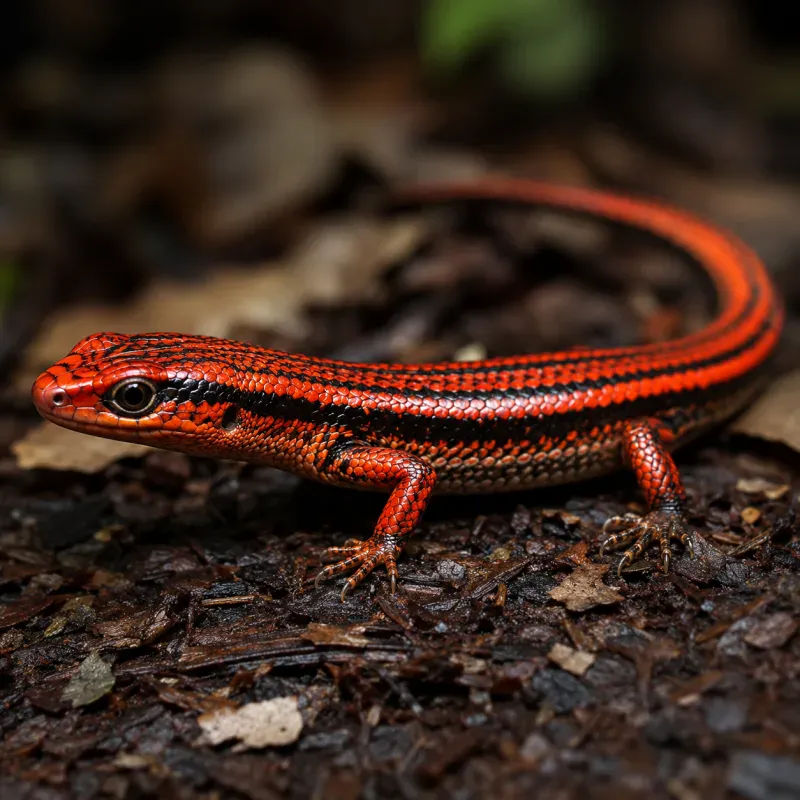
The fire skink (Lepidothyris fernandi) is one of the most visually stunning lizards available in the pet trade. Native to the humid forests of West and Central Africa, they display brilliant red-orange flanks, gold dorsal stripes, and a glossy black-and-white speckled body. Despite their exotic appearance, they are surprisingly hardy and make excellent beginner-to-intermediate pets for keepers who can provide deep substrate and high humidity.
Fire skinks are diurnal, semi-fossorial, and spend much of their time burrowing. They are shy but can become hand-tame with patience. At 12–15 inches, they are a manageable size for a display enclosure.
Natural History and Behavior
In the wild, fire skinks inhabit the leaf litter and loose soil of tropical rainforests, where they dig extensive tunnel systems. This burrowing behavior is not just a preference—it is essential for their psychological well-being. They are active during the day, often basking in patches of sunlight before retreating into their burrows. Understanding this natural history is key to replicating their environment successfully in captivity.
Why They Are Called "Living Flame Lizards"
The nickname comes from their vivid coloration: the bright red-orange flanks resemble flickering flames, especially when they move quickly through their enclosure. This coloration serves as a warning to predators in the wild, signaling that they are not an easy meal. In captivity, this beauty makes them a centerpiece species for any reptile enthusiast.
Lifespan and Size
With proper care, fire skinks can live 15–20 years in captivity, making them a long-term commitment. They reach adult size at around 12–15 inches (30–38 cm) from snout to tail tip, with males typically being slightly larger and having broader heads than females. Their manageable size makes them suitable for medium-sized enclosures.
Enclosure Setup
| Life Stage | Minimum Enclosure |
|---|---|
| Hatchling/juvenile | 20-gallon long (30"×12") |
| Adult | 40-gallon breeder (36"×18") |
Fire skinks are terrestrial with some climbing ability. A PVC or wood enclosure holds humidity better than glass. Provide a secure mesh lid — they are surprisingly strong and can push loose lids open. Essential furnishings: at least two hides (warm and cool), cork bark flats, a shallow water dish, and flat rocks for basking.
Enclosure Material Comparison
| Material | Humidity Retention | Heat Retention | Cost | Best For |
|---|---|---|---|---|
| Glass aquarium | Poor – loses humidity quickly | Moderate | Low | Budget setups, but requires frequent misting |
| PVC enclosure | Excellent | Good | Moderate | Most keepers; easy to clean and maintain humidity |
| Wood (melamine or sealed) | Good if sealed | Good | Moderate | Custom builds, good insulation |
Step-by-Step Enclosure Setup
- Choose the right enclosure: For an adult, a 40-gallon breeder (36"×18" footprint) is the minimum. Bigger is always better—consider a 4×2×2 foot enclosure if space allows.
- Seal all gaps: If using a wooden enclosure, apply a non-toxic waterproof sealant to prevent moisture damage and mold.
- Install substrate: Add at least 5–7 inches of the recommended substrate mix (see Deep Substrate section). Ensure it is slightly moist but not waterlogged.
- Place hides: Put one hide on the warm side and one on the cool side. Use cork bark flats or half-logs that allow the skink to feel secure.
- Add climbing elements: Even though they are terrestrial, fire skinks appreciate sturdy branches or driftwood to climb on and explore.
- Set up water dish: Provide a shallow, heavy water dish that cannot be tipped over. Clean and refill daily.
- Install lighting and heating: Position a basking lamp over one end and a UVB tube across the top. Ensure the basking surface reaches the correct temperature.
- Monitor temperatures: Use digital thermometers on both the warm and cool sides, and a hygrometer to track humidity.
Common Setup Mistakes
- Using a glass tank without modifications: Glass loses humidity rapidly, leading to dry conditions and shedding problems. If using glass, consider covering part of the screen lid with plastic wrap or foil to retain moisture.
- Placing the enclosure in a drafty area: Drafts can cause temperature fluctuations and respiratory issues. Keep the enclosure away from windows, doors, and air vents.
- Overcrowding with decorations: While enrichment is good, too many items can make the enclosure difficult to clean and reduce the skink's sense of open space.
Heating & Humidity
| Zone | Temperature |
|---|---|
| Basking surface | 92–96°F (33–36°C) |
| Warm side | 85–90°F (29–32°C) |
| Cool side | 75–80°F (24–27°C) |
| Night | 68–74°F (20–23°C) |
- Humidity: 60–80%. Fire skinks come from humid West African forests. Mist heavily once or twice daily, or use a reptile fogger on a timer.
- Heating: UTH on thermostat + overhead halogen basking bulb. They need belly heat for digestion and a basking spot for thermoregulation.
- UVB: T5 HO 5.0 tube recommended. Fire skinks are diurnal and benefit from UVB for calcium metabolism.
Setting Up Heating Equipment
- Under-tank heater (UTH): Attach to the bottom or side of the enclosure on the warm side. Always connect to a thermostat to prevent overheating and burns. The UTH provides belly heat, which is crucial for digestion.
- Overhead basking bulb: Use a halogen bulb or a ceramic heat emitter in a dome fixture. Place it above the basking surface, ensuring the surface temperature reaches 92–96°F. Use a dimmer or thermostat to regulate output.
- Nighttime heat: If nighttime temperatures drop below 68°F, use a ceramic heat emitter (no light) connected to a thermostat to maintain a gentle warm-up. Avoid colored bulbs, which can disrupt their sleep cycle.
- UVB placement: Install a T5 HO 5.0 tube covering about two-thirds of the enclosure. Place it 12–18 inches above the basking surface, with no glass or plastic between the bulb and the skink to filter UVB.
Maintaining Humidity
- Misting: Mist the enclosure heavily in the morning and evening. Use a spray bottle with dechlorinated water. This mimics natural dew and rainfall.
- Fogger: A reptile fogger on a timer can maintain consistent humidity, especially in drier climates. Place it near the cool side to create a humidity gradient.
- Moist hide: Create a "moss hide" by placing a hide filled with damp sphagnum moss on the warm side. This provides a microclimate with higher humidity, which is especially helpful during shedding.
- Hydrometer monitoring: Use a digital hygrometer to check humidity levels daily. Adjust misting frequency based on readings.
Troubleshooting Heating and Humidity Issues
| Problem | Possible Cause | Solution |
|---|---|---|
| Humidity too low (below 60%) | Screen lid, dry substrate, insufficient misting | Cover part of the lid, increase misting, add a fogger, or use a moisture-retaining substrate like coconut coir |
| Humidity too high (above 80%) | Over-misting, poor ventilation | Reduce misting, increase ventilation, ensure substrate is not waterlogged |
| Basking surface too hot | Bulb too powerful, thermostat malfunction | Use a lower wattage bulb, adjust thermostat setpoint, or raise the bulb higher |
| Warm side too cool | Insufficient heating, enclosure too large | Increase bulb wattage, add a second heat source, or move the enclosure to a warmer room |
Deep Substrate
This is the single most important aspect of fire skink care. They are obligate burrowers that feel secure only when buried. Provide 5–7 inches of substrate:
- Recommended mix: 60% organic topsoil + 30% coco coir + 10% play sand. This holds burrows well and retains moisture.
- Alternative: Cypress mulch or ReptiChip. Avoid pure aspen (molds at high humidity) and pure sand (doesn't hold burrows).
- Spot-clean feces daily. Full substrate change every 2–4 months. A cleanup crew (springtails + isopods) in a bioactive setup reduces maintenance dramatically.
Why Deep Substrate is Non-Negotiable
Fire skinks are obligate burrowers, meaning they have an innate need to dig. In the wild, they spend most of their time underground, emerging only to bask or hunt. Without deep substrate, they experience chronic stress, which can lead to refusal to eat, weakened immune system, and even self-harm. Providing 5–7 inches of loose, diggable substrate is not optional—it's a fundamental requirement.
Creating the Perfect Substrate Mix
- Gather materials: Organic topsoil (no fertilizers or chemicals), coco coir (also called coconut fiber), and play sand (washed and sterilized).
- Mix in a large container: Combine 60% topsoil, 30% coco coir, and 10% play sand by volume. Stir thoroughly to ensure even distribution.
- Moisten the substrate: Add dechlorinated water while mixing until the substrate holds its shape when squeezed but doesn't drip water. It should feel like damp soil, not mud.
- Add a drainage layer (optional): For bioactive setups, place a layer of hydroballs or pebbles at the bottom, covered with a mesh barrier, to prevent waterlogging.
- Fill the enclosure: Pour the substrate into the enclosure, building it deeper on one side to create a natural gradient. Tamp it down slightly to prevent collapse.
Substrate Maintenance
- Spot-cleaning: Remove feces and urates daily using a scoop or paper towel. This prevents bacterial growth and odors.
- Full replacement: Every 2–4 months, remove all substrate and replace it with fresh mix. This is essential to prevent the buildup of harmful bacteria and fungi.
- Bioactive option: For a self-cleaning setup, introduce springtails and isopods (cleanup crew) that consume waste and organic matter. This dramatically reduces maintenance and creates a more natural ecosystem.
Substrate Comparison Table
| Substrate | Burrow Holding | Moisture Retention | Risk of Impaction | Recommended? |
|---|---|---|---|---|
| 60% topsoil + 30% coco coir + 10% sand | Excellent | Excellent | Low | Yes |
| Cypress mulch | Good | Good | Low | Yes |
| ReptiChip (coconut husk) | Good | Good | Low | Yes |
| Pure aspen | Poor | Poor – molds easily | Moderate | No |
| Pure sand | Poor – collapses | Poor | High | No |
Diet & Feeding
Fire skinks are insectivores with a preference for soft-bodied prey:
- Staples: Crickets, dubia roaches, earthworms (nightcrawlers), silkworms, black soldier fly larvae.
- Occasional: Mealworms, superworms (treat), hornworms (hydrating treat), pinky mice (adults only, once monthly).
- Frequency: Juveniles: daily. Adults: every 1–2 days.
- Supplementation: Calcium (no D3) every other feeding. Calcium with D3 1–2×/week. Multivitamin 1×/week.
Prey Item Sizing and Nutrition
When feeding, ensure prey items are no larger than the space between the skink's eyes. This prevents impaction and choking. Crickets and roaches should be gut-loaded with a high-quality insect feed 24 hours before offering. Dust prey with supplements according to the schedule below.
Supplementation Schedule
| Feeding Day | Supplement | Amount |
|---|---|---|
| Day 1 (adult) | Calcium without D3 | Light dusting |
| Day 2 (adult) | Multivitamin | Light dusting |
| Day 3 (adult) | Calcium without D3 | Light dusting |
| Day 4 (adult) | Calcium with D3 | Light dusting |
| Repeat cycle |
For juveniles, feed daily and alternate supplements similarly, but include calcium with D3 twice a week to support rapid bone growth.
Feeding Tips and Troubleshooting
- Offer a variety: Rotate staple prey to provide a balanced nutrient profile and prevent boredom.
- Live prey only: Fire skinks prefer moving prey. Feed live insects, not dead ones.
- Feed in the morning: Since they are diurnal, offer food in the morning when they are most active.
- Monitor weight: Weigh your skink monthly to ensure it is maintaining a healthy weight. A sudden loss may indicate illness or stress.
Common Feeding Mistakes
- Overfeeding mealworms: Mealworms are high in fat and low in calcium. Offer them as occasional treats, not staples.
- Feeding pinky mice too often: Pinky mice are high in fat and protein. Offer only to adults once a month at most.
- Skipping supplements: Without calcium and vitamins, fire skinks can develop metabolic bone disease (MBD), leading to deformities and death.
- Feeding wild-caught insects: These may carry pesticides or parasites. Always use captive-bred insects from a reputable supplier.
Where Things Go Wrong
- Shallow substrate: Fire skinks that can't burrow become chronically stressed and may stop eating. 5+ inches is mandatory.
- Low humidity: Dry conditions cause stuck shed (especially on toes and tail tip), dehydration, and respiratory issues.
- Too much handling: Most fire skinks tolerate brief handling but prefer to be left alone. Over-handling causes stress and appetite loss.
- No UVB: While historically kept without UVB, modern standards recommend it. A T5 5.0 tube improves health and color vibrancy.
Detailed Troubleshooting for Common Issues
| Issue | Symptoms | Cause | Solution |
|---|---|---|---|
| Stuck shed | Dried skin on toes, tail tip, or eyes | Low humidity, lack of moist hide | Increase humidity, provide a moist hide with damp sphagnum moss, soak the skink in shallow warm water for 10–15 minutes |
| Respiratory infection | Wheezing, open-mouth breathing, excess mucus | Low humidity, drafts, cold temperatures | Raise humidity, eliminate drafts, ensure temperatures are within range, consult a vet |
| Refusing to eat | No interest in food for several days | Stress, improper temperatures, illness | Check temperatures and humidity, reduce handling, offer preferred prey, consult a vet if persistent |
| Metabolic bone disease (MBD) | Limp limbs, swollen jaw, tremors | Lack of UVB, calcium deficiency | Provide UVB, supplement with calcium and D3, consult a vet immediately |
Handling and Taming
Fire skinks are naturally shy and may initially run or hide when approached. With patience, they can become accustomed to gentle handling. Follow these steps:
- Start slowly: For the first week, only interact by opening the enclosure for feeding and maintenance. Let the skink observe you.
- Hand feeding: Offer treats like dubia roaches or earthworms from tongs. This builds positive associations.
- Short handling sessions: After a few weeks, begin handling for 5–10 minutes daily. Support the body fully and keep sessions brief to minimize stress.
- Never grab or squeeze: Always let the skink walk onto your hand voluntarily. Avoid handling when the skink is in shed or appears stressed.
Health and Wellness Checklist
- Regular observation: Watch for changes in appetite, activity, and stool consistency.
- Veterinary care: Find a reptile-experienced vet and schedule annual check-ups.
- Quarantine new animals: Isolate any new reptiles for at least 30 days to prevent disease spread.
- Maintain clean water: Change water daily and disinfect the dish weekly.
Frequently Asked Questions
Do fire skinks need UVB lighting?
Yes, modern standards recommend UVB lighting for fire skinks. A T5 HO 5.0 tube should be provided for 10–12 hours daily. UVB helps with calcium metabolism and vitamin D3 synthesis, preventing metabolic bone disease and promoting vibrant coloration. While they were historically kept without UVB, providing it is essential for optimal health.
How often should I feed my adult fire skink?
Adult fire skinks should be fed every 1–2 days. Offer a variety of staple insects such as crickets, dubia roaches, earthworms, silkworms, and black soldier fly larvae. Juveniles require daily feeding. Always dust prey with calcium and multivitamin supplements according to the schedule provided in the Diet & Feeding section.
Can I keep two fire skinks together?
Fire skinks are generally solitary and territorial. Keeping multiple individuals in the same enclosure can lead to stress, aggression, and fighting. It is best to house them singly. If you wish to breed, introduce them only briefly under supervision and separate them immediately after mating.
How do I fix stuck shed on my fire skink's toes?
Stuck shed is usually caused by low humidity. Increase the enclosure humidity to 60–80% and provide a moist hide filled with damp sphagnum moss. If shed remains, soak the skink in shallow, lukewarm water (85°F) for 10–15 minutes, then gently rub the affected area with a soft cloth. Never pull at the shed, as this can injure the underlying skin. If the issue persists, consult a veterinarian.
Related Reading
- Fire Skink Substrate & Humidity Guide — Learn the best substrates and humidity levels to keep your fire skink healthy and thriving.
- Fire Skink Diet & Feeding Guide: Complete Nutrition — Discover a complete nutritional plan with feeder insects and supplements for your fire skink.
- Fire Skink Care: Enclosure & Feeding Guide — Get practical tips on setting up the ideal enclosure and feeding routine for fire skinks.
- Reptile UVB Lighting Guide: Ferguson Zones & Bulb Selection — Understand UVB lighting needs and bulb choices to support your reptile's health and behavior.
- Reptile Vitamins & Supplements: Calcium With or Without D3 — Learn when to use calcium with or without D3 to prevent deficiencies in your reptile.
Check optimal temps, calculate feeding, and find your perfect species match.
References
- Sprackland, R. (2009). Giant Lizards. T.F.H. Publications.
- Vosjoli, P. (2004). The Herpetoculture of Skinks. Advanced Vivarium Systems.
- McKeown, S. (1996). A Field Guide to Reptiles of West Africa. Academic Press.
🐾 Join the Community
See how other keepers set up their enclosures, ask questions, and share your experience.
🛠️ Apply What You Learned
Check optimal temps, calculate feeding schedules, and get calcium dosage — all personalized for your species.
Comments