Schneider's Skink Care: Setup, Diet, and Health
Introduction
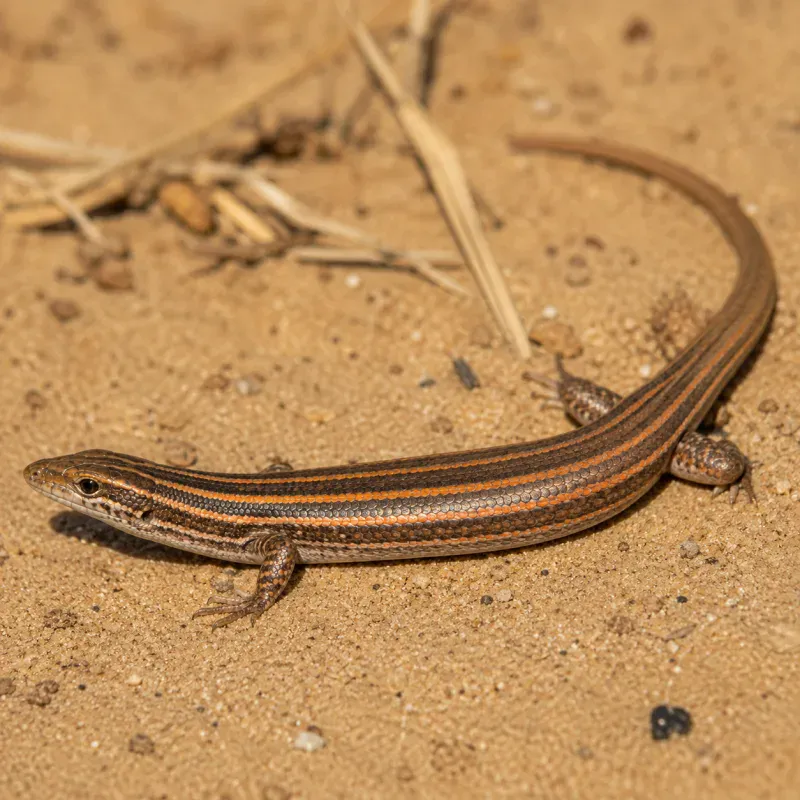
Schneider’s skink (Eumeces schneideri, formerly Novoeumeces schneideri) is a robust, diurnal burrowing skink native to North Africa and the Middle East. Despite its hardy nature and manageable size, it remains underrated in the exotic pet trade. This guide covers every aspect of care, from natural history to breeding, ensuring your skink thrives in captivity. With proper husbandry, these fascinating reptiles can live 15–20 years and become rewarding companions for keepers of all experience levels.
Natural History and Habitat
Schneider’s skinks inhabit arid to semi-arid regions, including rocky deserts, scrublands, and dry riverbeds. They are powerful burrowers, constructing deep tunnel systems to escape heat and predators. In the wild, they are opportunistic omnivores, feeding on insects, small vertebrates, and plant matter. Understanding this habitat helps replicate conditions in captivity. Their native range spans from Egypt and Libya through Israel, Jordan, Syria, and into Iran and parts of the Arabian Peninsula. These skinks are well-adapted to extreme temperature swings, with daytime highs often exceeding 100°F and nighttime drops into the 60s. In captivity, mimicking this thermal gradient is essential for their thermoregulation and overall health.
Enclosure Setup
Minimum Size
A single adult requires a 40-gallon breeder tank (36x18x18 inches). For a pair, upgrade to a 75-gallon (48x18x21 inches). Horizontal space is more important than height, as these skinks are primarily terrestrial and burrowing. A larger enclosure is always better—consider a 4x2x2-foot custom enclosure for a pair or if you want to provide a more naturalistic habitat. Ensure the enclosure has a secure, well-ventilated lid to prevent escape and allow for proper air exchange.
Substrate
Deep, loose substrate is essential. Use a mix of 60% organic topsoil, 30% play sand, and 10% coconut coir. Depth should be 6–8 inches to allow burrowing. Avoid calcium sand or wood shavings, as these can cause impaction or respiratory irritation. The substrate should be kept slightly moist at the bottom to maintain tunnel stability, but the top layer can dry out. Replace the top layer monthly and fully change the substrate every 3–4 months to prevent bacterial buildup. Spot-clean daily to remove feces and uneaten food.
Hides and Decor
Provide multiple hides: a humid hide on the cool side and a dry hide on the warm side. Add flat rocks, cork bark, and sturdy branches for climbing. A shallow water dish is sufficient; these skinks rarely soak. The humid hide should be a plastic container with a hole cut in the lid, filled with moist sphagnum moss or coconut coir, and placed on the cool side to maintain 60–70% humidity inside. The dry hide can be a half-log or rock cave on the warm side. Additional decor like leaf litter and artificial plants can provide security and enrichment. Ensure all decor is stable and cannot collapse on the skink.
Lighting
UVB is recommended for vitamin D3 synthesis. Use a T5 HO 5.0 or 6% UVB tube covering 2/3 of the enclosure. Photoperiod: 12–14 hours daily. UVB is not strictly required if you supplement D3, but it improves overall health. Place the UVB tube over the warm side, with the basking spot within 12–18 inches of the bulb. Replace the bulb every 6–12 months, as UVB output diminishes over time. Provide a low-wattage LED or ambient light to create a natural day/night cycle, but avoid bright lights at night.
Heating and Temperature
| Zone | Temperature (°F) | Temperature (°C) |
|---|---|---|
| Basking spot | 100–105 | 37–40 |
| Warm side ambient | 85–90 | 29–32 |
| Cool side ambient | 75–80 | 24–27 |
| Nighttime drop | 65–70 | 18–21 |
Use a ceramic heat emitter or halogen flood lamp for basking. Connect all heat sources to a thermostat for safety. Nighttime drops are natural but not mandatory. Place the basking lamp on one end of the enclosure to create a thermal gradient. Use a digital thermometer with probes to monitor temperatures at the basking spot, warm side, and cool side. A thermostat is non-negotiable—it prevents overheating and potential burns. For nighttime, if ambient temperatures drop below 65°F, use a ceramic heat emitter on a thermostat set to 68°F. Avoid red or blue night bulbs, as they can disrupt the skink’s circadian rhythm.
Humidity and Hydration
Humidity should be 30–40% in the dry areas, with a humid hide at 60–70%. Mist the enclosure lightly once daily. Provide fresh water in a shallow dish; change daily. Use a hygrometer to monitor humidity levels. During shedding, increase misting frequency to help with dysecdysis. Ensure the water dish is shallow enough to prevent drowning—about 1 inch deep is sufficient. Some keepers also provide a larger shallow dish during shedding to encourage soaking, though Schneider’s skinks rarely soak voluntarily.
Diet and Feeding Schedule
Staples
- Insects: crickets, dubia roaches, black soldier fly larvae, mealworms (occasional)
- Vegetables: collard greens, dandelion greens, squash, carrots (grated)
- Fruit: berries, mango (treat only, 10% of diet)
Insects should be gut-loaded for at least 24 hours before feeding to enhance their nutritional value. Offer a variety of insects to ensure a balanced diet. Vegetables should be finely chopped or grated to prevent choking. Avoid feeding spinach, kale, or broccoli in large amounts due to oxalates or goitrogens. Fruits are high in sugar and should be offered sparingly—no more than 10% of the total diet.
Supplements
Dust insects with calcium + D3 at every feeding, and a multivitamin once weekly. If using UVB, reduce D3 supplementation to twice weekly. Calcium without D3 can be used on other days to prevent over-supplementation. Always use supplements specifically formulated for reptiles, and check expiration dates. Over-supplementation can be as harmful as deficiency, so follow the schedule carefully.
Feeding Schedule
| Age | Frequency | Portion Size |
|---|---|---|
| Juvenile (under 6 months) | Daily | As many insects as they’ll eat in 10 min |
| Subadult (6–12 months) | Every other day | 8–10 insects + 1 tbsp greens |
| Adult (over 12 months) | 3–4 times per week | 5–8 insects + 2 tbsp greens |
Adjust portion sizes based on the individual’s body condition—overfeeding can lead to obesity, especially in adults. Remove uneaten insects after 15 minutes to prevent them from stressing the skink or biting it. For juveniles, offer smaller insects like pinhead crickets or small dubia roaches. Always provide fresh greens daily, even on non-feeding days, to encourage foraging behavior.
Handling and Temperament
Schneider’s skinks are generally docile but can be skittish. Allow 1–2 weeks for acclimation. Handle gently, supporting the body; never grab the tail (they can drop it). Short, frequent sessions (5–10 minutes) build trust. Signs of stress include tail twitching, hissing, or trying to burrow. Avoid handling during shedding or after feeding. When picking up your skink, use a scooping motion with both hands—one under the chest, the other supporting the hindquarters. Never pick up by the tail, as autotomy (tail drop) is a common stress response. Over time, your skink may become accustomed to handling and even seek out interaction, but always respect its boundaries.
Common Health Issues
- Metabolic Bone Disease (MBD): Caused by calcium deficiency or lack of UVB. Symptoms: tremors, soft jaw, lethargy. Prevention: proper supplementation and UVB. If suspected, increase calcium supplementation, provide UVB, and consult a reptile vet immediately.
- Respiratory Infections: Often from high humidity or cold. Signs: wheezing, nasal discharge, open-mouth breathing. Treat with vet-prescribed antibiotics. Ensure proper temperatures and ventilation to prevent recurrence.
- Parasites: Internal (worms) or external (mites). Fecal exams twice yearly. Quarantine new arrivals. If parasites are detected, follow the vet’s treatment plan and disinfect the enclosure thoroughly.
- Dysecdysis (bad shed): Low humidity or dehydration. Provide a humid hide and ensure hydration. If retained shed persists, soak the skink in shallow lukewarm water for 10–15 minutes and gently rub the area with a damp cloth.
- Tail Drop (autotomy): A stress response. The tail regenerates but is never identical. Minimize handling stress. After a tail drop, keep the enclosure clean to prevent infection, and monitor the stump for signs of necrosis.
Regular veterinary check-ups are recommended, especially for new arrivals. Keep a health log to track weight, appetite, and shedding patterns, which can help detect issues early.
Breeding Basics
Sexing
Males have wider heads, thicker tails, and larger femoral pores. Females are smaller and less robust. Sexing is reliable after 12 months. To check femoral pores, gently lift the tail and look for a row of enlarged pores on the underside of the thighs. Males also tend to be more territorial and may display head-bobbing during breeding season.
Brumation
Cool the enclosure to 60–65°F for 6–8 weeks (reduce photoperiod to 8 hours). Provide water but no food. After brumation, gradually warm up. Begin brumation in late fall to mimic natural cycles. During brumation, monitor your skink’s weight and hydration—offer water weekly. After 6–8 weeks, slowly raise temperatures over a week and resume feeding with small portions.
Mating and Egg-Laying
Introduce the pair after brumation. Mating is brief. The female lays 6–12 eggs in a moist substrate. Incubate at 82–86°F for 45–60 days. Hatchlings are 3–4 inches and can eat pinhead crickets. Provide a nesting box for the female—a container filled with moist vermiculite or peat moss, placed in the warm side. After laying, remove the eggs carefully to an incubator, keeping them at the same temperature and humidity. Hatchlings should be housed separately to avoid aggression.
Common Mistakes
- Using shallow substrate – prevents natural burrowing
- Overhead heat without thermostat – risk of burns
- Feeding only insects – need vegetable matter
- Ignoring UVB – increases MBD risk
- Handling too soon – causes stress
- Keeping the enclosure too humid – leads to respiratory infections
- Not providing a temperature gradient – prevents proper thermoregulation
- Overfeeding adults – leads to obesity and fatty liver disease
Each of these mistakes is easily avoidable with proper research and vigilance. Always prioritize your skink’s natural behaviors and needs.
Comparison: Schneider’s Skink vs. Blue-Tongued Skink
| Feature | Schneider’s Skink | Blue-Tongued Skink |
|---|---|---|
| Size | 12–16 inches | 18–24 inches |
| Activity | Diurnal, active burrower | Diurnal, terrestrial |
| Diet | Insects + greens | Omnivorous, more plant-heavy |
| Humidity | 30–40% | 40–60% |
| Difficulty | Beginner | Beginner–Intermediate |
Blue-tongued skinks are larger and require more space, but they are also more handleable and less burrow-dependent. Schneider’s skinks are more active diggers and need deeper substrate. Both make excellent pets, but your choice depends on your space and handling preferences.
Final Thoughts
Schneider’s skinks are rewarding, low-maintenance pets for keepers who appreciate a burrowing lifestyle. With proper setup, they can live 15–20 years. Respect their need for deep substrate, consistent temperatures, and a balanced diet, and you’ll have a fascinating companion. These skinks are not as well-known as some other species, but their hardiness and unique behaviors make them a hidden gem in the reptile hobby. Whether you’re a beginner or an experienced keeper, providing the right environment will ensure a long, healthy life for your Schneider’s skink.
Frequently Asked Questions
1. How long do Schneider’s skinks live?
Schneider’s skinks can live 15–20 years in captivity with proper care. This lifespan is comparable to many other popular pet lizards, so be prepared for a long-term commitment.
2. Do Schneider’s skinks need UVB lighting?
UVB is recommended for vitamin D3 synthesis, which is essential for calcium metabolism. While UVB is not strictly required if you supplement D3 in the diet, providing UVB improves overall health and reduces the risk of metabolic bone disease. Use a T5 HO 5.0 or 6% UVB tube covering two-thirds of the enclosure.
3. What is the minimum tank size for a Schneider’s skink?
A single adult requires a 40-gallon breeder tank (36x18x18 inches). For a pair, you should upgrade to a 75-gallon tank (48x18x21 inches). Horizontal space is more important than height, as these skinks are terrestrial and burrowing.
4. What should I feed my Schneider’s skink?
Schneider’s skinks are omnivorous. Feed a staple of insects (crickets, dubia roaches, black soldier fly larvae) and vegetables (collard greens, dandelion greens, squash, carrots). Fruit should be offered only as a treat, making up no more than 10% of the diet. Dust insects with calcium + D3 at every feeding and a multivitamin once weekly.
Related Reading
- Schneider Skink Enclosure: Heating & Substrate — Learn how to set up the perfect enclosure with proper heating and substrate.
- Schneider Skink Diet & Feeding Guide — Discover the best foods, feeding schedules, and nutritional tips for your skink.
- Reptile UVB Lighting Guide: Ferguson Zones & Bulb Selection — Understand UVB requirements for Schneider's skinks and choose the right bulb.
- Reptile Vitamins & Supplements: Calcium With or Without D3 — Learn how to properly supplement your skink's diet with calcium and vitamins.
Check optimal temps, calculate feeding, and find your perfect species match.
References
- Bates, M. (2020). The Complete Guide to Schneider's Skinks. Herpetological Publishing.
- Johnson, R. (2019). Reptile Nutrition and Supplementation. Exotic Pet Health Press.
- Smith, A. (2021). UVB Lighting for Reptiles: A Practical Guide. Reptile Lighting Institute.
- Wilson, L. (2018). Breeding Arid-Dwelling Skinks. International Herpetological Society.
🐾 Join the Community
See how other keepers set up their enclosures, ask questions, and share your experience.
🛠️ Apply What You Learned
Check optimal temps, calculate feeding schedules, and get calcium dosage — all personalized for your species.
Comments