Russian Tortoise Care: Complete Species Guide
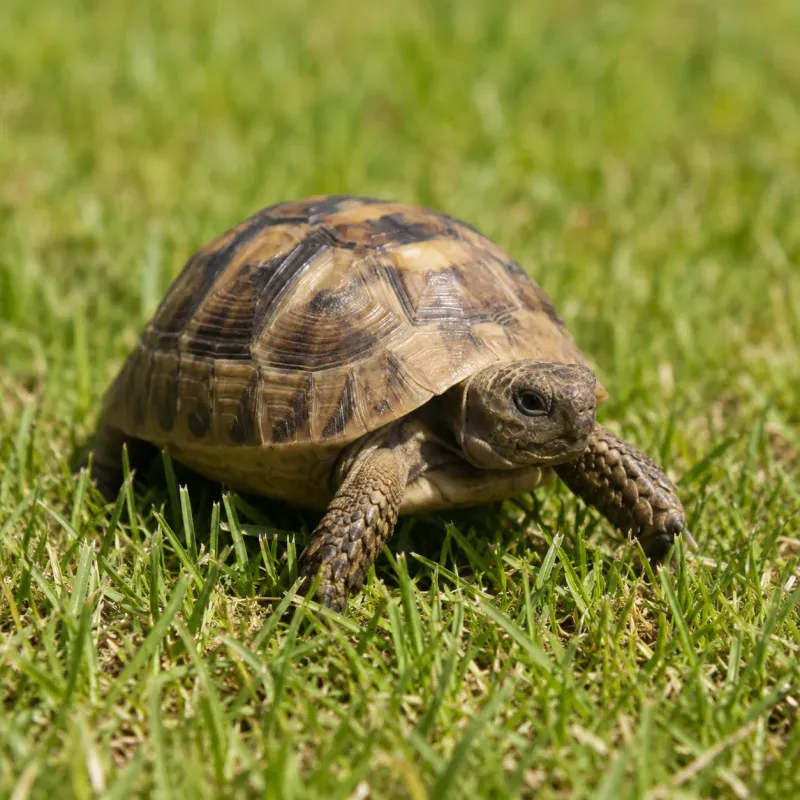
Species Overview
The Russian tortoise (Testudo horsfieldii) is the most recommended starter tortoise for good reason. They stay small (6–10 inches), are extremely hardy, and have huge personalities in a compact package. Native to the arid steppes of Central Asia, they are adapted to extreme temperature swings. Key fact: Russian tortoises can live 50+ years — this is a multi-decade commitment.
Their natural habitat spans from Afghanistan and Pakistan through Iran, Turkmenistan, Uzbekistan, and Kazakhstan. In the wild, they experience scorching summers and freezing winters, which is why they are so resilient in captivity. Their burrowing behavior is not just a preference — it's a survival mechanism to escape heat, cold, and predators.
This guide will walk you through every aspect of Russian tortoise care, from enclosure setup to diet, health, and brumation. By the end, you'll have the knowledge to provide a thriving home for your shelled companion.
Indoor Enclosure
Minimum 8'×4' (32 sq ft) for an adult. A 40-gallon tank is not suitable — they need floor space, not height. Substrate: 50% organic topsoil + 50% play sand, 4–6 inches deep for burrowing. They are escape artists — walls must be at least 12" high and smooth-sided.
Step-by-Step Indoor Enclosure Setup
- Choose the right container: A large plastic tub, a custom-built wooden enclosure, or a tortoise table (not a glass tank). Glass tanks can cause stress due to reflection and poor ventilation. Aim for at least 8'×4' (32 sq ft) of floor space. For hatchlings, a 40-gallon tank may work temporarily, but plan for an upgrade within a year.
- Add substrate: Mix 50% organic topsoil (no fertilizers or pesticides) with 50% play sand. Depth: 4–6 inches for adults, 2–3 inches for juveniles. This allows natural burrowing behavior, which helps with temperature regulation and stress reduction.
- Install heating and lighting: Place a basking lamp at one end to create a temperature gradient (see Heating & UVB section). Use a T5 HO 10.0 UVB tube spanning at least 2/3 of the enclosure. Position lights so the tortoise cannot touch them — use a mesh guard to prevent burns.
- Add hides and decor: Provide at least two hides (cool side and warm side). Use cork bark, half logs, or overturned plant saucers. Add flat rocks for basking and for wearing down claws. Avoid sharp edges that could injure the shell.
- Set up a water dish: Use a shallow, heavy dish (e.g., terracotta saucer) that can't be tipped over. Change water daily. Soaking your tortoise 2–3 times a week in lukewarm water (15–20 minutes) helps hydration and shedding.
- Monitor and adjust: Use digital thermometers and a hygrometer to verify temperatures and humidity. Adjust wattage or distance of bulbs as needed.
Substrate Options Compared
| Substrate | Pros | Cons | Recommendation |
|---|---|---|---|
| 50% topsoil + 50% play sand | Allows burrowing, natural, cheap | Can be dusty if too dry | Best choice |
| Cypress mulch | Holds humidity, soft | Can cause impaction if ingested, not natural | Avoid |
| Aspen shavings | Low dust, absorbent | Not burrow-friendly, can be ingested | Avoid |
| Reptile carpet | Easy to clean | No digging, harbors bacteria | Not recommended |
| Paper towels | Hygienic for quarantine | No enrichment, no burrowing | Only for sick/young |
Common Indoor Enclosure Mistakes
- Using a glass tank: Poor ventilation and stress from reflections. If you must use one, cover the lower 3–4 inches with opaque paper.
- Too shallow substrate: If it's less than 4 inches, the tortoise can't burrow, leading to stress and skin issues.
- Placing the enclosure in a high-traffic area: Tortoises need quiet. Put them in a calm room away from TVs and loud pets.
- Skipping a thermostat: Overheating can be fatal. Always use a dimming thermostat for the basking bulb.
Outdoor Enclosure
Russian tortoises thrive outdoors when weather permits (above 65°F). A secure outdoor pen with shade, sun, and edible weeds is the gold standard. Ensure it's predator-proof with a wire lid.
How to Build a Predator-Proof Outdoor Pen
- Location: Choose a spot with a mix of full sun and partial shade. Morning sun is ideal, with afternoon shade to prevent overheating.
- Size: Bigger is always better. A minimum of 6'×6' is recommended, but 10'×10' or larger is ideal. The more space, the more natural foraging behavior.
- Walls: Use wood, cinder blocks, or brick. Walls must be at least 12 inches high and smooth-sided to prevent climbing. Bury the walls 6–12 inches deep to prevent digging out.
- Predator protection: Cover the top with hardware cloth (1/2-inch mesh) or a secure wire lid. This keeps out raccoons, dogs, and birds of prey. Also, consider an electric fence for raccoons if they're common in your area.
- Plants: Plant edible weeds like dandelion, plantain, clover, and chicory. Avoid toxic plants (see Diet section). Use organic soil and avoid pesticides.
- Water and hides: Provide a shallow water dish and at least one hide (e.g., a wooden box with a ramp).
- Weather considerations: If temperatures drop below 65°F, bring the tortoise indoors. Provide a cold frame or greenhouse for early spring/late fall.
When Can Tortoises Go Outside?
- Daytime temperatures above 65°F and no risk of frost.
- Nighttime temperatures above 60°F if left out overnight (otherwise bring in).
- Always supervise for the first few days to ensure they can't escape and are finding food.
Common Outdoor Enclosure Mistakes
- No wire lid: Raccoons and dogs can easily dig under or climb over walls.
- Too small: A 4×4 pen doesn't provide enough room for foraging and exercise.
- Ignoring toxic plants: Many common garden plants (e.g., buttercups, foxglove) are toxic. Always verify plant safety.
- Leaving them out in extreme heat: Even in summer, temperatures above 100°F can be dangerous. Provide shade and a shallow water pan for cooling.
Heating & UVB
| Zone | Temperature |
|---|---|
| Basking spot | 95–100°F (35–38°C) |
| Warm side | 80–85°F (27–29°C) |
| Cool side | 70–75°F (21–24°C) |
| Night | 65–70°F (18–21°C) |
UVB: T5 HO 10.0 Desert tube, 12 hours per day — essential for calcium metabolism. Halogen flood bulb for basking on a dimming thermostat.
Setting Up Heating and UVB Correctly
- Basking bulb: Use a halogen flood bulb (e.g., 50–100 watts depending on enclosure size) placed at one end. Aim for a basking surface temperature of 95–100°F. Use a dimming thermostat to avoid overheating.
- UVB tube: Install a T5 HO 10.0 Desert UVB tube. Position it so it covers about 2/3 of the enclosure. The distance from the tortoise's shell to the tube should be 12–18 inches (follow the manufacturer's instructions). Replace the tube every 12 months, as UVB output decreases over time.
- Night temperatures: Use a ceramic heat emitter (CHE) connected to a thermostat if your house drops below 65°F at night. No light at night is needed.
- Monitoring: Use digital thermometers with probes at basking, warm, and cool ends. A temperature gun is handy for spot-checking.
- Basking spot too hot: Raise the bulb or reduce wattage. Never let it exceed 105°F.
- Cool side too cold: Add a CHE or move the basking lamp closer to the center.
- UVB not working: Check the bulb with a UVB meter. Replace if output is low.
- Thermostat failure: Always have a backup thermostat. If the dimming thermostat fails, the bulb may overheat — use a separate fail-safe thermostat.
- Using a heat rock: These cause severe burns. Never use them.
- No thermostat: Unregulated heat sources can spike to dangerous levels.
- UVB too far away: If the tube is more than 18 inches away, the tortoise gets no benefit.
- Turning off UVB at night: UVB should be on for 12 hours, but if you turn it off earlier, it's fine as long as total daily exposure is adequate.
- Base (80%): Offer a variety of broadleaf weeds and leafy greens daily. Examples: dandelion leaves and flowers, plantain, clover, endive, escarole, collard greens, mustard greens, turnip greens, arugula, and watercress. Rotate the greens to prevent boredom and nutritional imbalances.
- Vegetables (15%): Add chopped vegetables a few times a week. Good options: butternut squash, bell peppers, cactus pads (opuntia), zucchini, and carrots (in moderation). Avoid high-sugar vegetables like corn.
- Treats (5%): Offer treats sparingly (once a week or less). Examples: strawberries, raspberries, apple slices (no seeds), and cucumber (for hydration). Too many treats cause diarrhea and obesity.
- Calcium supplementation: Dust food with calcium carbonate (no D3) 3–4 times per week for adults, more often for growing juveniles. If using a multivitamin, choose one without D3 if UVB is adequate.
- Iceberg lettuce: No nutritional value, high water content.
- Spinach: High in oxalates, binds calcium.
- Animal protein: Meat, dog/cat food, eggs — causes kidney failure and pyramiding.
- Grains: Bread, pasta, rice — not digestible.
- Fruits (in excess): High sugar, causes diarrhea.
- Toxic plants: Buttercups, daffodils, foxglove, lilies, rhubarb leaves, tomato leaves, avocado.
- Adults: Feed every day or every other day, offering a pile roughly the size of their shell.
- Juveniles: Feed daily, offer a smaller portion.
- Water: Always provide fresh water in a shallow dish. Soak your tortoise 2–3 times a week.
- Feeding too much fruit: Causes diarrhea and vitamin A toxicity.
- Using iceberg lettuce as a staple: It's empty calories.
- Skipping calcium: Leads to metabolic bone disease.
- Not washing produce: Pesticides can be harmful. Always wash thoroughly.
- Pre-brumation check: Take your tortoise to a vet for a fecal exam and health check. Ensure it's at a healthy weight (no signs of illness) and has been eating well.
- Gradual cooling: Over 2–3 weeks, gradually reduce temperatures and food. Stop feeding 2 weeks before brumation so the gut is empty (food can rot during brumation).
- Prepare the fridge: Use a dedicated fridge (not one with food). Set temperature to 40–45°F (4–7°C). Place a thermometer inside to monitor.
- Housing: Place the tortoise in a plastic tub with ventilation holes, filled with a few inches of damp substrate (e.g., 50/50 topsoil/sand). Add a hide.
- Monitor: Check the tortoise weekly. Weigh it monthly. A weight loss of more than 5-10% is a red flag — end brumation.
- Waking up: After 8–12 weeks, gradually raise the temperature over a few days. Offer warm water soaks and then food.
- Brumating a sick tortoise: Can be fatal. Always vet-check first.
- Too warm fridge: Above 50°F, the tortoise may wake up and burn energy.
- Too cold fridge: Below 35°F, freezing can occur.
- Not monitoring weight: Rapid weight loss indicates dehydration or illness.
- Too-small enclosure: Think floor space (sq ft), not gallons. A 40-gallon tank is for hatchlings, not adults.
- No UVB: Tortoises without UVB develop severe metabolic bone disease.
- Overfeeding protein: Dog food, cat food, and excessive fruit cause pyramiding and organ damage.
- Incorrect substrate: Wood chips cause impaction. They need soil/sand mix for digging.
- Ignoring hydration: Russian tortoises need regular soaks to stay hydrated, especially in dry indoor environments.
- Not providing enough burrowing depth: If they can't dig, they become stressed and develop health issues.
- Using a heat rock: Causes severe burns; always use overhead heating.
- Feeding iceberg lettuce: It's nutritionally worthless and can lead to diarrhea.
- Russian Tortoise Diet Guide: Safe Greens, Weeds & Schedule — Learn which greens and weeds are safe and how to schedule feedings.
- Russian Tortoise Enclosure: Indoor & Outdoor — Discover proper indoor and outdoor setups to keep your tortoise thriving.
- Russian Tortoise Health: Diseases & Prevention — Identify common diseases and prevention tips for a healthy tortoise.
- Reptile UVB Lighting Guide: Ferguson Zones & Bulb Selection — Understand UVB requirements and choose the right bulb for your reptile.
- Reptile Vitamins & Supplements: Calcium With or Without D3 — Find out when to use calcium with D3 versus without for optimal health.
Troubleshooting Heating Issues
Common Heating Mistakes
Diet & Nutrition
Russian tortoises are strict herbivores: 80% broadleaf weeds (dandelion, plantain, clover, endive, escarole, collard greens), 15% vegetables (squash, bell pepper, cactus pads), 5% treats (berries, apple, cucumber). Never feed: iceberg lettuce, spinach, animal protein, grains. Calcium (no D3) dusted on food 3–4×/week.
Building a Balanced Diet
Foods to Avoid (Toxic or Harmful)
Feeding Schedule and Portions
Common Diet Mistakes
Hibernation (Brumation)
Brumation is optional for pet tortoises — many keepers skip it to avoid risk. If you brumate, use the fridge method (stable 40–45°F for 8–12 weeks). Never brumate a sick or underweight tortoise.
Should You Brumate Your Russian Tortoise?
In the wild, Russian tortoises brumate to survive freezing winters. In captivity, it's not necessary for health, but some keepers choose to do it to mimic natural cycles or to encourage breeding. The decision depends on your experience and the tortoise's health.
Step-by-Step Fridge Brumation Method
Alternative: Skip Brumation
If you choose not to brumate, keep the enclosure temperatures stable year-round. Some keepers notice a slight decrease in activity in winter, but it's not necessary. Skipping brumation is safer for first-time keepers.
Common Brumation Mistakes
Lessons From Experienced Keepers
Frequently Asked Questions
What is the minimum indoor enclosure size for an adult Russian tortoise?
The minimum indoor enclosure size for an adult Russian tortoise is 8'×4' (32 square feet). A 40-gallon tank is not suitable for adults because they need floor space, not height. The substrate should be 50% organic topsoil and 50% play sand, 4–6 inches deep for burrowing.
What temperatures are needed in a Russian tortoise enclosure?
The basking spot should be 95–100°F, the warm side 80–85°F, the cool side 70–75°F, and nighttime temperatures 65–70°F. A T5 HO 10.0 Desert tube UVB light should be provided for 12 hours per day. Always use a dimming thermostat for the basking bulb to prevent overheating.
What should a Russian tortoise eat?
Russian tortoises are strict herbivores: 80% broadleaf weeds (dandelion, plantain, clover, endive, escarole, collard greens), 15% vegetables (squash, bell pepper, cactus pads), and 5% treats (berries, apple, cucumber). Never feed iceberg lettuce, spinach, animal protein, or grains. Calcium (no D3) should be dusted on food 3–4 times per week.
Is hibernation required for pet Russian tortoises?
Brumation is optional for pet tortoises, and many keepers skip it to avoid risk. If you do brumate, use the fridge method at a stable 40–45°F for 8–12 weeks, and never brumate a sick or underweight tortoise. Always have a vet check before starting brumation.
Related Reading
Check optimal temps, calculate feeding, and find your perfect species match.
References
- Highfield, A. (2020). Practical Encyclopedia of Keeping and Breeding Tortoises and Freshwater Turtles. Carapace Press.
- Palika, L. (2018). Russian Tortoise Care: The Complete Guide. Reptile Publishing.
- Vetlexicon (2021). Testudo horsfieldii: Husbandry Guidelines. Exotic Animal Formulary.
🐾 Join the Community
See how other keepers set up their enclosures, ask questions, and share your experience.
🛠️ Apply What You Learned
Check optimal temps, calculate feeding schedules, and get calcium dosage — all personalized for your species.
Comments