White's Tree Frog Health: Diseases & Prevention
Introduction
White's Tree Frogs (Litoria caerulea) are beloved for their docile temperament, striking green-blue coloration, and relatively hardy nature — but they are not immune to health problems. As a responsible keeper, understanding the signs of a healthy frog, common diseases like chytridiomycosis and metabolic bone disease (MBD), and proper quarantine procedures is essential for a long, happy life (typically 10–16 years). This evidence-backed guide covers everything you need to know to keep your White's Tree Frog thriving.
Signs of a Healthy White's Tree Frog
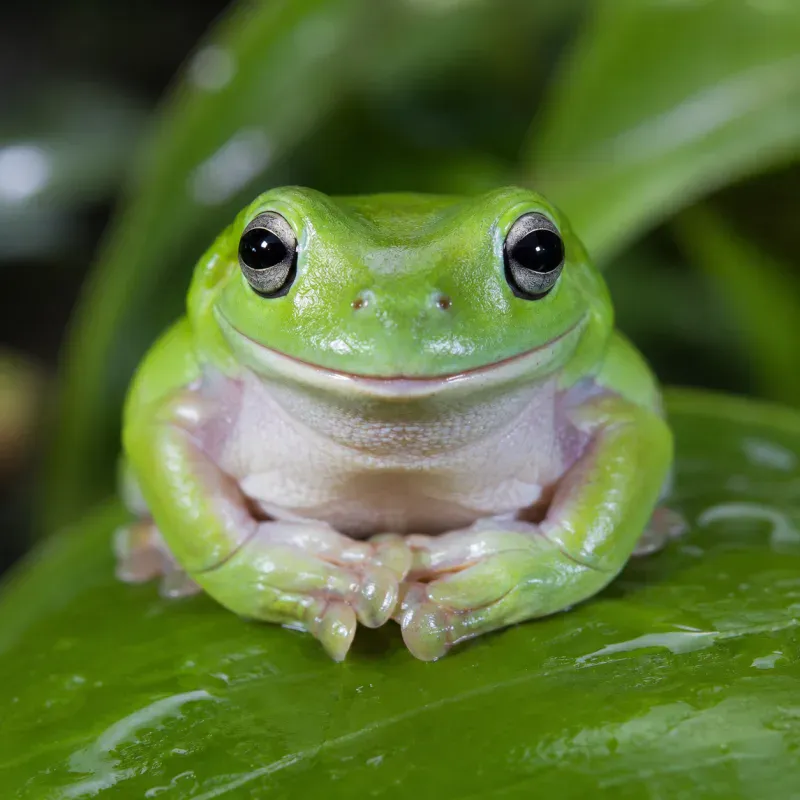
A healthy frog should exhibit clear, bright eyes; smooth, moist skin without lesions, sloughing, or discoloration; and a plump, rounded body (but not overly bloated). It should be alert, responsive, and active during its nocturnal hours. Normal behaviors include climbing, hunting, and occasional vocalizations. Key indicators include:
- Clear, round eyes with no cloudiness or discharge
- Smooth, even green or blue-green skin (may have small white spots — normal)
- Strong grip when climbing or perching
- Regular feeding response (takes food eagerly)
- Normal, firm feces (not watery or bloody)
- No excessive shedding or retained shed
Common Diseases and Health Issues
Chytrid Fungus (Chytridiomycosis)
Chytrid fungus (Batrachochytrium dendrobatidis) is a devastating pathogen that affects amphibians worldwide. Symptoms include lethargy, excessive skin shedding, reddening of the belly and toes, and loss of righting reflex. Diagnosis requires a skin swab sent to a lab (PCR test). Treatment: Veterinary-prescribed antifungal baths (e.g., itraconazole) and strict quarantine. Prevention: Quarantine all new frogs for 60 days, maintain clean water, and avoid cross-contamination between enclosures.
Bacterial Infections (Red-Leg Syndrome)
Bacterial infections, often caused by Aeromonas or Pseudomonas, manifest as reddening of the legs, belly, and toes (hence "red-leg syndrome"), swelling, lethargy, and loss of appetite. This is usually secondary to poor husbandry — dirty water, overcrowding, or stress. Treatment: Immediate veterinary care with antibiotics (e.g., enrofloxacin) and improved hygiene. Quarantine affected frogs immediately.
Metabolic Bone Disease (MBD)
MBD is caused by calcium deficiency or improper calcium-to-phosphorus ratios, often from lack of UVB or insufficient supplementation. Symptoms include soft jaw (rubber jaw), tremors, bowed legs, difficulty climbing, and fractures. Prevention: Dust feeder insects with a calcium + D3 supplement at every feeding (for juveniles) or 2–3 times weekly (adults). Provide UVB lighting (5–6% UVB bulb, 12 hours daily) or ensure dietary D3 via supplements. Avoid high-phosphorus feeders like mealworms.
Other Concerns
- Parasites: Nematodes and protozoa can cause weight loss, diarrhea, and regurgitation. Fecal exams by a vet are essential.
- Obesity: White's Tree Frogs are prone to overeating. Feed adults 3–4 large crickets or 2–3 dubia roaches every 5–7 days.
- Impaction: Caused by ingesting substrate (e.g., loose bark). Use large, smooth stones or reptile-safe soil.
Quarantine Procedures
Quarantine is the single most important step to prevent disease introduction. Follow these steps for any new frog:
- Set up a separate, simple enclosure (plastic bin with ventilation, paper towel substrate, water dish, hide).
- Quarantine for a minimum of 60 days — longer if you have other amphibians.
- Monitor for symptoms daily: appetite, skin condition, behavior, and stool quality.
- Wash hands thoroughly between handling quarantine and main enclosures (use disposable gloves).
- Consider a fecal exam and skin swab for chytrid before introducing to your collection.
Handling Safety
White's Tree Frogs tolerate gentle handling better than many frogs, but it's still stressful and can transfer oils, bacteria, or toxins. Best practices:
- Wash hands with warm water and mild soap (no antibacterial soaps or lotions). Rinse thoroughly.
- Use powder-free nitrile or vinyl gloves if possible.
- Never handle a frog that is shedding or appears stressed.
- Keep handling sessions under 5 minutes, and no more than once a week.
- Do not handle after applying any creams, oils, or hand sanitizer.
Preventative Care and Husbandry
Enclosure Setup
Use a vertically oriented glass terrarium (minimum 18x18x24 inches for one adult). Provide branches, cork bark, and broad-leafed plants (live or silk) for climbing. Substrate: coconut fiber, sphagnum moss, or bioactive mix. Avoid loose particle substrates that can be ingested.
Heating and Lighting
Maintain a temperature gradient of 75–82°F (24–28°C) during the day, with a night drop to 68–75°F (20–24°C). Use a low-wattage basking bulb (25–50W) or ceramic heat emitter. UVB lighting (5–6% T5 or compact) is recommended for 10–12 hours daily to aid calcium metabolism — even though these frogs are nocturnal, UVB still benefits them.
Humidity
White's Tree Frogs need 50–70% humidity, with spikes to 80–90% after misting. Use a hygrometer to monitor. Misting 1–2 times daily with dechlorinated or reverse osmosis water. A shallow water dish (changed daily) allows soaking.
Diet and Supplementation
Feed a variety of gut-loaded insects: crickets, dubia roaches, black soldier fly larvae, and occasional hornworms. Dust all feeders with a calcium + D3 supplement (e.g., Repashy Calcium Plus) at every feeding for juveniles, 2–3 times weekly for adults. Use a multivitamin (e.g., Repashy SuperVite) once weekly.
Comparison Table: Common Health Issues
| Condition | Symptoms | Cause | Treatment | Prevention |
|---|---|---|---|---|
| Chytrid Fungus | Lethargy, excessive shedding, red belly, loss of righting reflex | Batrachochytrium dendrobatidis | Itraconazole baths (vet-prescribed) | Quarantine 60 days, clean water |
| Bacterial Infection (Red-Leg) | Reddening of legs/belly, swelling, lethargy | Aeromonas, Pseudomonas | Antibiotics (vet-prescribed) | Clean enclosure, reduce stress |
| Metabolic Bone Disease | Soft jaw, tremors, bowed legs, fractures | Calcium deficiency, no UVB | Calcium supplementation, UVB, vet care | Proper UVB + calcium/D3 dusting |
| Parasites | Weight loss, diarrhea, regurgitation | Nematodes, protozoa | Fecal exam, antiparasitics | Quarantine, clean feeders |
Common Mistakes to Avoid
- Skipping quarantine: Even from reputable breeders, frogs can carry subclinical infections. Always quarantine.
- Overfeeding: Obesity shortens lifespan. Stick to a schedule.
- No UVB: Relying solely on dusted D3 is risky; UVB provides natural synthesis and supports overall health.
- Using tap water: Chlorine and chloramines harm frogs. Use dechlorinated or RO water.
- Handling too often: Stress suppresses immunity. Limit handling.
- Ignoring subtle signs: Early detection of weight loss, color changes, or activity shifts can save a frog's life.
Conclusion
White's Tree Frogs are resilient but require attentive care to avoid common diseases like chytrid, MBD, and bacterial infections. By maintaining proper quarantine, providing UVB and calcium supplementation, monitoring humidity and temperature, and recognizing early signs of illness, you can help your frog live a long, healthy life. Always consult a qualified reptile veterinarian for any health concerns — they are your best partner in keeping your amphibian friend thriving.
Related Reading
Check optimal temps, calculate feeding, and find your perfect species match.
References
- Berger, L., Speare, R., Daszak, P., et al. (1998). Chytridiomycosis causes amphibian mortality associated with population declines in the rain forests of Australia and Central America. Proceedings of the National Academy of Sciences, 95(15), 9031–9036.
- Pessier, A. P., & Jacobson, E. R. (Eds.). (2010). Amphibian Medicine and Captive Husbandry. Krieger Publishing.
- Wright, K. M., & Whitaker, B. R. (2001). Amphibian Medicine and Captive Husbandry. Krieger Publishing.
- Fry, M. M., & Fry, J. (2018). Metabolic bone disease in amphibians: A review. Journal of Herpetological Medicine and Surgery, 28(1–2), 32–41.
🐾 Join the Community
See how other keepers set up their enclosures, ask questions, and share your experience.
🛠️ Apply What You Learned
Check optimal temps, calculate feeding schedules, and get calcium dosage — all personalized for your species.
Comments