Red-Footed Tortoise Care: Setup, Diet & Humidity
Species Overview
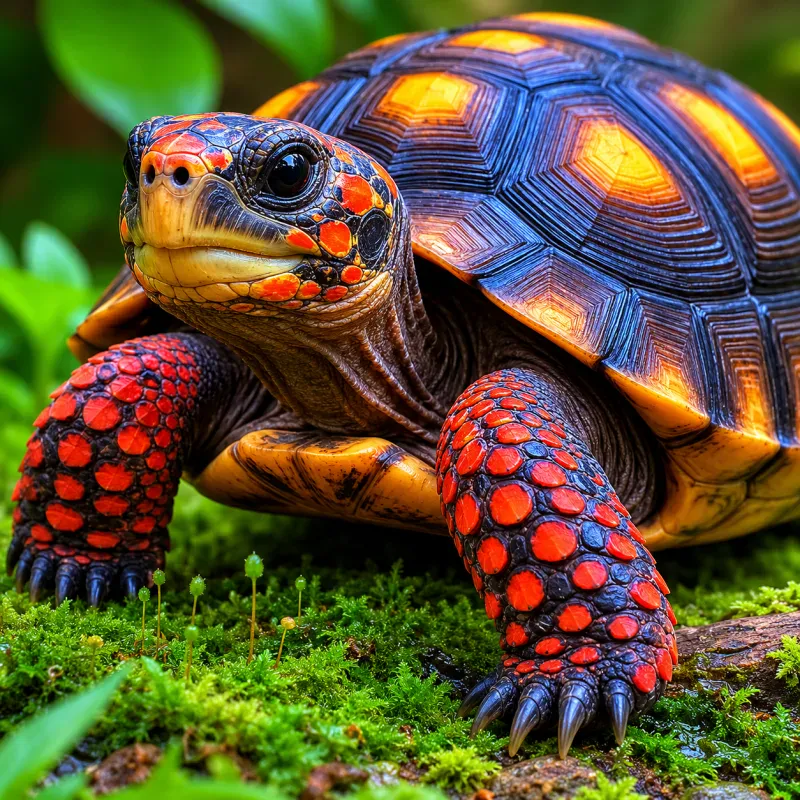
The red-footed tortoise (Chelonoidis carbonarius) breaks the stereotype of the desert tortoise. Native to the tropical forests and savannas of South America, they need high humidity, warmth, and an omnivorous diet — a combination that confuses keepers transitioning from grassland species like Russians or Sulcatas. Their striking red and orange limb scales make them one of the most visually appealing tortoise species.
Red-foots are medium-sized tortoises, typically reaching 12–16 inches in length and 10–20 pounds as adults, with males slightly larger than females. They are active, curious, and social, often interacting with their keepers. In the wild, they inhabit the Amazon basin, the Guianas, and parts of Central America, where they forage on fruits, leaves, and occasional animal matter. Their natural history explains their need for consistent warmth and moisture — they are not adapted to arid conditions.
One common misconception is that red-foots are beginner tortoises because they are hardy. While they are forgiving of minor mistakes compared to some species, their humidity and dietary requirements demand attention. With proper care, they can live 40–60 years in captivity, making them a long-term commitment.
Enclosure Requirements
| Life Stage | Minimum Indoor Enclosure |
|---|---|
| Hatchling | 4'×2' (8 sq ft) |
| Juvenile (under 6") | 6'×3' (18 sq ft) |
| Adult | 8'×4' (32 sq ft) or outdoor pen |
Red-foots are not burrowers like Russian tortoises, but they need hides and dense planting. Substrate: 4–6 inches of cypress mulch, coco coir, or organic topsoil — materials that retain moisture. They are strong and can push through flimsy barriers; walls must be solid and at least 16" high for adults.
Choosing the Right Enclosure Type
For indoor setups, a large plastic tub, a custom wooden vivarium, or a glass terrarium with a screen top can work. Wooden vivariums are excellent for retaining heat and humidity, while glass tanks are easier to clean but may require modifications to maintain humidity. Open-top enclosures are not recommended because they lose heat and moisture rapidly.
For hatchlings, a 4'×2' enclosure is adequate, but they grow quickly. Plan for the adult size from the start to avoid multiple upgrades. A 8'×4' enclosure is the minimum for one adult; if you plan to keep a pair, add at least 50% more floor space. Red-foots are active foragers and will pace if confined, so larger is always better.
Substrate Depth and Maintenance
Provide 4–6 inches of substrate. Cypress mulch is a top choice because it resists mold and holds moisture well. Coco coir is another excellent option, but it can become dusty when dry — mist it regularly. Organic topsoil (free of fertilizers and pesticides) can be mixed with coco coir for a more natural texture. Avoid sand, as it can cause impaction if ingested.
Spot-clean daily by removing feces and uneaten food. Replace the entire substrate every 2–3 months, or sooner if it becomes sour or heavily soiled. A deep substrate also allows red-foots to dig shallow nests, which they enjoy even if they are not true burrowers.
Furniture and Hides
Provide at least two hides — one on the warm side and one on the cool side — so your tortoise can thermoregulate without feeling exposed. Cork bark, half-logs, or commercial reptile caves work well. Add dense planting (live or artificial) to mimic their forest floor habitat. Live plants like pothos, spider plants, and ferns not only increase humidity but also provide grazing and cover. Ensure any plant is non-toxic and pesticide-free.
A large, shallow water dish is essential. Red-foots are enthusiastic soakers and will use it daily. Choose a dish that is heavy or recessed to prevent tipping. Change the water daily to keep it clean.
Heating & UVB
| Zone | Temperature |
|---|---|
| Basking spot | 95–100°F (35–38°C) |
| Ambient daytime | 80–85°F (27–29°C) |
| Cool side | 75–80°F (24–27°C) |
| Night | 70–75°F (21–24°C) — never below 65°F |
- UVB: T5 HO 10.0 Desert tube. Red-foots bask frequently despite their tropical origins.
- A ceramic heat emitter (CHE) provides nighttime ambient heat without light.
- Mercury vapor bulbs can work for outdoor daytime setups but require careful distance calibration.
Setting Up a Temperature Gradient
Place the basking lamp at one end of the enclosure to create a thermal gradient. Use a thermostat to regulate the temperature and prevent overheating. The basking spot should be directly under the lamp, with a flat rock or log for the tortoise to climb onto. Ensure the distance between the lamp and the basking surface matches the manufacturer's recommendations (typically 12–18 inches for a T5 tube, 8–12 inches for a basking bulb).
Use a digital thermometer with probes at both the basking spot and the cool side to monitor temperatures daily. An infrared thermometer gun can also be handy for spot-checking surface temperatures. Avoid relying on stick-on thermometers, which are inaccurate.
Nighttime Heating
At night, temperatures can drop, but they should never fall below 65°F. A ceramic heat emitter (CHE) is ideal because it produces heat without light, which can disrupt the tortoise's sleep cycle. Connect the CHE to a thermostat set to 70–75°F. If your home gets very cold, you may need a second CHE or a heat mat on the side of the enclosure (not under, as tortoises do not absorb heat well from below).
UVB Lighting Schedule
Provide UVB for 10–12 hours a day, matching the natural day/night cycle. A timer is essential for consistency. Replace T5 tubes every 6–12 months, even if they still emit visible light, because UVB output diminishes over time. Place the UVB tube so it covers the length of the enclosure, not just the basking spot, to allow the tortoise to get UVB while moving around.
For outdoor setups, natural sunlight is the best UVB source. Ensure your outdoor pen has both sunny and shaded areas so the tortoise can choose its exposure. Never place a glass or plastic barrier between the tortoise and the sun, as it blocks UVB.
Humidity Management
70–80% humidity is essential. This is the #1 husbandry challenge for indoor keepers in dry climates. Achieve this with:
- Deep, moisture-retentive substrate (cypress mulch or coco coir) that is damp but not waterlogged.
- Daily heavy misting or a reptile fogger on a timer.
- A large, shallow water dish they can soak in — red-foots are enthusiastic soakers.
- Live plants (pothos, spider plants, ferns) increase localized humidity.
Signs of low humidity: pyramiding (raised scutes on the shell), dry flaky skin, and chronic dehydration. Pyramiding in red-foots is almost always a humidity issue, not diet.
Measuring and Maintaining Humidity
Use a digital hygrometer to measure humidity at tortoise level, not at the top of the enclosure. Place it on the cool side to get an average reading. In dry climates, you may need to mist multiple times a day. A reptile fogger or humidifier on a timer can help maintain consistent levels, but ensure it does not make the substrate waterlogged. The substrate should be damp like a wrung-out sponge — if you can squeeze water out, it's too wet.
Humid Hides
Create a humid hide by filling a plastic container with damp sphagnum moss and placing it inside the enclosure. This provides a microclimate with even higher humidity, which is especially beneficial for hatchlings and juveniles. Check the moss regularly and remoisten as needed.
Soaking and Hydration
In addition to the water dish, provide regular soakings. Hatchlings should be soaked in shallow, lukewarm water (85–90°F) for 15–20 minutes daily; adults can be soaked 2–3 times a week. This helps with hydration and encourages regular bowel movements. Never leave a tortoise unattended in water that is deep enough to cover its head.
Omnivorous Diet
This is where red-foots differ dramatically from grassland tortoises. They need animal protein:
| Food Group | % of Diet | Examples |
|---|---|---|
| Leafy greens/weeds | 60% | Dandelion, collard, endive, hibiscus leaves |
| Fruits | 25% | Papaya, mango, fig, berries, cactus fruit |
| Protein | 15% | Earthworms, snails, cooked lean chicken, hard-boiled egg (1×/week), quality tortoise pellets |
Calcium (no D3) dusted on food 3–4×/week. Cuttlebone always available. Never feed: iceberg lettuce, dog/cat food (too high protein), grains.
Building a Balanced Salad
For the leafy green portion, rotate a variety of dark, leafy greens. Dandelion greens, collard greens, mustard greens, endive, and escarole are excellent staples. Avoid spinach and Swiss chard in large amounts due to oxalates, which can bind calcium. You can also offer edible weeds like plantain, clover, and mulberry leaves if you have a safe, pesticide-free source.
Fruits should be offered in moderation but are an important part of the diet. Papaya, mango, figs, and berries are favorites. Cactus fruit (prickly pear) is also highly nutritious. Avoid citrus fruits, as they can upset the digestive system. Fruit should be chopped into small, manageable pieces to prevent choking.
Animal Protein: How and When
Offer animal protein once a week for adults, and up to twice a week for growing juveniles. Earthworms and snails are natural choices; you can also offer cooked lean chicken, turkey, or a hard-boiled egg (with the shell for extra calcium). Quality commercial tortoise pellets designed for omnivorous species can also be used, but they should not be the sole protein source. Never feed dog or cat food, as it is too high in protein and fat, which can cause kidney damage and shell deformities.
Supplements
Dust food with a calcium supplement (no D3) 3–4 times a week for juveniles and 2–3 times a week for adults. If your tortoise does not get natural sunlight or UVB, use a calcium supplement with D3 instead, but be careful not to overdose. A multivitamin supplement can be offered once a week. Always provide a piece of cuttlebone in the enclosure — many tortoises will gnaw on it to self-regulate calcium intake.
Foods to Avoid
- Iceberg lettuce — contains almost no nutrients and can cause diarrhea.
- Dog/cat food — too high in protein and fat.
- Grains and bread — not part of their natural diet and can cause digestive issues.
- Rhubarb, avocado, and tomato leaves — toxic.
- Dairy products — tortoises are lactose intolerant.
Outdoor Housing
Red-foots thrive outdoors in tropical/subtropical climates (temps above 70°F). A secure outdoor pen with shade, sun, a wallow area, and edible plants is ideal. They can graze on pesticide-free lawn weeds. Ensure predator protection (raccoons, dogs, birds of prey).
Designing an Outdoor Pen
Build walls at least 16 inches high, but 24 inches is safer, as red-foots can climb or dig under if the walls are not buried. Use wood, concrete blocks, or metal sheeting — anything solid that they cannot see through (they will try to push through transparent barriers). Bury the walls 6–12 inches underground to prevent digging out.
Provide a mix of sunny and shaded areas. A shallow pond or mud wallow is appreciated, especially during hot weather. Plant edible shrubs and flowers like hibiscus, mulberry, and dandelions. Ensure all plants are non-toxic and pesticide-free.
Climate Considerations
Outdoor housing is only suitable if daytime temperatures are consistently above 70°F and nighttime temperatures do not drop below 65°F. In cooler climates, you can move the tortoise outdoors during the day and bring it inside at night, but only if you have a secure indoor enclosure. Always provide a warm hide in the outdoor pen, such as a doghouse with a heat pad, for unexpected cold snaps.
Pitfalls to Avoid
- Dry enclosure: Treating a red-foot like a desert tortoise (Sulcata/Russian) causes severe pyramiding and dehydration. These are tropical forest tortoises.
- No animal protein: Red-foots evolved as opportunistic omnivores. A purely herbivorous diet leads to deficiencies.
- Too-small enclosure: 32 sq ft minimum for one adult. These are active foragers.
- Cold nights: Temperatures below 65°F cause respiratory infections. Provide nighttime heating.
- Overfeeding fruit: While fruit is important, too much can cause diarrhea and obesity. Stick to the 25% ratio.
- Using sand as substrate: Sand can cause impaction if ingested and does not hold humidity. Always use moisture-retentive substrates.
- Skipping UVB: Even though they are tropical, red-foots need UVB to metabolize calcium. Without it, metabolic bone disease is a risk.
Frequently Asked Questions
How often should I soak my red-footed tortoise?
Hatchlings should be soaked daily in shallow, lukewarm water (85–90°F) for 15–20 minutes. Adults can be soaked 2–3 times a week. Always supervise and ensure the water is not deep enough to cover their head.
Can red-footed tortoises eat bananas?
Bananas are safe in small amounts, but they are high in sugar and phosphorus, which can interfere with calcium absorption. Offer them occasionally as a treat, not as a staple fruit. Better fruit options include papaya, mango, and berries.
Why is my red-footed tortoise pyramiding?
Pyramiding in red-foots is almost always caused by low humidity. A dry environment causes the scutes to raise as the shell grows. Ensure humidity is 70–80% and provide a humid hide. Diet and calcium also play a role, but humidity is the primary factor.
What is the minimum enclosure size for an adult red-footed tortoise?
The minimum is 8'×4' (32 sq ft) for one adult. Red-foots are active foragers and need space to roam. If you keep more than one, increase the enclosure size by at least 50% per additional tortoise. Outdoor pens should be even larger.
Related Reading
- Red-Footed Tortoise Diet Guide — Omnivorous feeding schedule.
- Russian Tortoise Care Guide — Popular pet tortoise comparison.
- Leopard Tortoise Care Guide — Grazing tortoise with similar tropical needs.
Check optimal temps, calculate feeding, and find your perfect species match.
References
- Vetter, H., & van Dijk, P.P. (2006). Chelonoidis carbonarius. In: The IUCN Red List of Threatened Species.
- Highfield, A.C. (2009). Tortoises of the World: A Comprehensive Guide. TFH Publications.
- Gurley, R. (2005). The Red-Footed Tortoise: A Complete Guide. Serpent's Tale Natural History Book Distributors.
🐾 Join the Community
See how other keepers set up their enclosures, ask questions, and share your experience.
🛠️ Apply What You Learned
Check optimal temps, calculate feeding schedules, and get calcium dosage — all personalized for your species.
Comments