Praying Mantis Care: Ghost & Orchid Species
Introduction
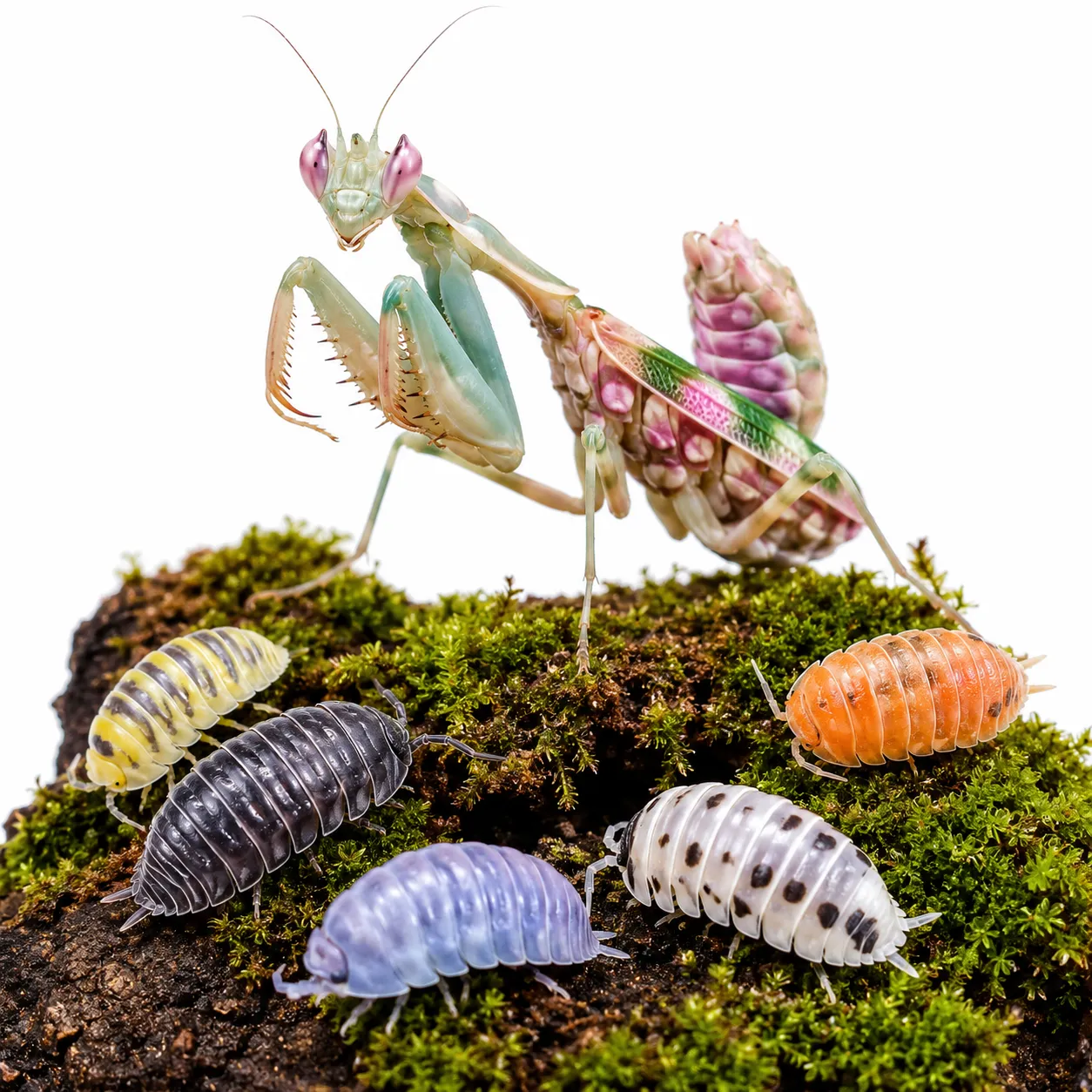
Praying mantises are among the most fascinating and beginner-friendly exotic pets. Their alien-like appearance, predatory grace, and relatively simple care requirements make them ideal for first-time insect keepers. This guide covers three popular beginner species: the Ghost Mantis (Phyllocrania paradoxa), the Orchid Mantis (Hymenopus coronatus), and the Giant Asian Mantis (Hierodula membranacea). Each has unique needs, but all share common husbandry principles. By the end of this article, you'll know exactly how to set up an enclosure, maintain proper temperature and humidity, feed fruit flies and crickets, handle molting, and avoid common mistakes.
Species Comparison Table
| Feature | Ghost Mantis | Orchid Mantis | Giant Asian Mantis |
|---|---|---|---|
| Adult Size | 1.5–2 inches (4–5 cm) | 2–3 inches (5–7.5 cm) | 3–4 inches (7.5–10 cm) |
| Lifespan | 6–12 months | 6–10 months | 8–14 months |
| Difficulty | Beginner | Intermediate | Beginner |
| Temperature Range | 70–80°F (21–27°C) | 75–85°F (24–29°C) | 72–82°F (22–28°C) |
| Humidity Range | 50–70% | 60–80% | 50–70% |
| Color Variation | Brown, tan, gray | White, pink, purple | Green, brown |
| Price (nymph) | $15–25 | $25–50 | $10–20 |
Enclosure Setup
Choosing the right enclosure is critical for your mantis's health and safety. Mantises are arboreal, meaning they need vertical space with plenty of climbing surfaces. A mesh or screen top is essential for ventilation and for attaching molting anchors.
Size Guidelines
- Ghost Mantis: 6x6x9 inches (15x15x23 cm) for a single adult
- Orchid Mantis: 8x8x12 inches (20x20x30 cm) – larger is better for this species
- Giant Asian Mantis: 12x12x18 inches (30x30x45 cm) – needs more space due to size
Never house multiple mantises together unless breeding, as they are cannibalistic. For nymphs, use smaller containers (like deli cups with mesh lids) to help them find food easily. As they grow, upgrade enclosure size gradually.
Substrate and Decor
Use a 1–2 inch layer of coconut fiber, sphagnum moss, or paper towels. Paper towels are easiest for cleaning and monitoring humidity. Add vertical branches, twigs, or artificial vines for climbing. Orchid mantises benefit from silk flowers that mimic their natural habitat. Always ensure decorations are secure and cannot fall on the mantis.
Temperature and Humidity
Temperature and humidity are the two most critical environmental factors. Incorrect levels can lead to molting problems, dehydration, or respiratory issues.
Heating
Most mantis species thrive at room temperature (70–80°F). If your home is cooler, use a low-wattage heat mat placed on the side of the enclosure (never the bottom) regulated by a thermostat. Avoid heat lamps, as they dry out the enclosure too quickly. For the Orchid Mantis, a small ceramic heat emitter may be needed in colder climates.
Humidity
Maintain humidity by misting the enclosure daily with dechlorinated water. Use a hygrometer to monitor levels. For Ghost and Giant Asian mantises, mist once in the morning; for Orchid mantises, mist twice daily. If humidity is too low, add a small water dish with a sponge (to prevent drowning) or use a humidifier in the room. Avoid over-misting, which can cause mold and bacterial growth.
Diet and Feeding
Mantises are carnivorous and require live prey. The size of the prey should match the mantis's size: a general rule is that prey should be no larger than the mantis's head or abdomen width.
Feeding Schedule
- Nymphs (L1–L3): Offer fruit flies (Drosophila hydei or melanogaster) every 1–2 days. Use flightless strains to prevent escape.
- Juveniles (L4–L6): Offer small crickets, house flies, or blue bottle flies every 2–3 days. Remove uneaten prey after 24 hours.
- Adults: Offer 2–3 appropriately sized crickets, roaches (e.g., dubia nymphs), or waxworms every 3–4 days. Do not overfeed, as obesity shortens lifespan.
Gut-load prey (feed them nutritious foods like carrots, collard greens, or commercial gut-load) for 24 hours before offering. Dust prey with calcium and vitamin D3 powder once a week for adults, and at every feeding for growing nymphs.
Molting Care
Molting is the most vulnerable time in a mantis's life. During this process, the mantis sheds its exoskeleton to grow. A failed molt is the leading cause of death in captivity.
Signs of Premolt
- Loss of appetite (refusing food for 24–48 hours)
- Lethargy and reduced movement
- Swollen abdomen and wing buds (in later instars)
- Hanging upside down from the enclosure top
During Molt
Do not disturb the mantis. Do not feed, handle, or open the enclosure. Ensure humidity is at the upper end of the species' range (70–80% for all three species) to soften the old exoskeleton. Do not touch the mantis or its molt, as even slight movement can cause deformities.
After Molt
Wait at least 24 hours before feeding. The new exoskeleton is soft and needs time to harden. Offer small prey items first. If the mantis has a bent limb after molting, it may straighten within a few days. If not, consult a specialist.
Handling Tips
Mantises can be handled, but they are delicate and can be easily injured. Use these guidelines for safe interaction.
- Handling frequency: Limit to 2–3 times per week for short periods (5–10 minutes).
- How to pick up: Gently coax the mantis onto your hand by placing a finger in front of its front legs. Never grab or squeeze.
- Safety: Wash hands before handling to remove any scents. Avoid handling after feeding or during premolt.
- Risks: Mantises can bite if threatened, but the bite is harmless to humans (slight pinch). They may also drop from your hand – always handle over a soft surface.
Common Health Issues
Most health problems in mantises stem from improper husbandry. Here are the most common issues and how to address them.
Dehydration
Symptoms: Wrinkled abdomen, lethargy, sunken eyes. Treatment: Increase misting frequency and provide a water droplet on a leaf or your finger.
Molt Failure (Dystocia)
Symptoms: Stuck exoskeleton, bent limbs, inability to fully emerge. Prevention: Maintain proper humidity (70–80% during molt) and provide adequate climbing surfaces for anchoring. Treatment: If partially stuck, gently mist the area and wait – do not pull.
Fungal or Bacterial Infections
Symptoms: Black spots on the exoskeleton, foul odor, lethargy. Prevention: Keep enclosure clean and avoid over-misting. Treatment: Isolate the mantis and consult a veterinarian; mild cases may improve with improved ventilation.
Obesity
Symptoms: Bloated abdomen, difficulty climbing, shortened lifespan. Prevention: Stick to a feeding schedule and avoid overfeeding adults.
What Beginners Get Wrong
Avoid these pitfalls to ensure your mantis thrives.
- Overfeeding: Offering prey too large or too often leads to obesity and regurgitation. Stick to size-appropriate prey and a regular schedule.
- Improper humidity: Too low causes molt failure; too high causes mold. Use a hygrometer and adjust misting accordingly.
- Handling during premolt: Disturbing a mantis before a molt can cause stress and failure. Learn the signs of premolt and leave it alone.
- Using tap water: Chlorine and heavy metals can harm mantises. Always use dechlorinated, distilled, or spring water for misting and drinking.
- Keeping multiple mantises together: Even siblings will cannibalize. House each mantis individually unless breeding under supervision.
- Neglecting ventilation: Stagnant air encourages mold and respiratory issues. Use a mesh top and avoid completely sealed enclosures.
By following this guide, you'll provide a safe, enriching environment for your mantis. Enjoy the incredible experience of watching these miniature predators hunt, grow, and thrive.
Related Reading
Check optimal temps, calculate feeding, and find your perfect species match.
References
- Battiston, R., et al. (2010). Mantids of the World. Johns Hopkins University Press.
- Prete, F. R., et al. (1999). The Praying Mantids. Johns Hopkins University Press.
- Ehrlich, P. R., & Raven, P. H. (1964). Butterflies and Plants: A Study in Coevolution. Evolution, 18(4), 586–608.
- Mantid Forum (2023). Care Sheets for Ghost, Orchid, and Giant Asian Mantises. Retrieved from mantidforum.com.
🐾 Join the Community
See how other keepers set up their enclosures, ask questions, and share your experience.
🛠️ Apply What You Learned
Check optimal temps, calculate feeding schedules, and get calcium dosage — all personalized for your species.
Comments